



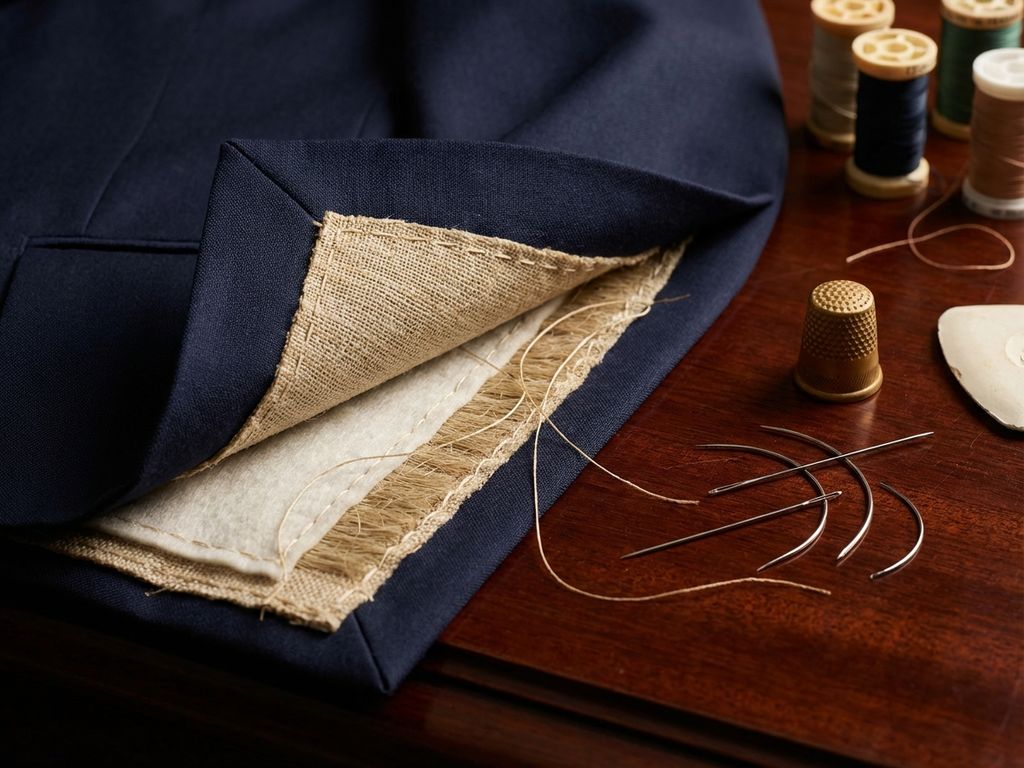
Maintaining your suit jacket’s canvas structure involves proper hanging, careful storage, and gentle handling to preserve the internal framework that gives your jacket its shape and drape. Canvas construction acts as the suit’s backbone, requiring specific care techniques to prevent damage and maintain structural integrity. These practices help your investment piece last for decades while retaining its professional appearance.
What exactly is the canvas structure in a suit jacket?
Canvas structure refers to the internal layer of fabric sewn between your jacket’s outer fabric and inner lining that provides shape, structure, and drape. This interfacing layer determines how your jacket hangs on your body and maintains its form over time.
Three main types of canvas construction exist in suit making. Full floating canvas represents the highest-quality option, where horsehair canvas is hand-stitched to the jacket front with loose, floating stitches that allow natural movement. This construction lets the jacket mold to your body shape while maintaining its structure.
Half-canvas construction combines floating canvas in the chest area with fused interfacing in the lower portions. This approach balances quality with cost-effectiveness, providing good shape retention where it matters most while keeping production affordable.
Fused construction involves gluing synthetic interfacing directly to the fabric using heat and adhesive. While more economical, this method creates a stiffer feel and may develop bubbling issues over time as the adhesive breaks down through wear and cleaning.
The canvas serves multiple purposes beyond basic structure. It helps distribute stress across the garment, prevents wrinkles from setting permanently, and allows the jacket to return to its original shape after movement. Quality canvas also improves with age, developing a natural drape that conforms to your body while maintaining the jacket’s intended silhouette.
How does canvas construction affect your suit’s lifespan?
Canvas quality directly impacts how long your suit maintains its appearance and structural integrity. Higher-quality canvas construction can extend a suit’s useful life from years to decades when properly maintained.
Floating canvas construction offers the longest lifespan because the loose stitching allows fabric movement without stress concentration. The natural fibers in horsehair canvas actually improve with age, becoming more supple while maintaining their supportive properties. This construction method allows for multiple alterations throughout the garment’s life without compromising structural integrity.
Half-canvas jackets provide good longevity with proper care. The floating chest piece handles the most stress from arm movement and body shape variations, while the fused lower portion typically experiences less wear. These suits often last 10–15 years with regular use when maintained correctly.
Fused construction presents the shortest lifespan due to adhesive breakdown over time. Heat, moisture, and repeated cleaning cycles can cause the glue to fail, leading to bubbling, puckering, and loss of shape. However, with gentle care and minimal dry cleaning, even fused suits can provide several years of good service.
The canvas also affects how well your suit ages aesthetically. Quality canvas helps maintain clean lines and prevents the fabric from developing permanent creases or sagging. This structural support becomes increasingly important as the outer fabric naturally relaxes with wear.
What are the signs that your suit’s canvas needs attention?
Visual and tactile indicators reveal when your suit’s canvas structure requires professional attention. Bubbling or puckering on the jacket front, particularly around the chest area, signals adhesive failure in fused construction or damaged stitching in canvas construction.
Feel for irregularities by running your hand across the jacket front. Lumps, bumps, or areas where the fabric feels loose or separated from the underlying structure indicate canvas problems. The jacket should feel smooth and uniform across its surface.
Shape-retention issues become apparent when your jacket no longer hangs properly on your body or a hanger. Lapels that curl, chest areas that cave in, or shoulders that lose their structure all suggest canvas deterioration. The jacket may also develop permanent wrinkles that don’t disappear after hanging.
Check the jacket’s recovery after movement. A healthy canvas allows the jacket to return to its original shape after you’ve been sitting, reaching, or moving your arms. If wrinkles remain or the fabric stays distorted, the internal structure may be compromised.
Temperature changes can reveal hidden canvas issues. If your jacket feels different in various climates or develops new irregularities after seasonal storage, the canvas may be responding to environmental stress. Professional evaluation can determine whether repair or replacement makes sense.
How do you properly care for a suit with canvas construction?
Proper suit care focuses on supporting the canvas structure through correct hanging, storage, and cleaning practices. Always hang your jacket on broad-shouldered wooden hangers that match your shoulder width to maintain the canvas shape and prevent stress points.
Allow your suit to rest between wears. Canvas needs time to recover and release moisture absorbed during wear. Rotating between multiple suits gives each garment proper recovery time, extending canvas life significantly.
Handle cleaning with extreme care. Limit dry cleaning to when absolutely necessary, as chemical solvents and heat can damage canvas fibers and adhesives. Spot-cleaning minor stains and allowing the suit to air out often eliminates the need for frequent professional cleaning.
Store suits in breathable garment bags or well-ventilated wardrobes. Avoid plastic bags that trap moisture, which can damage canvas materials over time. Cedar elements help repel insects while absorbing excess moisture naturally.
Temperature and humidity control protect canvas integrity. Extreme heat can damage fused construction, while excessive moisture may cause natural canvas fibers to distort. Room-temperature storage with moderate humidity provides ideal conditions for long-term canvas preservation.
Steam rather than press when possible. Professional pressing applies heat and pressure that can stress canvas construction. Light steaming removes wrinkles while allowing the canvas to maintain its natural structure and movement.
When should you seek professional help for canvas issues?
Professional intervention becomes necessary when canvas problems affect the suit’s appearance or fit. Bubbling, permanent shape loss, or structural damage require skilled tailoring assessment to determine repair feasibility and cost-effectiveness.
Minor canvas issues may be repairable if caught early. Loose stitching in floating canvas construction can often be re-secured, while small areas of fused canvas separation might be addressed through careful reattachment. However, these repairs require specialized knowledge and equipment.
Extensive canvas damage typically makes replacement more practical than repair. When bubbling covers large areas, when the canvas has separated completely, or when the structural integrity is compromised throughout, investing in a new suit often provides better value than expensive restoration.
Consider the suit’s overall value when making repair decisions. High-quality suits with floating canvas construction often justify repair costs, while lower-cost fused suits may not warrant expensive intervention. Factor in the garment’s age, condition, and replacement cost.
Timing matters for professional consultation. Address canvas issues promptly to prevent further damage that could make repair impossible. Early intervention often allows for less expensive solutions than waiting until problems become severe.
Professional assessment helps you understand your options and make informed decisions about garment care, repair, or replacement based on your specific situation and needs.
Understanding canvas construction and proper suit care helps you maintain your investment for years to come. Quality garment care preserves both the structural integrity and aesthetic appeal of your suits, ensuring they continue to serve you well in professional and formal settings. At Café Costume, we understand the importance of proper suit maintenance and offer guidance to help you care for your tailored pieces throughout their lifetime, ensuring your investment in quality craftsmanship pays dividends for years to come.
Articles connexes
- Pourquoi certains mariés portent-ils des bretelles au lieu d'une ceinture ?
- 6 erreurs à éviter lors de l'achat de votre costume de mariage
- Quelle est la différence entre les revers en pointe et les revers à cran pour les mariages ?
- Quels sont les réglages de pressage qui conviennent le mieux aux différents tissus des costumes ?
- Comment éviter les taches brillantes lors du repassage d'un costume ?
