



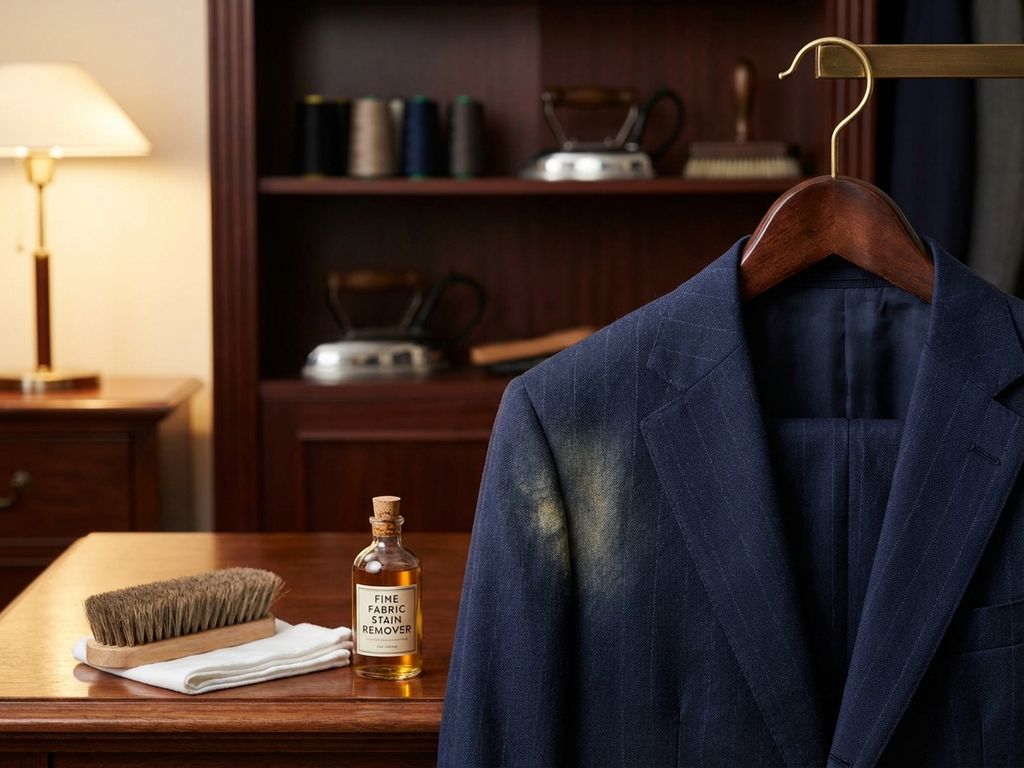
The best way to treat sweat stains on suit jackets depends on whether the stains are fresh or set in. For fresh stains, blot immediately and treat with white vinegar or a baking soda paste. Old stains need enzyme cleaners or professional treatment. Prevention through proper undershirts and antiperspirant timing works better than any cure. Quick action makes all the difference in successful stain removal.
What actually causes sweat stains on suit jackets and why are they so stubborn?
Sweat stains form when salt, proteins, and oils from perspiration combine with deodorant residue to create stubborn marks on fabric fibres. The yellowish discolouration comes from aluminium compounds in antiperspirants reacting with sweat proteins, while salt crystals embed deep into the weave, making removal challenging.
Different fabrics react differently to sweat because of their fibre structure and finish. Wool suits are particularly vulnerable because the natural fibres absorb moisture readily, while synthetic blends may repel initial contact but trap stains once they penetrate. Natural fibres like wool and cotton hold onto sweat components more tenaciously than synthetic materials.
Timing matters enormously in suit care because fresh sweat is mostly water and salt, which you can easily remove. Once sweat dries and oxidises, proteins denature and bind to fabric fibres. Deodorant compounds then react with these proteins, creating the characteristic yellow staining that becomes increasingly difficult to remove as time passes.
The stubborn nature of these stains comes from the chemical bonding that occurs. Aluminium salts from antiperspirants create particularly persistent stains because they form strong bonds with fabric fibres. This chemical reaction explains why some stains seem impossible to remove with ordinary washing methods.
How do you remove fresh sweat stains from a suit jacket at home?
Remove fresh sweat stains by blotting immediately with a clean cloth, then applying white vinegar directly to the affected area. Let it sit for 30 minutes before rinsing with cold water. For stubborn spots, make a paste with baking soda and water, apply for 15 minutes, then rinse thoroughly.
Here’s the step-by-step process for treating fresh stains:
- Blot the stain immediately – never rub, as this pushes sweat deeper into the fibres.
- Mix equal parts white vinegar and cold water in a spray bottle.
- Spray the solution onto the stained area and let it penetrate for 30 minutes.
- Rinse thoroughly with cold water, working from outside the stain inward.
- If the stain persists, create a paste with three parts baking soda to one part water.
- Apply the paste and let it sit for 15–20 minutes before rinsing.
For different fabric types, adjust your approach accordingly. Wool suits need gentler treatment – use lukewarm water instead of cold, and test any cleaning solution on a hidden area first. Cotton-blend suits can handle slightly more aggressive treatment, but avoid hot water, which sets protein stains permanently.
Immediate action prevents permanent staining because fresh sweat hasn’t had time to oxidise and bond with fabric fibres. The longer you wait, the more difficult removal becomes, so treat stains as soon as you notice them for the best results.
What’s the best way to tackle old, set-in sweat stains on suits?
Old sweat stains require enzyme cleaners that break down protein bonds, or hydrogen peroxide solutions for stubborn discolouration. Apply enzyme cleaner and let it work for several hours before rinsing. For severe stains, professional cleaning with specialised solvents often provides the only effective solution.
Enzyme cleaners work by breaking down the protein structures that create persistent stains. Look for products specifically designed for protein stains – these contain enzymes that dissolve the bonds between sweat proteins and fabric fibres. Apply the cleaner generously, work it in gently with your fingers, and allow several hours for the enzymes to work effectively.
For hydrogen peroxide treatment, mix one part 3% hydrogen peroxide with two parts water. Test on an inconspicuous area first, as peroxide can lighten some fabrics. Apply the solution, let it sit for one hour, then rinse thoroughly. This method works particularly well on white or light-coloured suit linings where yellowing is most visible.
Professional cleaning becomes necessary when home methods fail or when dealing with expensive suits. Professional cleaners have access to industrial-strength solvents and specialised techniques that can remove even severely set-in stains without damaging delicate fabrics.
Know when to stop DIY attempts. If you’ve tried enzyme cleaners and hydrogen peroxide without success, further home treatment may damage the fabric. Wool suits, in particular, can shrink or felt if overtreated, making professional intervention the safer choice for valuable garments.
How can you prevent sweat stains from ruining your suit jackets?
Prevent sweat stains by wearing properly fitted cotton undershirts that absorb moisture before it reaches your suit. Apply antiperspirant the night before wearing your suit, allowing it to form an effective barrier. Choose breathable fabrics and avoid over-layering to reduce excessive perspiration.
Undershirt selection makes an enormous difference in garment care. Choose cotton or moisture-wicking materials that extend beyond your suit jacket’s armpit area. Avoid synthetic undershirts that trap moisture against your skin, increasing sweat production and transfer to outer garments.
Antiperspirant timing affects its effectiveness significantly. Apply it to completely dry skin before bed, allowing the aluminium compounds to form protective plugs in sweat ducts overnight. Morning application over residual moisture reduces effectiveness and increases the likelihood of product transfer to clothing.
Fabric protection products create a barrier between your suit and potential stains. Spray-on fabric protectors repel moisture and make cleaning easier if stains do occur. Reapply these products after each professional cleaning to maintain their effectiveness.
Smart wearing habits reduce sweat contact with suit fabric. Remove your jacket when possible, especially in warm environments. Allow suits to air dry completely between wears, and rotate between multiple suits to prevent excessive wear on any single garment. These practices extend suit life and reduce staining incidents.
When should you take a sweat-stained suit to professional cleaners?
Take your suit to professional cleaners when home treatments fail, when dealing with expensive or delicate fabrics, or when stains cover large areas. Professional cleaning is also recommended for suits with multiple types of stains or when you’re unsure about fabric composition and appropriate treatment methods.
Professional cleaning becomes worthwhile when the cost of the service is significantly less than replacing the garment. For high-quality suits or those with sentimental value, professional treatment often provides the best chance of successful stain removal without fabric damage.
When communicating with cleaners, provide specific details about the stains. Mention when they occurred, what products you’ve already used, and any fabric care labels or manufacturer information. This information helps cleaners choose the most appropriate treatment method and set realistic expectations for results.
Expect professional cleaning to cost between £15 and £40, depending on the treatment required and your location. Specialised stain removal may cost more than standard dry cleaning, but it’s often the only way to salvage severely stained garments. Ask about guarantees – reputable cleaners often offer to retreat stains at no additional cost if the first attempt isn’t successful.
Professional cleaners have access to industrial equipment and solvents unavailable to consumers. They can also assess whether a stain is removable before treatment, potentially saving you money on unsuccessful attempts. For valuable suits, this expertise justifies the additional cost over DIY methods.
Understanding proper suit maintenance helps you make informed decisions about when to attempt home treatment versus seeking professional help. The key lies in acting quickly, choosing appropriate methods for your fabric type, and recognising when expert intervention provides the best value. At Café Costume, we understand that a well-maintained suit reflects your attention to detail and personal standards. Our personal style consultation service includes guidance on proper garment care, helping you protect your investment in quality tailoring for years to come.
Articles connexes
- Les 7 meilleures méthodes de nettoyage des costumes recommandées par les tailleurs
- Vos garçons d'honneur doivent-ils porter la même couleur marine ?
- Quels sont les meilleurs tissus pour les costumes de mariage d'été ?
- Les problèmes de santé liés à l'alcool peuvent-ils être résolus à l'aide d'un sachet ?
- Quelle est la durée de vie d'un costume bien entretenu ?
