



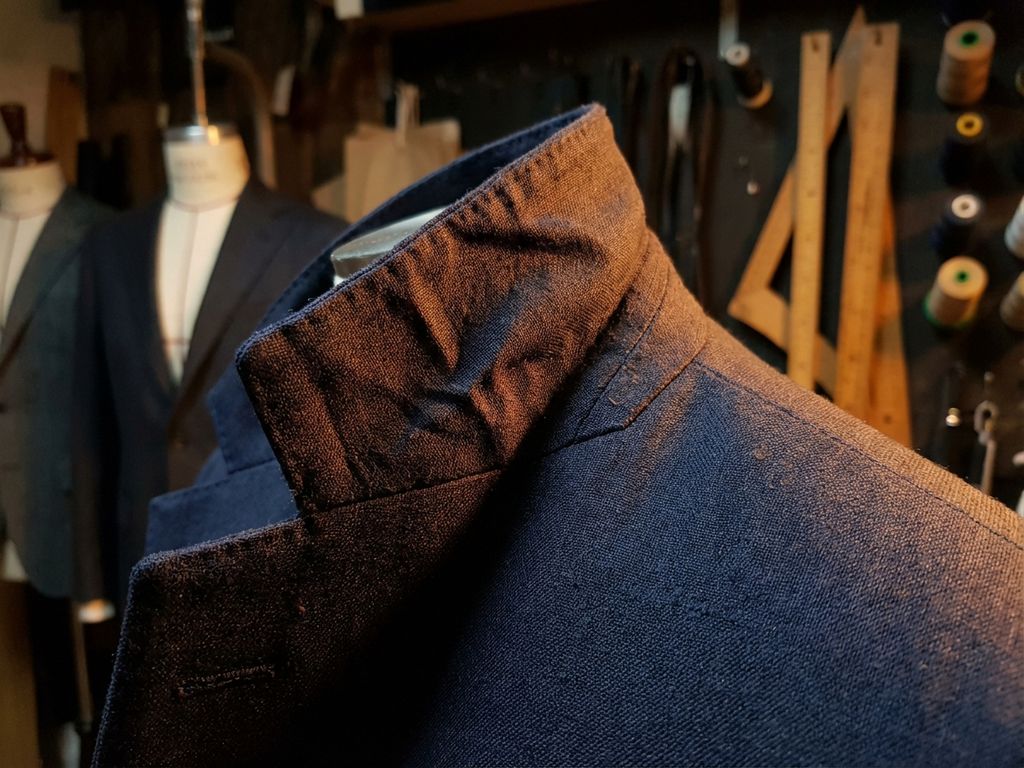
Suit collar curling happens due to poor storage, humidity changes, low-quality construction, and daily wear patterns. The collar’s interfacing and canvas construction play major roles in maintaining its shape over time. Most collar issues stem from improper hanging, moisture exposure, and inadequate support during storage, though some problems indicate permanent structural damage requiring professional attention.
What actually causes suit collars to curl and lose their shape?
Collar curling primarily results from inadequate interfacing, poor construction methods, and environmental factors that weaken the collar’s structural integrity. The interfacing material between fabric layers provides shape retention, but low-quality interfacing loses stiffness over time, causing the collar to buckle and curl at stress points.
Fabric quality significantly affects collar stability. Natural fibres like wool maintain their shape better than synthetic blends, which tend to stretch and lose elasticity. The weave density also matters – looser weaves are more susceptible to distortion than tightly woven fabrics that resist deformation.
Construction methods determine long-term collar performance. Hand-sewn collars with proper canvas construction maintain their shape longer than machine-made alternatives with fusible interfacing. The canvas construction method allows the collar to move naturally while retaining structure, whereas fused interfacing can separate from the fabric over time.
Environmental factors accelerate collar deterioration. Humidity causes fibres to expand and contract repeatedly, weakening the fabric’s memory. Temperature fluctuations compound this effect, particularly when suits are stored in areas with poor climate control, such as attics or damp wardrobes.
Daily wear patterns create specific stress points where collars begin to curl. Frequent neck movement, tie adjustments, and collar manipulation gradually break down the interfacing. Heavy perspiration also weakens both fabric and interfacing, particularly around the neckline where moisture accumulates.
How do you prevent suit collar wrinkles from happening in the first place?
Proper hanging techniques form the foundation of collar preservation. Always use wide, padded hangers that support the jacket’s shoulders without creating pressure points. Wooden hangers with curved shoulders work best, as they maintain the jacket’s natural shape while allowing air circulation around the collar area.
Storage methods directly impact collar longevity. Hang jackets with adequate spacing between garments to prevent crushing. The collar should hang freely without touching other clothing or wardrobe walls. Garment bags protect against dust and humidity while maintaining proper air circulation, but avoid plastic bags, which trap moisture.
Climate control prevents the humidity fluctuations that cause collar distortion. Maintain consistent temperature and humidity levels in your wardrobe area. Silica gel packets or wardrobe dehumidifiers help control moisture in enclosed spaces, which is particularly important in humid climates or for seasonal storage.
Daily care habits preserve collar structure between wears. Allow suits to rest for at least 24 hours between uses, giving fibres time to recover their natural shape. Brush the collar gently with a clothes brush to remove surface dirt and restore the fabric’s texture.
Rotation practices extend collar life significantly. Avoid wearing the same suit on consecutive days, as repeated stress without recovery time accelerates structural breakdown. Having multiple suits allows each garment proper rest periods for optimal suit maintenance and collar preservation.
What’s the difference between fixable collar issues and permanent damage?
Fixable collar problems include minor creasing, temporary curling from humidity, and surface-level distortion that hasn’t affected the underlying structure. These issues respond well to steaming, proper pressing, and improved storage techniques, restoring the collar to its original appearance.
Temporary collar curling often results from environmental factors rather than structural damage. If the collar returns to shape when hung properly or after gentle steaming, the interfacing remains intact. Surface wrinkles that disappear with minimal intervention indicate reversible damage suitable for home treatment.
Permanent damage manifests as persistent curling that resists correction, visible interfacing separation, or fabric distortion that remains after proper care attempts. Hard creases that won’t respond to steaming, bubbling fabric surfaces, or collars that won’t lie flat indicate structural compromise requiring professional intervention.
Assessment criteria help determine the appropriate response. Gently manipulate the collar to test its flexibility and shape retention. If it springs back to the correct position, home remedies may work. If it remains distorted or feels stiff and unnatural, professional tailoring becomes necessary.
Professional intervention becomes essential when interfacing has separated from the fabric, creating permanent bubbles or waves. Attempting home fixes on severely damaged collars risks further deterioration. Experienced tailors can replace the interfacing and reconstruct the collar structure, though this represents a significant investment in garment care.
How do you fix a curled suit collar without damaging the fabric?
Steam treatment offers the safest method for addressing minor collar curling without fabric damage. Use a handheld steamer held 6–8 inches from the collar, moving continuously to avoid concentrated heat exposure. Allow the steam to penetrate the fabric while gently reshaping the collar with your free hand.
The steaming process requires patience and proper technique. Work systematically from one collar point to the other, applying steam evenly across the entire surface. Never hold the steamer in one position, as concentrated heat can damage delicate fabrics or cause shiny spots on wool suits.
Pressing methods work for stubborn creases but require extreme caution. Use a pressing cloth between the iron and fabric, setting the temperature appropriate for your suit’s material. Apply gentle pressure for short intervals, checking frequently to prevent overheating. Nettoyage des costumes professionals recommend testing on an inconspicuous area first.
Reshaping techniques help restore collar structure after steam treatment. While the fabric remains slightly damp from steaming, gently manipulate the collar into its correct position. Use your hands to smooth out curves and ensure even distribution along the collar’s length.
Safety considerations vary by fabric type. Wool responds well to steam but can shrink with excessive moisture. Silk requires lower temperatures and minimal manipulation. Cotton blends handle more aggressive treatment, while delicate fabrics like cashmere need professional attention. When uncertain about fabric composition, consult care labels or seek professional advice.
Avoid home remedies involving excessive heat, heavy pressing, or chemical treatments. These approaches often cause irreversible damage that exceeds the original problem. Professional suit care services have specialised equipment and expertise for challenging collar issues that resist gentle home treatment.
Understanding collar construction and implementing proper care techniques keeps your suits looking sharp while extending their lifespan. When home methods prove insufficient, we’re here to help assess and address more complex tailoring needs through our comprehensive consultation services.
Articles connexes
- Comment rafraîchir un costume entre deux nettoyages professionnels ?
- Quelle est l'importance de la rupture du pantalon dans le style du costume de mariage ?
- Comment empêcher les mites d'endommager les costumes stockés ?
- Quelle est la meilleure façon d'éclaircir un sachet après l'avoir laissé tomber ?
- Quelles sont les couleurs de chemise qui s'accordent avec les costumes de mariage bleu marine ?
