



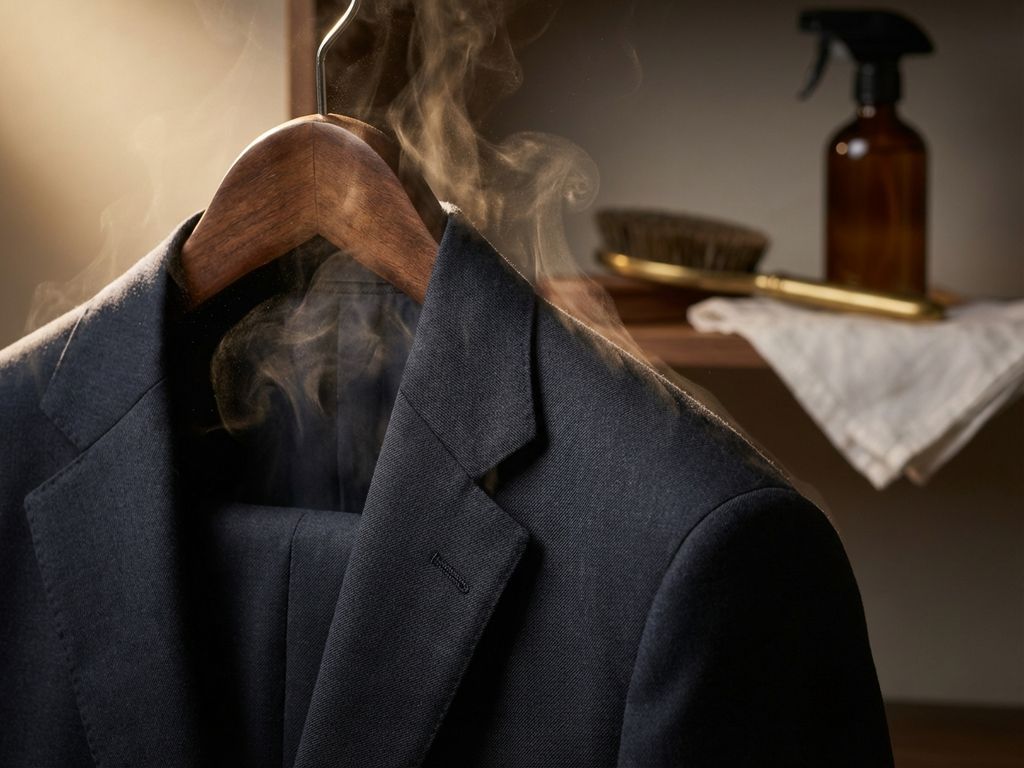
Persistent suit odours can develop from bacteria trapped in fabric fibres, body oils that penetrate the material, and moisture that gets locked into the weave. Even professional dry cleaning doesn’t always eliminate these sources because some bacteria survive chemical solvents, and certain odour-causing compounds bond with fabric molecules. Understanding why this happens helps you address the root causes and maintain fresh-smelling garments.
What causes suits to smell even after professional cleaning?
Suits develop persistent odours when bacteria, body oils, and moisture penetrate deep into fabric fibres where standard dry-cleaning chemicals can’t reach them. The dry-cleaning process primarily removes surface dirt and some stains, but it doesn’t eliminate all odour-causing bacteria or break down oils that have bonded with fabric molecules over time.
The science behind this involves several factors working together. When you wear a suit, your body produces oils and perspiration that seep into the fabric. These create an ideal environment for bacteria to grow, especially in areas like the underarms, collar, and back where contact is most frequent. Some bacteria form protective biofilms that help them survive the dry-cleaning process.
Different cleaning methods also affect odour removal. Traditional dry cleaning uses perchloroethylene or other solvents that excel at removing grease and stains but aren’t designed to kill all bacteria. The cleaning temperature and duration may not be sufficient to eliminate stubborn odour sources. Additionally, if the cleaning equipment isn’t properly maintained, it can actually transfer odours between garments.
Fabric construction plays a role too. Tightly woven fabrics can trap odours more effectively than loose weaves, while fabric treatments and finishes can either help or hinder odour retention. Natural fibres like wool have microscopic scales that can harbour bacteria, making complete odour removal more challenging.
Why do certain fabrics hold onto odours more than others?
Natural fibres like wool and cotton absorb moisture more readily than synthetic materials, creating better conditions for bacterial growth and odour retention. Wool’s protein structure and cotton’s cellulose fibres both have microscopic spaces and surface textures that trap odour-causing particles more effectively than smooth synthetic fibres.
The molecular structure of different fabrics determines how they interact with odour-causing substances. Wool fibres have scales and a complex protein structure that can chemically bond with certain odour compounds. Cotton’s absorbent nature means it soaks up body oils and perspiration, which then provide nutrients for bacteria. These natural materials also tend to retain moisture longer, extending the time bacteria have to multiply.
Synthetic fabrics like polyester have smoother surfaces that don’t trap particles as easily. However, they can develop different odour problems. Polyester tends to hold onto oils more tenaciously once they penetrate the fibre, and some synthetic materials can develop a permanent smell over time due to chemical breakdown of the fibres themselves.
Fabric density and weave pattern significantly affect odour retention. Tightly woven fabrics create more spaces for bacteria and particles to hide, while loose weaves allow better air circulation that can help prevent odour buildup. The thread count and finishing treatments applied during manufacturing also influence how readily a fabric accepts and releases odours.
Blended fabrics combine characteristics of their component fibres. A wool–polyester blend might absorb less moisture than pure wool but could still retain odours due to the wool content. Understanding your suit’s fabric composition helps you choose appropriate garment-care strategies.
How can you tell if the smell is coming from the suit or something else?
Isolate your suit from other items and hang it in a well-ventilated, neutral-smelling space for several hours. If the odour persists when you smell the fabric directly, particularly around high-contact areas like the collar and underarms, the smell is coming from the suit itself rather than environmental sources.
Check your storage area thoroughly before assuming the suit is the problem. Wardrobes, closets, and garment bags can develop musty odours from humidity, poor ventilation, or other stored items. Remove everything from the storage space and clean it completely, then test whether the suit still smells when stored elsewhere.
Examine other garments stored in the same area. If multiple items smell similar, the problem is likely environmental rather than specific to one suit. Look for signs of dampness, mould, or accumulated dust that could be transferring odours to your clothes.
Consider external factors that might be affecting your perception. Strong scents from cologne, fabric softeners, or household products can linger in fabric and mask or combine with other odours. Sometimes what seems like a suit problem is actually scent layering from multiple sources.
Test specific areas of the suit systematically. Smell the jacket separately from the trousers, and pay attention to different parts of each garment. Odours often concentrate in specific zones like the collar, cuffs, and areas where the fabric touches your body most directly. This targeted approach helps you identify whether the entire suit needs treatment or just certain sections.
What are the most effective ways to remove odours from suits at home?
Steam treatment is the safest and most effective home method for eliminating suit odours. Hang your suit in a bathroom during a hot shower, or use a handheld steamer to treat the fabric directly. The heat and moisture help kill bacteria while the steam penetrates fibres to release trapped odours without damaging the suit’s construction.
Proper airing techniques provide excellent results for mild to moderate odours. Hang your suit on quality hangers in a well-ventilated area away from direct sunlight for 24–48 hours. Fresh air circulation helps moisture evaporate and allows trapped odours to dissipate naturally. Outdoor airing works particularly well on dry, breezy days.
Natural deodorizers offer gentle odour absorption without harsh chemicals. Place activated charcoal, baking soda, or white vinegar in small containers near your hanging suit overnight. These materials absorb odour-causing compounds from the air around the fabric. Never apply these substances directly to the suit, as they can leave stains or residues.
For stubborn odours, create a vodka spray solution using plain vodka in a spray bottle. Lightly mist the affected areas and allow the suit to air-dry completely. The alcohol kills bacteria and evaporates quickly, taking odours with it. This method works particularly well on wool suits but should be tested on an inconspicuous area first.
Proper storage solutions prevent odour return after treatment. Ensure your suit is completely dry before storing it, use breathable garment bags, and include moisture-absorbing packets in your wardrobe. Cedar blocks or lavender sachets provide natural odour prevention while protecting against moths.
How do you prevent suits from developing odours in the first place?
Wear quality undershirts and ensure proper fit to create a barrier between your skin and the suit fabric. This prevents body oils and perspiration from directly contacting the suit material. Choose moisture-wicking undershirts made from natural fibres that absorb sweat effectively while allowing air circulation.
Implement a rotation schedule that gives each suit adequate recovery time between wears. Fabric needs 24–48 hours to fully air out and release moisture after wearing. Having multiple suits in rotation ensures each garment gets proper rest time, significantly reducing odour buildup over time.
Control humidity in your storage area using dehumidifiers or moisture-absorbing products. High humidity creates ideal conditions for bacterial growth and mould development. Maintain humidity levels between 45–55% in your wardrobe area, and ensure adequate ventilation to prevent stagnant air.
Develop proper hanging and storage habits immediately after wearing. Remove your suit promptly, hang it on proper suit hangers that maintain the garment’s shape, and allow it to air out before returning it to your wardrobe. Never store a suit immediately after wearing without giving it time to breathe.
Regular maintenance habits prevent small problems from becoming major odour issues. Brush your suits regularly with a quality clothes brush to remove surface dirt and lint. Address stains immediately rather than letting them set into the fabric. Schedule professional cleaning based on wear frequency rather than waiting for visible soiling.
Environmental factors in your daily routine also matter. Avoid wearing suits in heavily scented environments when possible, and be mindful of activities that cause excessive perspiration. When travelling, pack suits with tissue paper and cedar sachets to maintain freshness during transport.
Understanding suit care and proper garment maintenance helps you preserve your investment while ensuring you always look and smell professional. Quality suits deserve quality care, and preventing odours is much easier than removing them after they’ve developed. When you’re ready to invest in expertly crafted suits that respond beautifully to proper care, we’re here to help you create garments that maintain their freshness and elegance for years to come.
Articles connexes
- Quel est le meilleur moment pour se faire aider par un troupeau ?
- Comment repasser un smoking sans abîmer les détails en satin ?
- Comment restaurer la forme des épaules d'un costume écrasé ?
- Quelle est la meilleure façon d'aérer un costume entre les différents portages ?
- Comment choisir des chaussettes qui s'accordent avec votre costume de mariage ?
