



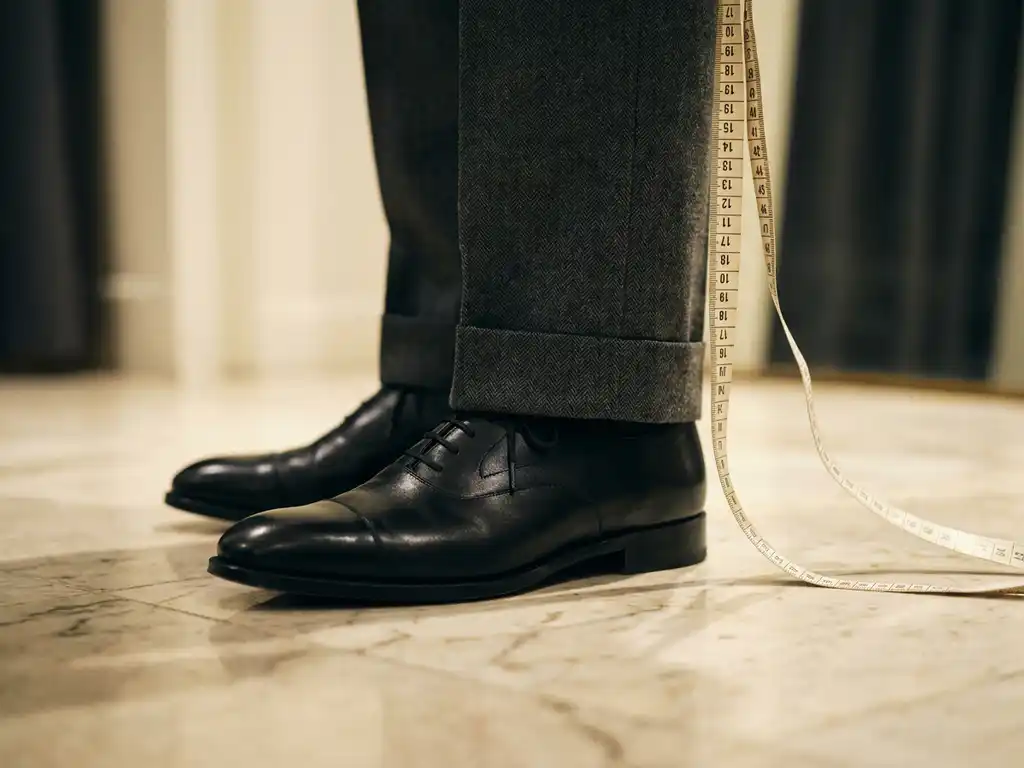
Wedding suit trousers should have a quarter break, where the fabric creates a small horizontal fold at the front when you stand naturally. This length allows about half an inch of trouser fabric to rest on your dress shoes, creating an elegant silhouette that’s neither too short nor too long. The proper length ensures your wedding suit looks polished and professional while maintaining comfort throughout your special day.
Quelle est la longueur idéale pour un pantalon de costume de mariage ?
The proper length for wedding suit trousers creates a quarter break at the front of each leg when you’re standing in your dress shoes. This means the trouser hem should sit approximately half an inch below where your leg meets your shoe, allowing a subtle horizontal crease to form across the front of the trouser.
For formal wedding suits, this length strikes the perfect balance between elegance and practicality. The trouser should just touch the top of your shoe’s heel when viewed from behind, while creating that gentle fold at the front. This measurement works particularly well with traditional wedding suit colours like navy, charcoal, or black, as it maintains the clean lines that formal occasions demand.
When wearing summer wedding suits in lighter fabrics like linen or cotton, you might prefer a slightly shorter length with minimal or no break. This creates a more contemporary look that works beautifully for outdoor ceremonies or beach weddings, where a relaxed elegance is often more appropriate than strict formality.
What are the different types of trouser breaks and which works best for weddings?
There are four main types of trouser breaks: no break, quarter break, half break, and full break. For weddings, a quarter break is typically the most flattering choice, as it provides elegance without appearing overly casual or excessively formal.
A no break creates a clean, modern appearance where the trouser hem sits just above the shoe. This works well for contemporary wedding styles and summer wedding suits, particularly for grooms who prefer a streamlined look. However, it can appear too casual for very formal ceremonies.
The quarter break allows a small fold of fabric to rest on the shoe, creating visual interest while maintaining sophistication. This length flatters most body types and works excellently with both slim-fit and classic-cut trousers.
A half break creates a more pronounced fold and suits men with longer legs or those wearing wider trouser styles. While acceptable for weddings, it can sometimes appear less sharp than a quarter break.
The full break, where fabric pools noticeably on the shoe, is generally too casual for wedding occasions and can make even well-fitted suits appear sloppy.
How do you measure trouser length correctly for a perfect fit?
To measure trouser length correctly, stand naturally in your wedding shoes while someone measures from your natural waist to where you want the hem to fall. Proper stance and appropriate footwear are essential for accurate measurements that will look perfect on your wedding day.
Start by wearing the exact shoes you’ll wear with your wedding suit, as heel height significantly affects trouser length. Stand with your feet shoulder-width apart and your weight evenly distributed. Avoid standing on tiptoes or slouching, as this will throw off the measurements.
Professional tailors measure from the trouser’s natural waistline (where the waistband sits) down to the desired hem length. For a quarter break, this typically means the trouser should reach about half an inch below where your ankle meets your shoe.
When trying on trousers, walk around and sit down to ensure the length works in different positions. The trouser should never expose your ankle when you’re seated or taking normal steps. If you’re between sizes, it’s generally better to go slightly longer, as trousers can always be shortened but lengthening options are limited.
Remember that trouser length can appear different depending on your posture and the trouser’s cut. Slim-fit styles may require slightly different measurements than classic cuts to achieve the same visual effect.
What factors should you consider when choosing trouser length for your wedding?
When choosing trouser length for your wedding, consider your body type, shoe style, venue formality, and personal style preferences. The combination of these factors determines the most flattering length that will photograph well and feel comfortable throughout your celebration.
Your body proportions play a significant role in determining the ideal length. Taller men can typically wear slightly longer trousers with a half break, while shorter grooms often look better with minimal break to avoid overwhelming their frame. If you have shorter legs, a no-break or quarter-break length can create the illusion of additional height.
Shoe style directly impacts how your trouser length appears. Dress shoes with higher heels require longer trousers than flat shoes. Oxford shoes pair beautifully with traditional trouser lengths, while loafers or more casual footwear might work better with shorter, contemporary cuts.
Consider your wedding venue and season when making this decision. Beach or outdoor weddings often call for summer wedding suits with shorter trouser lengths that won’t drag in sand or grass. Church ceremonies or ballroom receptions typically require more traditional formal wedding suits with classic trouser breaks.
Your personal style should also influence this choice. If you generally prefer contemporary fashion, a cleaner, shorter length might feel more authentic to you. Traditional style lovers might gravitate towards classic proportions with a proper quarter break.
How do trouser length rules differ between formal and casual wedding styles?
Formal wedding styles require precise trouser lengths with proper breaks, while casual wedding styles allow more flexibility and contemporary proportions. Black-tie events demand traditional measurements, whereas relaxed celebrations can accommodate modern, shorter cuts that reflect current fashion trends.
For black-tie and white-tie weddings, trousers should have a quarter to half break, creating elegant lines that complement the formality of the occasion. These formal wedding suits require traditional proportions that have remained consistent for decades, ensuring your photographs will look timeless.
Semi-formal weddings offer more flexibility in trouser length. You can choose between a classic quarter break or a more contemporary minimal break, depending on your personal style and the specific venue. This is where many grooms find the perfect balance between tradition and modernity.
Casual and outdoor weddings allow for the most creativity in trouser length. Summer wedding suits often feature shorter trousers with little to no break, creating a fresh, relaxed appearance that’s perfect for beach ceremonies or garden parties. These lengths work particularly well with lighter fabrics and colours.
Destination weddings in tropical locations often call for cropped trouser styles that sit well above the shoe, providing comfort in warm weather while maintaining a polished appearance. This approach works beautifully with linen suits and other breathable fabrics designed for warm-weather celebrations.
Getting your wedding suit trouser length right makes a significant difference to your overall appearance and confidence on your special day. The key lies in balancing traditional tailoring principles with your personal style and the specific requirements of your wedding celebration. Whether you choose a classic quarter break for a formal ceremony or a contemporary shorter length for a relaxed outdoor affair, proper fitting ensures you’ll look and feel your absolute best. At Café Costume, we understand that every groom deserves perfectly fitted trousers that complement both their body type and wedding style, creating a look that’s both timeless and personally meaningful.
