



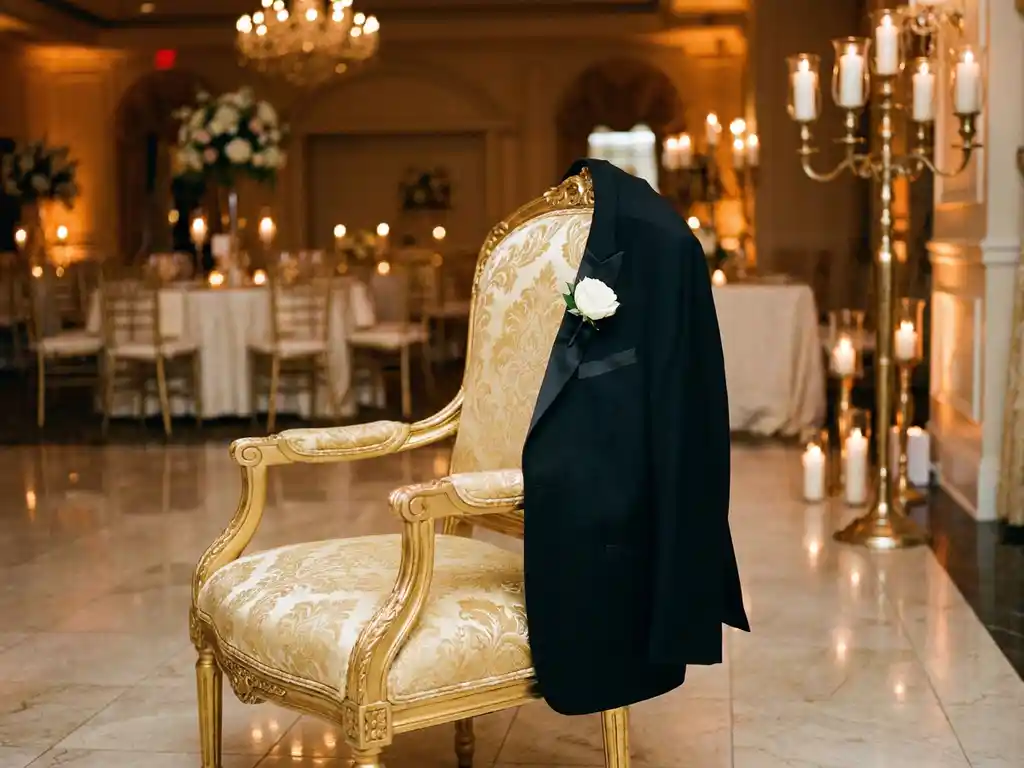
Some weddings require black tie dress codes to create a specific atmosphere of elegance and formality that matches the venue, time, or significance of the celebration. Black tie indicates one of the most formal levels of evening wear, signalling to guests that this is a sophisticated affair where traditional formal attire is expected. The dress code helps ensure visual cohesion and respects the couple’s vision for their special day.
What does black tie actually mean for wedding guests?
Black tie is among the most formal dress codes for evening events, requiring men to wear tuxedos with black bow ties and women to wear formal evening gowns or cocktail dresses. This dress code sits above cocktail attire and standard formal wear in the hierarchy of wedding dress expectations.
For men, black tie means a black tuxedo jacket with matching trousers featuring a satin stripe down the side, a white dress shirt with a wing or turndown collar, a black bow tie, black patent leather shoes, and optional accessories like cufflinks and a pocket square. The tuxedo should be well fitted and traditionally black, though midnight navy is sometimes acceptable.
Women have more flexibility within black tie requirements. Appropriate options include floor-length evening gowns, elegant cocktail dresses that fall below the knee, or sophisticated separates in luxurious fabrics. The key is choosing attire that feels formal and refined. Avoid overly revealing styles, bright white (which could compete with the bride), or casual fabrics like cotton or denim.
Black tie differs from other dress codes in its specific requirements. Unlike “formal” or “cocktail” attire, black tie has established traditions that date back centuries. The dress code ensures everyone understands exactly what level of formality to expect, creating a cohesive and elegant atmosphere for the celebration.
Why do couples choose black tie dress codes for their weddings?
Couples choose black tie dress codes to create a sophisticated, elegant atmosphere that matches their vision for a formal celebration. This dress code elevates the entire event, making it feel more special and memorable for both the couple and their guests.
Venue considerations often drive the black tie decision. Upscale hotels, historic mansions, art galleries, and luxury estates naturally call for formal attire that complements the sophisticated setting. A black tie dress code ensures guests dress appropriately for these elegant spaces, creating visual harmony between the attendees and the venue.
Evening celebrations particularly suit black tie requirements. Weddings starting after 6 PM traditionally call for more formal attire, and black tie perfectly matches the elegance of evening celebrations. The dress code also works well for autumn and winter weddings, when formal fabrics and darker colours feel seasonally appropriate.
Family traditions and cultural expectations influence many couples’ dress code decisions. Some families have traditions of formal celebrations, or the couple may want to honour their heritage through a sophisticated affair. Additionally, milestone celebrations like second marriages or vow renewals often call for elevated formality.
The desire to create a specific photographic aesthetic also motivates black tie choices. Formal attire photographs beautifully and creates timeless images that won’t look dated years later. When everyone dresses formally, wedding photos have a cohesive, elegant appearance that many couples prefer.
How do you know if a wedding is truly black tie or just formal?
Wedding invitations should clearly state “Black Tie” if that’s the expected dress code, while “Formal” or “Cocktail” indicates less strict requirements. When the dress code isn’t explicitly stated, look at context clues like venue, timing, and invitation style to gauge expectations.
True black tie events will specifically use the phrase “Black Tie” on the invitation. This precise language indicates the traditional tuxedo and evening gown requirements. If you see “Black Tie Optional,” it means black tie attire is preferred but not mandatory, and formal business attire is acceptable.
“Formal” or “Formal Attire” allows more flexibility than black tie. Men can wear dark business suits instead of tuxedos, and women can choose from a wider range of dress styles and lengths. “Cocktail” attire is less formal still, typically meaning a suit and tie for men and cocktail dresses for women.
Context clues help when dress codes aren’t clearly specified. Evening weddings at upscale venues like luxury hotels or country clubs often expect formal attire even without explicit instructions. Wedding websites sometimes provide additional guidance about dress expectations or venue requirements.
When in doubt, contact the couple or wedding party directly. It’s better to ask than to arrive inappropriately dressed. You can also research the venue online to understand its typical dress expectations or ask other guests about their attire plans.
Consider the couple’s general style and previous events they’ve hosted. Couples who typically dress formally or have sophisticated tastes likely expect elevated attire from their guests, even if not explicitly stated.
What happens if you don’t follow the black tie dress code at a wedding?
Not following a black tie dress code creates social awkwardness for both you and the hosts, making you stand out inappropriately and potentially showing disrespect for the couple’s wishes. While you’re unlikely to be turned away, underdressing can make you feel uncomfortable and affect wedding photos.
Underdressing at a black tie wedding makes you visibly different from other guests, which can feel embarrassing and uncomfortable throughout the celebration. You might feel self-conscious during photos, dancing, or mingling, as your casual attire contrasts sharply with the formal atmosphere the couple worked to create.
The couple may feel disappointed that their dress code wasn’t respected, especially if they specifically chose black tie to create a particular aesthetic for their special day. Wedding photography can be affected when some guests aren’t dressed appropriately, potentially disrupting the elegant visual cohesion they planned.
Overdressing is generally less problematic than underdressing, but wearing white tie (the most formal dress code) to a black tie event can also seem inappropriate. The key is matching the specified level of formality rather than exceeding or falling short of expectations.
If you realise you’re inappropriately dressed upon arrival, focus on a graceful recovery. Apologise briefly to the couple if appropriate, but don’t make it a big issue that detracts from their celebration. Stay positive, participate fully in the festivities, and remember that your presence matters more than perfect attire.
For future events, plan ahead by checking dress codes carefully and asking questions when anything is unclear. Keep a formal outfit ready for special occasions, or consider renting appropriate attire when you don’t own black tie clothing. Most couples appreciate guests who make an effort to honour their dress code requests.
Understanding black tie requirements helps you navigate formal wedding invitations with confidence. Whether you need costumes de mariage for a summer celebration or formal wedding suits for an elegant evening affair, the key is respecting the couple’s vision while ensuring you feel comfortable and appropriately dressed. We specialise in creating perfectly fitted wedding suits that meet any dress code requirement, helping you look and feel your best for these special celebrations.
Articles connexes
- Qu'est-ce qui vous pousse à vous engager sur un terrain de golf ?
- Quelle est l'importance des boutons de manchette dans le style d'un costume de mariage ?
- Dois-je faire faire un costume sur mesure pour mon mariage ?
- Le paquet de la marine : la plus belle carcasse dans chaque garde-robe
- 3 raisons pour lesquelles les costumes de marié sur mesure l'emportent sur les costumes standard
