



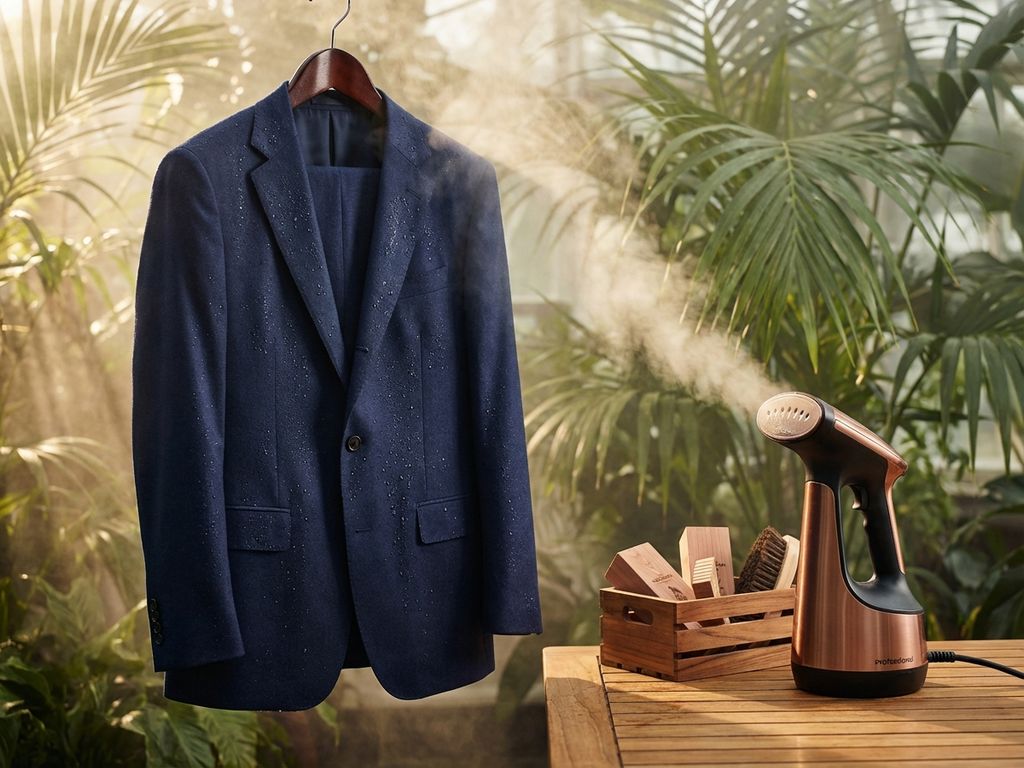
Caring for suits in humid climates requires specific strategies to prevent moisture damage, odour buildup, and fabric deterioration. High humidity affects different suit fabrics in different ways, making proper storage, drying, and fabric selection important for maintaining your garments’ quality and appearance. Understanding how humidity impacts suits helps you implement effective care practices that preserve your investment.
What happens to suits in humid climates?
Humidity causes suits to absorb moisture from the air, leading to wrinkle formation, odour retention, and potential fabric damage. Wool naturally absorbs up to 30% of its weight in moisture, while synthetic blends react differently. Extended exposure to high humidity can result in mould growth, mildew formation, and permanent fabric weakening.
Different suit fabrics respond uniquely to humid conditions. Natural fibres like wool and cotton are hygroscopic, meaning they absorb and release moisture from the environment. This characteristic can be beneficial, as it helps regulate body temperature, but it also means these fabrics hold onto sweat and environmental moisture for longer.
The structure of your suit also plays a role in how humidity affects it. Canvas construction and padding can trap moisture between layers, creating ideal conditions for bacterial growth and unpleasant odours. The lining material significantly impacts how quickly moisture moves through the garment and how long it takes to dry completely.
Wrinkle formation accelerates in humid conditions because moisture weakens the fabric’s ability to maintain its pressed shape. The combination of body heat, movement, and environmental humidity creates the perfect storm for creasing that becomes increasingly difficult to remove with standard pressing techniques.
Understanding these effects helps you take preventive action through proper suit maintenance routines. Regular rotation between suits, immediate post-wear care, and appropriate storage methods significantly reduce humidity-related damage and extend your garments’ lifespan.
How do you store suits properly in humid environments?
Proper suit storage in humid climates involves climate control, adequate ventilation, and moisture management. Use breathable garment bags, cedar accessories, and dehumidifiers to maintain optimal conditions. Avoid plastic covers and ensure sufficient space between garments for air circulation around each suit.
Temperature and humidity control form the foundation of effective suit storage. Aim to maintain your wardrobe area at 60–70°F with 45–55% relative humidity. A small dehumidifier in your wardrobe or dressing room helps achieve these conditions, particularly during humid seasons or in naturally damp environments.
Proper hanging techniques prevent fabric stress and promote air circulation. Use quality wooden hangers that match your jacket’s shoulder width. Cedar hangers provide additional moisture absorption and natural moth deterrence. Avoid wire hangers completely, as they create pressure points and do not provide adequate support.
Ventilation strategies make a significant difference in preventing moisture buildup. Leave space between suits on the rail, ideally 2–3 inches between garments. If your wardrobe has doors, open them periodically to allow air exchange. Consider installing small battery-operated fans for wardrobes in particularly humid locations.
Moisture absorbers placed strategically throughout your wardrobe help maintain dry conditions. Silica gel packets, activated charcoal, or commercial wardrobe dehumidifiers work effectively. Replace or recharge these regularly according to the manufacturer’s instructions to maintain their effectiveness.
Garment bags should be breathable cotton or canvas rather than plastic. Plastic traps moisture and creates condensation, leading to the exact problems you are trying to prevent. Quality fabric garment bags allow air circulation while protecting garments from dust and light exposure.
What’s the best way to dry suits after wearing them in humidity?
After wearing suits in humid conditions, hang them immediately on proper hangers in a well-ventilated area away from direct heat or sunlight. Allow 24–48 hours of air drying before returning them to the wardrobe. Use fans or dehumidifiers to accelerate the drying process without damaging the fabric structure.
Timing matters significantly when drying suits that have been exposed to humidity. Remove the jacket as soon as possible after wear and hang it in an area with good air circulation. The longer moisture remains trapped in the fabric, the more likely odours and bacteria are to develop. This immediate action prevents most humidity-related problems.
Positioning your suit correctly during the drying process ensures even moisture removal. Hang jackets with all buttons undone and pockets emptied. Turn the jacket inside out occasionally to ensure the lining dries completely. Trouser positioning should allow air to circulate around the entire garment, either hung full-length or draped over a wide hanger.
Room selection affects drying efficiency significantly. Choose areas with natural air circulation, such as near windows or in rooms with ceiling fans. Avoid bathrooms, laundry rooms, or other naturally humid spaces. A spare bedroom or dressing area typically provides ideal conditions for drying suits.
Accelerating the process safely requires careful attention to temperature and airflow. Place a small fan nearby to increase air circulation, but avoid direct heat sources like radiators or hair dryers. These can cause fabric shrinkage, colour fading, or damage to the suit’s construction. Room-temperature air movement provides the safest and most effective drying.
Helpful tools include moisture-wicking hangers, cedar accessories, and small dehumidifiers. Some specialised suit hangers feature ventilation channels or moisture-absorbing materials. These investments pay off through better garment care and extended suit life, particularly in consistently humid climates.
Which suit fabrics handle humidity better than others?
Wool blends with synthetic fibres handle humidity better than pure wool, offering moisture-wicking properties while maintaining breathability. Tropical wool, mohair blends, and performance fabrics resist moisture absorption and dry faster. Pure cotton and linen suits struggle most in humid conditions due to their high moisture absorption rates.
Natural fibre performance varies significantly in humid conditions. Traditional wool absorbs moisture readily but also releases it efficiently when given proper drying time. However, this absorption can lead to temporary shape loss and odour retention. Merino wool performs better than standard wool due to its finer fibres and natural antimicrobial properties.
Synthetic blends offer superior humidity management through engineered moisture-wicking properties. Wool–polyester blends combine wool’s natural breathability with synthetic fibres’ quick-drying characteristics. These fabrics maintain their shape better and resist wrinkle formation even in high-humidity conditions.
Performance fabrics represent the newest category of suit materials designed specifically for challenging climates. These often incorporate moisture-wicking technology, antimicrobial treatments, and enhanced breathability. While maintaining a professional appearance, they function more like athletic wear in their moisture-management capabilities.
Tropical-weight fabrics provide another excellent option for humid climates. These lighter-weight wools and wool blends allow better air circulation while maintaining the sophisticated appearance expected in business settings. The reduced fabric density means less moisture retention and faster drying times.
Fabric weave affects humidity performance as much as fibre content. Open weaves like fresco or hopsack allow better air circulation than tight twills. The trade-off involves durability and formality, as more open weaves may appear less formal but perform better in humid conditions.
When selecting suit fabrics for humid climates, consider your specific needs regarding formality, frequency of wear, and local climate patterns. A consultation with an experienced tailor helps you understand how different fabric choices will perform in your particular environment and usage patterns.
Proper suit care in humid climates combines smart fabric choices, effective storage solutions, and consistent maintenance routines. These practices protect your investment while ensuring you always look professional, regardless of environmental challenges. At Café Costume, we understand how climate affects garment performance and can guide you through fabric selection and care practices that work best for your specific needs and environment.
