



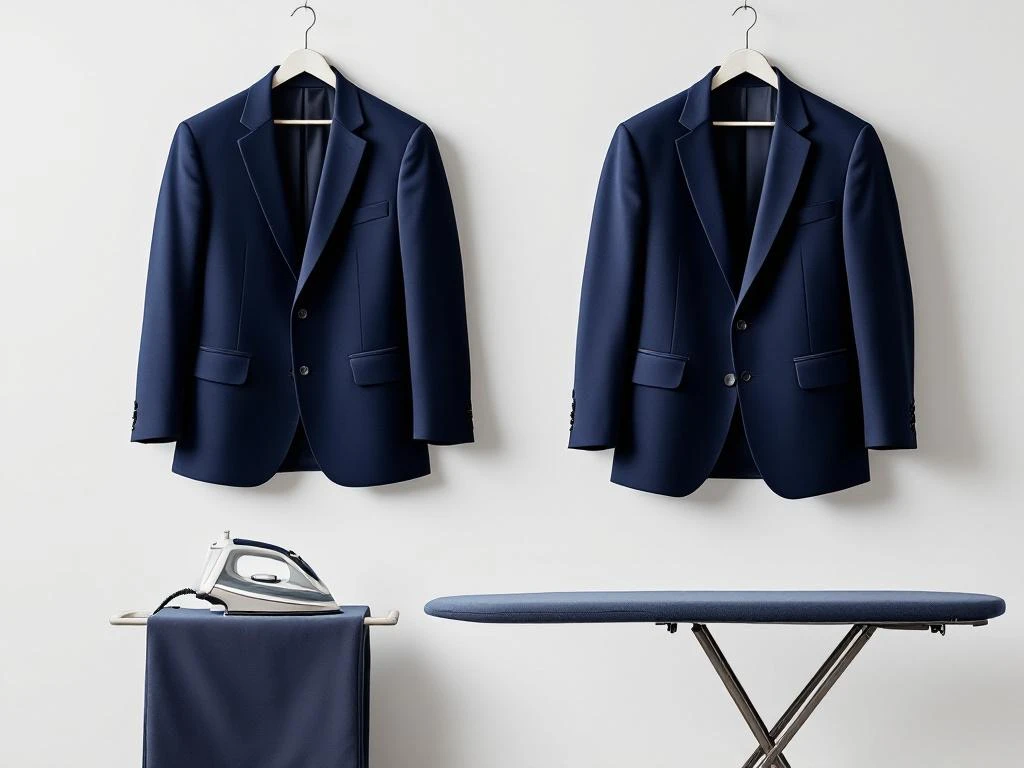
Pressing and ironing are two different techniques for removing wrinkles from suits, with pressing being the preferred method for tailored garments. Pressing involves applying heat and pressure without movement, while ironing uses a sliding motion across the fabric. Pressing preserves the suit’s structure and prevents damage to delicate fabrics. Understanding these differences helps you maintain your suits properly and decide when professional care is necessary.
What’s the actual difference between pressing and ironing a suit?
Pressing uses downward pressure and steam without moving the iron, while ironing involves sliding the iron across fabric surfaces. Pressing applies heat and moisture vertically to the garment, allowing the fabric to relax and reshape naturally. Ironing uses horizontal movement that can stretch fibres and distort the suit’s carefully constructed shape.
The temperature approach differs significantly between these methods. Suit pressing typically uses lower, more controlled heat settings with steam to gently coax wrinkles out of wool and other delicate fabrics. The iron remains stationary on each section for several seconds before lifting and moving to the next area.
Ironing applies continuous heat while moving across the fabric, which works well for cotton shirts but can damage suit materials. The sliding motion can create unwanted shine on wool surfaces and stretch the fabric beyond its intended shape. This is particularly problematic with structured suit jackets that rely on precise tailoring for their fit.
Pressure distribution also varies considerably. Pressing concentrates weight evenly across a specific area, allowing the fabric’s natural properties to respond to heat and moisture. Ironing distributes pressure unevenly as you move the iron, potentially creating new creases while attempting to remove others.
Why does pressing work better than ironing for suits?
Pressing preserves the suit’s internal structure and prevents fabric damage that commonly occurs with traditional ironing methods. Suits contain canvas, padding, and interfacing that can shift or distort when subjected to the sliding motion of ironing. Pressing maintains these structural elements while effectively removing wrinkles.
Wool fabrics, commonly used in quality suits, respond better to the stationary heat and steam of pressing. The fibres can relax naturally without being forced into unnatural positions. This prevents the shiny appearance that often develops when wool is ironed with sliding movements.
The controlled application of moisture through steam pressing helps restore the fabric’s natural drape and texture. Steam penetrates the fibres more effectively when applied with steady pressure rather than quick passes with an iron. This deeper moisture penetration allows stubborn wrinkles to release completely.
Professional suit pressing also respects the garment’s construction lines and seams. Pressing allows you to work around these areas carefully, maintaining the suit’s intended silhouette. Ironing can accidentally flatten important design elements like lapel rolls or trouser creases that give the suit its distinctive shape.
Temperature control becomes more precise with pressing techniques. You can adjust heat and steam levels for different fabric areas without the risk of overheating that comes with continuous iron movement. This prevents scorching and fabric damage while achieving better wrinkle removal.
How do you properly press a suit at home?
Home suit pressing requires a quality steam iron, a pressing cloth, and proper technique to avoid damaging your garment. Set your iron to the wool setting (medium heat) and ensure the steam function works properly. Always use a pressing cloth between the iron and suit fabric to prevent direct contact.
Start with the suit trousers, laying them flat on an ironing board. Place the pressing cloth over the fabric and apply the iron with firm, steady pressure for 3–5 seconds before lifting and moving to the next section. Work from the waistband down, paying special attention to the crease lines.
For the suit jacket, begin with the back panel laid flat. Press the shoulders carefully, using the iron’s tip to work around seams and construction details. The lapels require special attention – press from the inside when possible to maintain their natural roll and prevent flattening.
Sleeve pressing needs particular care to avoid creating unwanted creases. Lay each sleeve flat and press from the shoulder seam toward the cuff. Use the pressing cloth throughout and avoid pressing directly over buttons or decorative elements that could leave impressions in the fabric.
Steam application should be generous but controlled. Allow the steam to penetrate the fabric before applying pressure, then lift the iron straight up rather than sliding it away. This prevents stretching and maintains the fabric’s natural texture.
After pressing each section, allow the fabric to cool and dry completely before moving the garment. This helps set the pressed shape and prevents new wrinkles from forming immediately. Hang the suit properly on shaped hangers while it finishes cooling.
When should you take your suit to a professional instead?
Professional pressing becomes necessary for expensive suits, delicate fabrics, or when home attempts haven’t achieved satisfactory results. Luxury fabrics like cashmere, silk linings, or specialty weaves require professional equipment and expertise to avoid damage. If your suit cost more than £500, professional care is often worthwhile.
Structured jackets with significant canvas work or padding should go to professionals when heavily wrinkled. These garments contain multiple fabric layers that require specific pressing techniques to maintain their shape. Home pressing can inadvertently damage internal construction that’s impossible to repair.
Stubborn wrinkles that resist home pressing attempts indicate the need for professional steam-pressing equipment. Commercial steamers and presses apply more consistent heat and moisture than domestic irons can achieve. Professionals also have specialised tools for working around construction details.
Time constraints often make professional pressing practical. If you need a suit ready quickly for an important event, professionals can typically complete the work within 24 hours. They also have experience with various fabric types and can adjust techniques accordingly.
Stains or odours combined with wrinkles require professional attention. Home pressing can set stains permanently or spread them further into the fabric. Professional cleaners can address both issues simultaneously using appropriate solvents and techniques.
When in doubt about your suit’s fabric content or care requirements, professional consultation prevents costly mistakes. Many dry cleaners offer pressing-only services that cost less than full cleaning while providing expert fabric care. To learn more about our professional suit care process, you can explore our comprehensive service offerings.
Understanding the difference between pressing and ironing helps you maintain your suits properly while avoiding common fabric damage. Suit pressing preserves the garment’s structure and appearance far better than traditional ironing methods. Whether you choose home care or professional services depends on your suit’s value, fabric type, and your comfort level with the techniques involved. For those preparing for special occasions, proper suit maintenance becomes even more crucial. At Café Costume, we understand that proper suit care extends the life and appearance of your tailored garments, keeping them looking sharp for years to come. If you’d like to learn more about our commitment to quality or need specific guidance on suit care, feel free to get in touch with our team. Our expertise in professional garment care ensures your suits receive the attention they deserve.
