



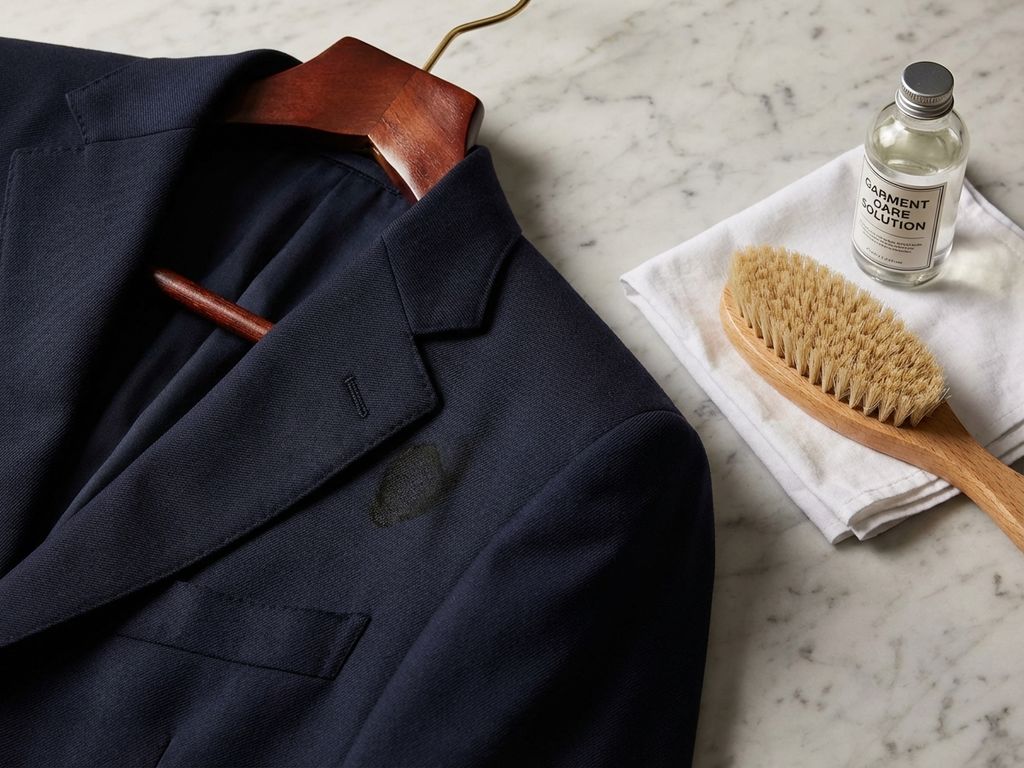
Treating oil-based stains on suits requires immediate action and proper technique to prevent permanent damage. Blot the stain gently with a clean cloth to absorb excess oil, avoiding rubbing, which spreads the stain. Apply cornstarch or talcum powder to absorb remaining oil, let it sit for 10–15 minutes, then brush it off gently. For fresh stains, these quick steps often prevent the need for professional cleaning.
What should you do immediately when oil spills on your suit?
Act quickly by blotting the stain with a clean, dry cloth or paper towel to absorb as much oil as possible. Never rub or press hard, as this pushes the oil deeper into the fabric fibres and makes the stain larger. Blot from the outside edges of the stain toward the centre to prevent spreading.
Remove any excess oil or food particles with a spoon or the edge of a knife, scraping gently across the surface. Avoid pressing down, which forces oil into the weave. If you’re dining out, ask for club soda or plain water to help dilute the stain before it sets.
Apply an absorbent powder immediately if available. Cornstarch, talcum powder, or even table salt can help draw oil from the fabric. Sprinkle generously over the stain, let it sit for 10–15 minutes, then brush it off gently with a soft brush or cloth. This emergency treatment often prevents permanent staining.
Avoid these common mistakes that worsen oil stains: using hot water (which sets the stain), applying soap directly to the fabric, or using napkins with lotion or perfume. Heat from hand dryers or direct sunlight also sets oil stains permanently.
How do you remove oil-based stains from different suit fabrics?
Wool suits require gentle treatment with cool water and mild detergent, while cotton and linen can handle slightly more aggressive cleaning methods. Synthetic blends often respond well to dish soap, but always test any cleaning solution on an inconspicuous area before applying it to the stain.
For wool suits, mix a small amount of gentle wool detergent with cool water. Apply it with a clean cloth, working from the outside of the stain inward. Rinse with a damp cloth and allow the suit to air-dry completely. Wool’s natural oils help resist stains, but the delicate fibres require careful handling.
Cotton and linen suits can handle dish soap treatment. Apply a small amount of grease-cutting dish soap directly to the stain, work it in gently with your fingers, then rinse with cool water. These natural fibres are more durable but can shrink with hot water or aggressive rubbing.
Synthetic blends often respond to a mixture of dish soap and white vinegar. Combine equal parts and apply the solution to the stain, let it sit for 10 minutes, then rinse thoroughly. Synthetic fibres resist staining but can be damaged by harsh chemicals or excessive heat.
Seek professional help for expensive suits, vintage fabrics, or stains that don’t respond to gentle home treatment. Proper suit care and maintenance often require professional expertise to preserve the garment’s structure and appearance.
What household items can safely treat oil stains on suits?
Dish soap, white vinegar, cornstarch, and talcum powder are safe, effective options for treating oil stains on most suit fabrics. These common household products work without damaging delicate materials when used properly. Always test them on a hidden area before treating visible stains.
Grease-cutting dish soap breaks down oil molecules effectively. Use brands without added moisturisers or fragrances, which can leave residues. Apply a small amount directly to the stain, work it in gently with clean fingers, then rinse with cool water. This method works particularly well on fresh stains.
White vinegar helps break down oil while being gentle on fabrics. Mix equal parts white vinegar and water, apply with a clean cloth, then rinse thoroughly. Never use coloured or flavoured vinegars, which can stain light fabrics.
Absorbent powders like cornstarch, talcum powder, or baking soda draw oil from fabric fibres. Sprinkle generously over fresh stains, let them sit for 15–30 minutes, then brush them off gently. This technique works best on recent spills before the oil penetrates deeply.
Avoid household items that can damage suits: bleach (which weakens fibres), fabric softener (which leaves residues), hot water (which sets stains), and coloured soaps (which can stain). Proper garment care means using only gentle, colourless cleaning agents that won’t compromise the fabric’s integrity.
When should you take an oil-stained suit to a professional cleaner?
Take your suit to a professional cleaner if home treatment doesn’t remove the stain completely, if the fabric is delicate or expensive, or if the stain has set for more than 24 hours. Professional cleaning equipment and solvents can handle stubborn stains that household methods cannot address safely.
Expensive suits, particularly those made from fine wool, silk, or luxury blends, deserve professional attention from the start. The cost of professional cleaning is minimal compared to replacing a damaged garment. Vintage or structured suits with canvas interfacing also require professional handling to maintain their shape.
Large stains, multiple stains, or stains combined with other substances (wine, sauce, makeup) need professional treatment. Home methods work best on small, fresh, simple oil stains. Complex staining requires specialised solvents and techniques.
When visiting the cleaner, point out the stain clearly and explain what caused it. Mention any home treatments you’ve attempted, as some cleaning products can interfere with professional solvents. Be honest about how long the stain has been present.
Transport your stained suit carefully to prevent the oil from spreading. Hang it properly or lay it flat, avoiding folds through the stained area. The sooner you reach professional help, the better the chances of complete stain removal.
How can you prevent oil-based stains on your suits in the future?
Prevention focuses on careful eating habits, protective measures during meals, and proper suit storage. Wearing a napkin tucked into your collar during messy meals, choosing foods that are less likely to splatter, and keeping a stain-removal pen handy can prevent most oil-based accidents.
When dining in your suit, order carefully. Avoid dishes with heavy sauces, greasy foods, or items requiring messy eating techniques. Pasta with oil-based sauces, fried foods, and salad dressings are common culprits. If you must eat these foods, consider removing your jacket.
Carry a small stain-removal pen or packet of absorbent powder in your briefcase or car. These emergency tools can address spills immediately, preventing stains from setting. Many suit-cleaning emergencies happen away from home, making portable solutions valuable.
Proper suit storage prevents oil transfer from other garments or environmental sources. Use breathable garment bags, ensure adequate spacing between clothes, and avoid storing suits near kitchen areas where cooking oils can settle on fabrics.
Regular suit maintenance includes professional cleaning every four to six wears for business suits, and less frequently for occasional wear. This routine removes accumulated oils from skin, food, and the environment before they become visible stains. Professional cleaning also maintains the suit’s structure and appearance.
Quality suit care extends your garments’ lifespan significantly. Investing in proper cleaning, storage, and handling techniques protects your wardrobe investment while ensuring you always look professional and polished.
Oil stains don’t have to spell disaster for your favourite suits. Quick action, proper technique, and knowing when to seek professional help can save most garments from permanent damage. Remember that prevention remains your best strategy, but when accidents happen, these methods will help you respond effectively. At Café Costume, we understand that proper suit maintenance is part of looking your best, which is why we’re always happy to discuss care techniques during our personal style consultations.
