



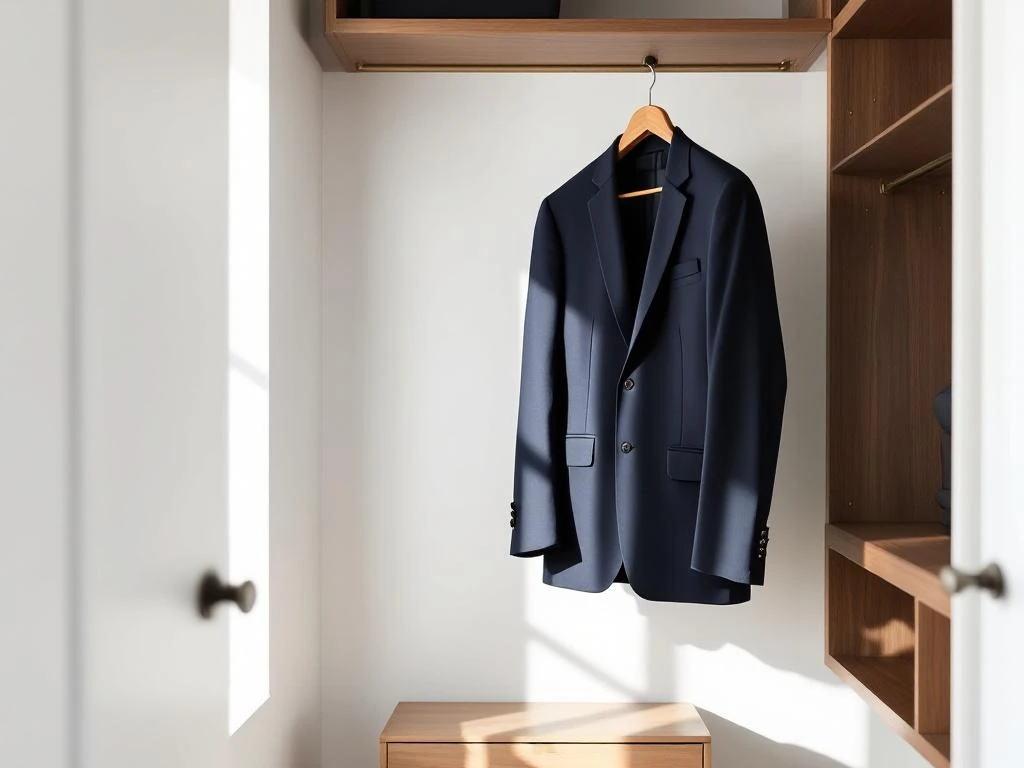
Proper suit storage protects your investment by maintaining fabric quality, preserving the garment’s shape, and preventing damage from moisture, pests, and wrinkles. A well-stored suit can last decades, while poor storage ruins even the finest tailored garments within months. The way you store your suits directly affects how long they look sharp and how much you’ll spend replacing them over time.
What happens to your suit when you store it incorrectly?
Poor storage causes visible damage that ruins your suit’s appearance and structure. Fabric develops permanent creases, shoulders lose their shape and form dimples, wool fibres deteriorate from compression, and moths or other pests create holes you can’t repair. The lining may separate from the outer fabric, buttons can loosen, and the entire garment takes on an unkempt appearance that’s difficult to reverse.
When you hang suits on wire hangers, the narrow shape creates shoulder bumps that distort the jacket’s silhouette. Storing suits in damp environments encourages mould growth and musty odours that penetrate the fabric. Direct sunlight fades colours unevenly, particularly noticeable on darker fabrics. Cramming suits into overcrowded wardrobes creates persistent wrinkles that become permanent over time.
The canvas interlining that gives your jacket its structure can warp when stored improperly. This internal framework, carefully shaped during construction, loses its form when subjected to pressure or moisture. Once this happens, the jacket never sits quite right on your shoulders again, no matter how much pressing or steaming you do.
How does proper storage extend your suit’s lifespan?
Correct storage methods protect the fabric weave, maintain the structural integrity of shoulders and lapels, prevent moisture-related damage, and reduce overall wear between uses. Quality suits stored properly can last 10-20 years or more, whilst identical garments stored carelessly may need replacement within 2-3 years. This protection preserves both the appearance and the financial investment you’ve made in tailored clothing.
Proper hanging distributes the suit’s weight evenly across broad, shaped hangers that mirror your shoulder line. This maintains the jacket’s silhouette exactly as it was crafted. The fabric remains smooth, the lining stays attached, and the canvas interlining keeps its intended shape. You’ll spend less time and money on pressing and repairs.
Controlled storage conditions prevent the gradual deterioration that occurs from temperature fluctuations and humidity. Natural fibres like wool need to breathe, but they also require protection from environmental extremes. When you provide these conditions, the fabric maintains its texture, colour, and structural integrity season after season.
What’s the difference between hanging and folding suits for storage?
Hanging is the preferred method for regular storage because it maintains the suit’s shape and prevents wrinkles. Use wide, contoured wooden or padded hangers that support the shoulders properly. Folding works for short-term travel or when wardrobe space is extremely limited, but it creates creases that require pressing before wearing. The choice depends on storage duration and available space.
For hanging, invest in quality hangers with a width that matches your shoulder measurement. The hanger should fill the jacket shoulder without stretching it. Wooden hangers with a slight curve work best because they absorb moisture and maintain their shape. Avoid thin plastic or wire hangers completely, as they damage the shoulder structure.
When you need to fold a suit for travel, do it carefully to minimise creasing. Turn the jacket inside out, fold one shoulder into the other, and lay it flat with minimal pressure on top. Trousers should be folded along the existing crease line. This technique reduces wrinkles, though you’ll still need to air out and possibly press the suit before wearing it.
How should you prepare a suit before storing it?
Always ensure your suit is clean before storage, as dirt and body oils attract pests and cause fabric deterioration. Air the garment for at least 24 hours after wearing to release moisture and odours. Check pockets and remove all items, inspect for stains or damage that needs repair, and use a breathable garment bag to protect against dust whilst allowing air circulation.
Professional suit cleaning before long-term storage prevents stains from setting permanently. Even invisible perspiration and skin oils become acidic over time, weakening fabric fibres. If you’ve only worn the suit briefly, brushing with a clothes brush and airing may suffice, but any suit worn multiple times needs proper cleaning.
Empty every pocket completely, including the small ticket pocket and inside pockets. Forgotten items create bulges that distort the fabric. Button the jacket and ensure the lapels lie flat. For trousers, hang them by the cuffs or fold them along the existing crease. A breathable cotton garment bag protects against dust whilst preventing the moisture build-up that plastic covers cause.
Where should you store suits to keep them in the best condition?
Store suits in a cool, dry space with consistent temperature, away from direct sunlight and with adequate air circulation. Your wardrobe should maintain 15-20°C with 40-50% humidity. Avoid damp basements, hot attics, or areas near heating vents. Allow space between garments so they’re not crushed together, which helps fabrics breathe and prevents wrinkles from forming.
If your wardrobe space is limited, prioritise your best suits for proper hanging and consider seasonal rotation. Store off-season suits in a spare wardrobe or under-bed storage with proper garment bags, but check them periodically for any issues. Cedar blocks or lavender sachets deter moths naturally without the chemical smell of mothballs.
For travel, a quality suit carrier protects your garments better than standard luggage. When staying in hotels, hang suits immediately in the bathroom whilst you shower. The steam helps release minor wrinkles. For long-term storage situations, like seasonal suits you won’t wear for months, consider climate-controlled storage if your home lacks suitable conditions.
Taking care of your suits through proper storage isn’t complicated, but it makes a significant difference to how long they maintain their appearance and fit. The techniques covered here work for any quality tailored garment, whether you’re storing a single suit for wedding occasions or an entire wardrobe. At Café Costume, we create suits built to last generations when you treat them with the care they deserve. Understanding how it works helps you appreciate why proper storage matters so much for maintaining your investment. Our commitment to quality craftsmanship is reflected in everything we do, from our tailoring philosophy to the guidance we provide on garment care. Visit any of our Belgian boutiques to discuss how our made-to-measure approach creates garments worth protecting, or contact us to learn more about preserving your tailored wardrobe.
