



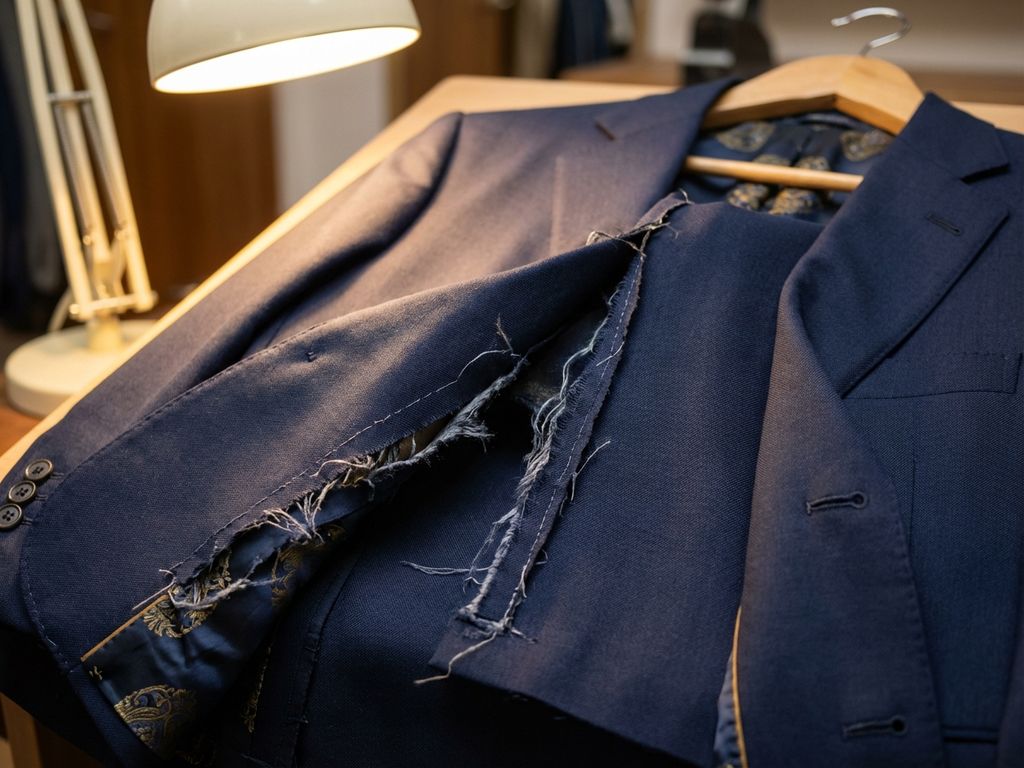
Suit vents split primarily due to poor fit, excessive fabric stress, or inadequate construction quality. When a suit jacket is too tight across the back and hips, the vent seams bear extra tension during movement. Quality construction and proper fitting prevent most vent-splitting issues, while mindful care extends garment life significantly.
What are suit vents and why do they split in the first place?
Suit vents are vertical openings at the back of a jacket that allow for better movement and visual appeal. You’ll find three main styles: single vent (centre back), double vent (side vents), or no vent at all. Single vents offer basic movement but can pull open awkwardly when you put your hands in your trouser pockets. Double vents provide superior mobility and maintain a cleaner silhouette during movement.
Vents split when the fabric experiences more stress than the seam construction can handle. The most common cause is an ill-fitting jacket that’s too tight across the back, shoulders, or through the body. When you move, sit, or reach, the fabric pulls against the vent seams, gradually weakening the stitching until it gives way.
Poor construction quality also contributes to vent failure. Inadequate stitching, weak thread, or insufficient seam allowances create weak points that fail under normal wear. Additionally, low-quality fabrics without proper stretch or recovery properties place extra strain on seams during movement.
The way you wear and care for your suit affects vent longevity too. Overstuffing pockets, aggressive movement, or poor storage can accelerate wear on these vulnerable areas. Understanding these factors helps you make better choices about fit, quality, and garment care.
How can you tell if your suit is too tight and causing vent problems?
Your suit is too tight if you notice pulling across the back when you move, restricted arm movement, or visible strain patterns around the vent area. The jacket should allow comfortable movement without the fabric stretching taut across your body. When vents pull open while you’re standing normally, the fit needs adjustment.
Look for these warning signs of improper fit: horizontal pulling lines across the back, difficulty buttoning the jacket comfortably, or restricted shoulder movement when reaching forward. The back panel should lie smoothly against your body without creating tension at the vent seams.
Check your range of motion by reaching forward, raising your arms, and sitting down while wearing the jacket. You should move freely without feeling fabric strain or hearing stress on the seams. If the vents gap open more than 5–7 centimetres when you’re standing relaxed, the jacket likely needs alterations.
Professional alterations can often resolve minor fit issues, particularly if there’s enough seam allowance to let out the back seams. However, if the jacket is significantly too small across the chest or shoulders, alterations may not provide adequate relief. In these cases, a new suit offers better value than extensive alterations that compromise the garment’s proportions.
Pay attention to how the jacket feels throughout a full day of wear. Gradual tightening or increasing restriction often indicates the garment is borderline too small and may develop vent problems over time.
What’s the best way to prevent suit vents from splitting?
Proper fit is the most effective prevention strategy for vent splitting. Ensure your jacket allows comfortable movement without strain across the back and shoulders. Professional fitting during purchase or alteration prevents most stress-related vent failures before they occur.
Suit care practices significantly impact vent longevity. Always hang your jacket properly on shaped hangers that support the shoulders without stretching the fabric. Avoid wire hangers that can distort the garment’s shape and create stress points.
Be mindful of your movements while wearing the suit. Avoid aggressive gestures that pull against the fabric, and empty pockets of heavy items that create additional strain. When sitting, unbutton the jacket to reduce tension across the back panel and vent area.
Regular suit maintenance includes professional cleaning when needed, but avoid over-cleaning, as frequent pressing can weaken seams over time. Store suits in breathable garment bags and allow them to rest between wears to help fabrics recover their shape.
Quality garment care also involves rotation if you own multiple suits. Wearing the same suit daily doesn’t allow time for fabric recovery, leading to premature wear on stress points like vents. Alternating between garments extends the life of each piece significantly.
Consider the activities you’ll perform while wearing the suit. If your day involves extensive movement or physical activity, choose suits with more generous cuts or stretch fabrics that accommodate motion without straining seams.
Can you repair split suit vents or do you need a new suit?
Most split suit vents can be repaired professionally, especially if they’re caught early before extensive damage occurs. Simple seam failures respond well to restitching, while more complex tears may require patch repairs or vent reconstruction. The repair cost and success depend on the extent of the damage and the fabric’s condition.
Minor vent splits involving just the seam line are typically straightforward repairs. A skilled tailor can restitch the seam, often reinforcing it for improved durability. These repairs usually cost significantly less than replacement and restore the garment’s functionality completely.
More extensive damage, such as fabric tears extending beyond the seam or multiple vent failures, requires careful assessment. If the underlying fit issues haven’t been addressed, repaired vents may fail again quickly. Sometimes the repair cost approaches the value of replacement, making a new suit more practical.
Consider the suit’s overall condition and value when deciding between repair and replacement. A high-quality suit worth several hundred pounds justifies professional repair, while inexpensive suits may not warrant significant repair investment.
The timing of repair matters too. Address vent splits promptly before they worsen, as larger tears are more difficult and expensive to repair effectively. Continuing to wear a suit with split vents often leads to additional damage that complicates repair.
Suit cleaning and pressing after repair help ensure the mended area blends seamlessly with the rest of the garment. Professional repair should be nearly invisible when completed properly, restoring both function and appearance.
Understanding vent problems helps you make informed decisions about suit care, fit, and maintenance. Proper attention to these details ensures your suits serve you well for years while maintaining their professional appearance. When you’re ready for a perfectly fitted suit that won’t develop these common problems, we’re here to help you create something exceptional that truly fits your lifestyle and needs.
