



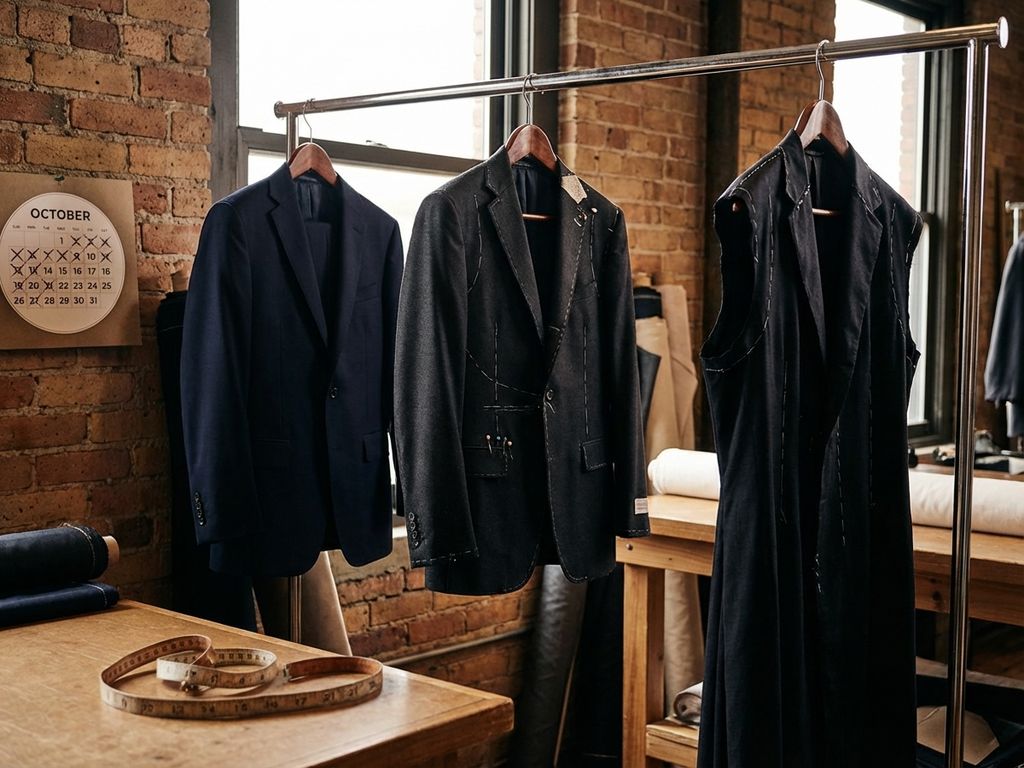
Groomsmen suits should be fitted 6–8 weeks before the wedding to allow proper time for alterations, coordinate multiple schedules, and ensure perfect fits for the entire wedding party. This timeline prevents rushed adjustments, reduces stress, and guarantees everyone looks their best on the big day. Here’s what you need to know about timing groomsmen fittings properly.
Why do groomsmen suits need so much lead time for fittings?
Fitting multiple groomsmen requires extensive coordination and time for proper alterations because each person has unique body measurements and scheduling constraints. Unlike fitting one person, coordinating several groomsmen involves managing different availability windows, ensuring consistent style choices, and allowing adequate time for multiple rounds of adjustments.
The fitting process becomes more complex when you’re working with a wedding party because each groomsman may need different levels of alteration. Some might require simple hemming, while others need significant adjustments to the jacket, trouser waist, or sleeve length. Your tailor needs time to work on each suit individually while maintaining consistency across the entire group.
Wedding suits also require careful attention to detail that can’t be rushed. The alterations process typically involves an initial fitting, followed by adjustments, and then a final fitting to ensure everything is perfect. When you multiply this by several groomsmen, the timeline extends considerably.
Seasonal considerations add another layer of complexity, especially for summer wedding suits or formal wedding suits. Different fabrics and styles may require specific alteration techniques or additional time for sourcing materials. Your tailor needs adequate time to work with various wedding suit colours and ensure all pieces complement each other perfectly.
What happens if you wait too long to fit groomsmen suits?
Waiting too long for groomsmen fittings creates a cascade of problems, including rushed alterations, limited fabric availability, poor fit quality, and significant stress for everyone involved. Last-minute fittings often result in compromised quality because tailors don’t have adequate time for proper adjustments and refinements.
Rushed alterations frequently lead to visible imperfections that become apparent in wedding photos. Seams may not lie properly, trouser lengths might be uneven, and jacket fits can appear awkward. These issues are particularly noticeable in formal wedding suits, where precision is important for achieving an elegant appearance.
Limited availability becomes a major concern when you delay fittings. Popular wedding suit colours and styles may become unavailable, forcing last-minute substitutions that don’t match your vision. This is especially problematic during peak wedding season, when demand for quality fabrics and tailoring services is highest.
The stress factor cannot be overstated. Last-minute fittings create anxiety for the groom, groomsmen, and their families. Instead of enjoying the lead-up to the wedding, everyone becomes focused on whether the suits will be ready and fit properly. This stress often affects the overall wedding experience and can strain relationships within the wedding party.
How far in advance should groomsmen get fitted for wedding suits?
Groomsmen should schedule initial fittings 8–12 weeks before the wedding for made-to-measure suits, 6–8 weeks for purchased suits requiring alterations, and 4–6 weeks for rental suits. These timelines ensure adequate time for proper measurements, alterations, and any necessary adjustments while accommodating everyone’s schedules.
Made-to-measure suits require the longest lead time because they’re constructed from scratch. The process involves initial consultations, pattern creation, construction, and multiple fittings. This timeline allows for the careful craftsmanship needed to create perfectly fitted wedding suits that complement your wedding style.
For purchased suits requiring alterations, 6–8 weeks provides sufficient time for comprehensive adjustments. This includes taking initial measurements, ordering any additional materials needed, completing alterations, and conducting final fittings. The timeline also accommodates any unexpected adjustments that might be needed.
Seasonal considerations affect these timelines significantly. Summer wedding suits in lighter fabrics may require additional time for sourcing appropriate materials, especially if you’re choosing linen or cotton blends. Winter weddings might need extra time for coordinating heavier fabrics and ensuring proper layering options.
Practical scheduling advice includes booking all groomsmen appointments simultaneously when possible, choosing weekends or evenings to accommodate work schedules, and building buffer time into your timeline for unexpected delays or additional fittings.
Timeline recommendations by suit type
- Made-to-measure suits: 10–12 weeks for initial consultation, 8–10 weeks for first fitting, 2–3 weeks for final adjustments
- Off-the-rack with alterations: 6–8 weeks for selection and initial fitting, 3–4 weeks for alterations, 1–2 weeks for final fitting
- Rental suits: 4–6 weeks for selection and initial fitting, 2–3 weeks for any necessary adjustments
What should groomsmen bring to their suit fitting appointments?
Groomsmen should bring proper dress shoes, appropriate undergarments, any accessories they’ll wear on the wedding day, and a positive attitude for the fitting process. These items ensure accurate measurements and help the tailor create the best possible fit for each person’s body type and the specific wedding requirements.
Proper footwear is important because it affects trouser length and overall proportions. Groomsmen should wear the exact shoes they plan to wear on the wedding day, or shoes with the same heel height. This ensures trouser hemming is accurate and the overall silhouette looks balanced.
Appropriate undergarments include well-fitting dress shirts, proper undershirts, and suitable underwear. These items affect how the suit fits and drapes, so wearing similar garments to what will be worn on the wedding day helps achieve the most accurate fit possible.
Accessories that might affect fit include cufflinks, watches, pocket squares, or any special items the groomsman plans to wear. Bringing these items helps the tailor account for any adjustments needed and ensures everything works together harmoniously.
Complete fitting appointment checklist
- Footwear: Dress shoes with appropriate heel height, dress socks
- Undergarments: Properly fitted dress shirt, undershirt, appropriate underwear
- Accessories: Watch, cufflinks, any special items to be worn
- Documentation: Any style preferences or specific requirements discussed with the groom
- Scheduling: Availability for follow-up fittings and final pickup
Special considerations for different body types include discussing any mobility needs, recent weight changes, or specific fit preferences with the tailor. Open communication about comfort requirements and lifestyle needs helps create suits that look great and feel comfortable throughout the entire wedding celebration.
Getting groomsmen fitted with adequate lead time transforms the wedding preparation experience from stressful to enjoyable. The proper timeline allows for careful attention to detail, ensures everyone looks their best, and creates lasting memories of the fitting process itself. When you plan ahead and follow these guidelines, you’ll have confident, well-dressed groomsmen who enhance your special day rather than worry about their appearance. We specialise in creating wedding suits that make every member of your wedding party look and feel exceptional, with the time and attention each suit deserves.
