



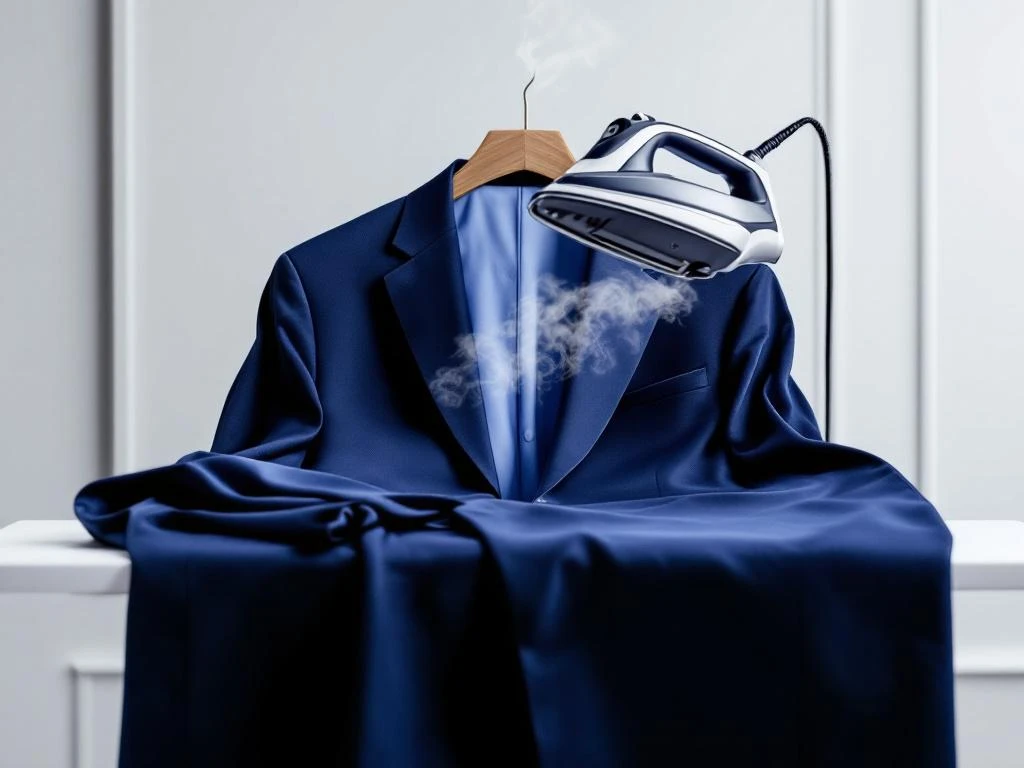
Shiny spots on suits occur when excessive heat and pressure flatten fabric fibres, creating reflective patches that ruin the garment’s appearance. You can prevent this by using proper iron temperature settings, pressing cloths, and correct technique. If shine appears, steam treatment or professional restoration may help restore the fabric’s natural texture.
What causes shiny spots when pressing suits?
Shiny spots develop when heat and pressure flatten the natural texture of suit fibres, creating reflective surfaces that catch light differently from the surrounding fabric. This happens because the fibres become compressed and lose their original structure, particularly affecting the microscopic scales on wool that give fabric its natural matte appearance.
Different fabrics react uniquely to heat and pressure. Wool suits are especially vulnerable because their protein-based fibres can become permanently damaged when exposed to excessive temperature. The natural crimp in wool fibres gets flattened, creating those telltale shiny patches that are difficult to reverse.
Cotton and linen blends handle heat better but can still develop shine when subjected to too much direct pressure from an iron. Synthetic blends present their own challenges, as polyester fibres can actually melt slightly under high heat, creating permanent glossy areas.
The combination of three factors creates shine: a temperature that is too high for the fabric type, excessive pressure from pressing down hard with the iron, and direct contact between the iron and fabric without protection. Understanding this helps you avoid the conditions that damage your suit’s appearance.
How do you set up your iron to avoid damaging suit fabric?
Set your iron to the lowest effective temperature for your suit fabric type, typically the wool or silk setting for most dress suits. Always check the care label inside your jacket or trousers, as this provides the manufacturer’s recommended temperature range for safe pressing.
For wool suits, use the wool setting (usually one or two dots on the temperature dial). Pure wool requires gentle heat, while wool blends may tolerate slightly higher temperatures. Cotton suits can handle medium heat settings, but it’s better to start low and increase gradually if needed.
Fill your iron with distilled water to prevent mineral deposits that could stain your fabric. Set the steam function to medium or high, as steam does most of the work in removing wrinkles without requiring excessive heat or pressure.
Before pressing your suit, test the iron temperature on an inconspicuous area such as the inside seam of a trouser leg or the inner lining. This quick test reveals whether your settings are appropriate without risking visible damage to the main fabric areas.
Clean your iron’s soleplate before each suit-pressing session. Any residue or buildup can transfer to your fabric or create uneven heat distribution that leads to shiny spots.
What’s the proper technique for pressing a suit without creating shine?
Always use a pressing cloth between your iron and suit fabric, lifting the iron straight up and down rather than sliding it across the surface. This technique protects the fabric while allowing steam to penetrate and release wrinkles effectively without creating friction that flattens fibres.
Place a clean cotton cloth, muslin, or specialised pressing cloth over the area you’re working on. Never press directly onto suit fabric with a bare iron, as this almost guarantees shine development, especially on wool and synthetic blends.
Use a lifting motion rather than sliding the iron. Press down gently, hold for a few seconds to let the steam work, then lift straight up and move to the next section. This prevents the dragging motion that flattens fibres and creates shiny streaks.
Work with steam rather than pressure. Hold the iron slightly above the pressing cloth and release bursts of steam, allowing the moisture and heat to relax wrinkles naturally. The weight of the iron provides sufficient pressure when combined with steam.
Pay special attention to high-risk areas such as lapels, pocket flaps, and trouser creases. These areas are most prone to shine because they’re often pressed repeatedly. Use extra care with pressing cloths and minimal pressure on these delicate sections.
Allow each pressed section to cool completely before moving the garment. Hot fabric is more vulnerable to impressions and damage, so letting it rest helps set the proper shape without creating new problems.
How do you remove shiny spots that have already appeared on your suit?
Light shine can often be reduced using steam treatment and gentle brushing, while more severe shine may require professional restoration or specialised products. The success of home treatment depends on how deeply the fibres have been damaged and how long the shine has been present.
For fresh, light shine spots, try the steam and brush method. Hold a steaming kettle or garment steamer about six inches from the shiny area, allowing steam to penetrate the fabric. Then brush gently with a clothes brush or clean toothbrush in the direction of the fabric’s grain to lift flattened fibres.
A white vinegar solution can help with stubborn shine on wool suits. Mix one part white vinegar with three parts water in a spray bottle. Lightly mist the shiny area, then steam and brush as described above. The acid in vinegar can help restore some of the natural texture to wool fibres.
Professional dry cleaners have specialised equipment and techniques for treating shine that home methods cannot match. They use steam presses, chemical treatments, and expert knowledge of different fabric types to restore suits when possible.
Some shine damage is permanent, particularly when fibres have been severely flattened or synthetic materials have been overheated. If home treatments don’t improve the appearance after several attempts, professional assessment can determine whether restoration is possible or if the garment needs replacement.
Prevention remains the best strategy, as even professional restoration cannot always return fabric to its original appearance. Understanding proper suit-pressing techniques protects your investment and maintains the sharp, professional look that makes quality tailoring worthwhile.
Proper suit pressing requires patience and the right technique, but mastering these skills helps maintain your garments’ appearance for years. Whether you’re caring for a favourite suit at home or considering how it works with professional tailoring services, understanding fabric care ensures your investment in quality clothing pays dividends in both appearance and longevity. For those preparing for special occasions, proper care is especially important for wedding attire. At about our approach, we combine traditional craftsmanship with modern techniques to create suits that not only look exceptional when new but also maintain their elegance with proper care throughout their lifetime. If you need guidance on maintaining your suit’s appearance, our team is available to help – simply contact us for expert advice. To learn more about our commitment to quality and service, visit our company info page.
