



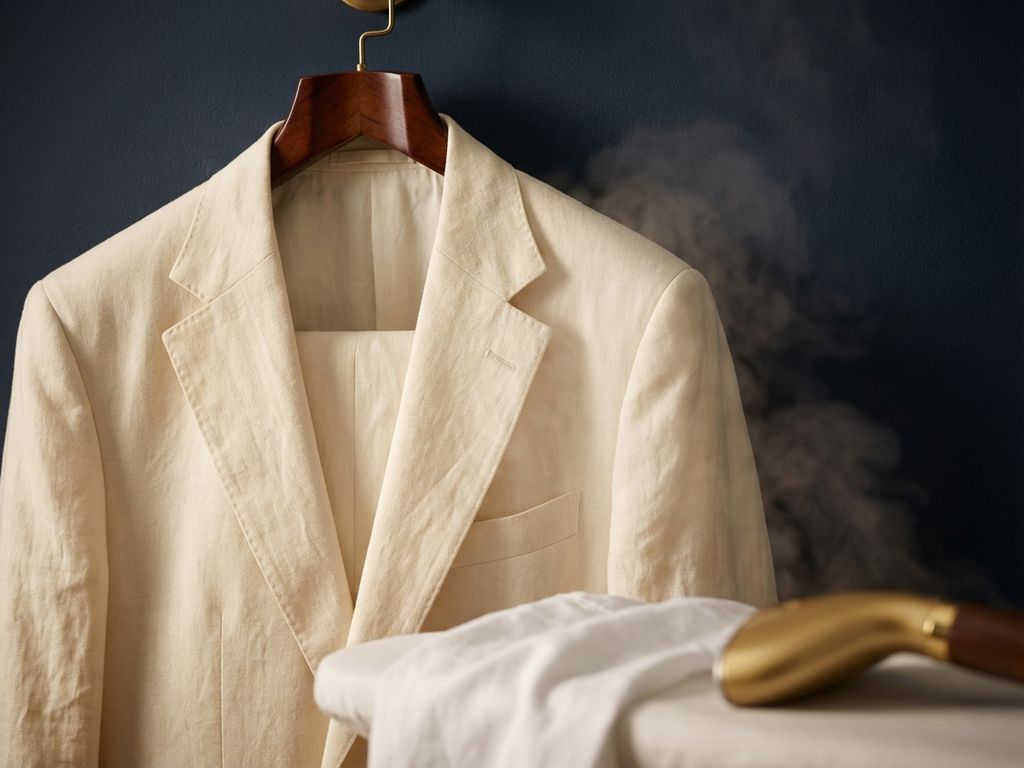
Caring for linen suits requires understanding their unique natural properties and adjusting your maintenance routine accordingly. Linen’s loose weave and natural fibres make it more delicate than wool or cotton, requiring gentler cleaning methods, careful wrinkle management, and proper storage techniques to maintain its elegant appearance and longevity.
What makes linen suits different from other fabrics when it comes to care?
Linen has a loose, open-weave structure made from flax fibres that makes it naturally breathable and moisture-absorbing, but also more susceptible to damage from aggressive cleaning and handling. Unlike wool’s resilient protein fibres or cotton’s tighter weave, linen’s cellulose fibres and relaxed construction require gentler treatment to prevent shrinkage, distortion, and premature wear.
The natural properties that make linen suits perfect for warm weather also create specific garment care challenges. Linen absorbs moisture readily, which means it can shrink significantly if exposed to high heat or agitation during cleaning. The loose weave means individual fibres can shift and distort more easily than in tighter fabrics, leading to permanent changes in fit and drape if not handled properly.
Linen’s tendency to wrinkle is actually part of its natural character, stemming from the same fibre structure that provides its breathability. While wool has natural elasticity that helps it bounce back from creasing, and cotton blends often include synthetic fibres for wrinkle resistance, pure linen embraces a more relaxed, lived-in appearance that requires different expectations and care approaches.
Temperature sensitivity sets linen apart significantly in suit care routines. Whereas wool can often handle moderate heat during pressing and cotton can withstand higher temperatures, linen requires careful temperature control throughout the cleaning and maintenance process to prevent fibre damage and maintain the fabric’s integrity.
How do you properly clean a linen suit without damaging it?
Professional dry cleaning is the safest method for linen suits, using specialised solvents and controlled processes that clean thoroughly without water-induced shrinkage or distortion. Choose a reputable dry cleaner experienced with natural fibres, and always point out any stains or areas of concern before cleaning to ensure proper treatment.
For minor freshening between wears, spot cleaning works well for small stains or marks. Use a clean, damp cloth with mild soap to gently dab the affected area, working from the outside of the stain inward to prevent spreading. Avoid rubbing or scrubbing, which can damage the loose weave, and allow the area to air-dry completely before wearing or storing.
If you must hand-wash linen garments, use cool water and a gentle detergent designed for delicate fabrics. Submerge the garment gently without agitation, let it soak for 10–15 minutes, then rinse thoroughly with cool water. Never wring or twist linen; instead, gently squeeze out excess water and lay it flat on clean towels to dry away from direct sunlight.
Professional cleaning becomes important for structured linen suits because the interfacing, shoulder pads, and canvas construction require specialised handling that home washing cannot provide. These internal components can be damaged by water and agitation, compromising the suit’s shape and fit permanently.
Between cleanings, proper airing helps maintain freshness without over-cleaning. Hang your linen suit in a well-ventilated area after wearing, allowing air circulation to naturally refresh the fabric. This reduces the frequency of professional cleaning needed, which extends the garment’s lifespan.
What’s the best way to handle wrinkles in linen suits?
Steaming is the gentlest and most effective method for removing wrinkles from linen suits, using moisture and heat to relax fibres without direct contact that could damage the fabric. Hold the steamer 6–8 inches away from the garment, working systematically from top to bottom while gently pulling the fabric taut.
When ironing becomes necessary, use a medium heat setting with the iron’s linen setting if available. Always iron on the reverse side of the fabric or use a pressing cloth to prevent shine and protect the surface. Work in smooth, continuous motions rather than pressing and lifting repeatedly, which can create new creases.
Embracing linen’s natural texture means accepting some wrinkling as part of the fabric’s character rather than fighting against it completely. A slightly rumpled appearance is often considered part of linen’s relaxed elegance, particularly in casual and warm-weather settings where the fabric performs best.
Preventive wrinkle management starts with how you wear and remove your linen suit. Avoid sitting for extended periods when possible, and when you do sit, gently smooth the fabric before and after. Remove the jacket carefully, supporting it properly rather than pulling it off hastily.
Hanging immediately after wear prevents deep-set wrinkles from forming. Use broad, padded hangers that support the jacket’s shoulders properly, and hang trousers by the cuffs or use a proper trouser hanger to maintain their shape. Allow the garment to hang freely without crowding from other clothes.
For travel, rolling linen garments carefully can actually reduce wrinkling compared to folding. Place tissue paper between layers when packing, and unpack immediately upon arrival, hanging the suit in a steamy bathroom to help release travel wrinkles naturally.
How should you store linen suits to keep them in perfect condition?
Proper hanging using wide, padded hangers maintains the suit’s shape and prevents creasing during storage. Choose hangers that match the jacket’s shoulder width and provide adequate support for the garment’s weight. Cedar or other wooden hangers work well, offering both support and natural moisture absorption.
Breathable garment bags protect linen suits from dust and moths while allowing air circulation that prevents moisture buildup and musty odours. Avoid plastic bags, which can trap humidity and lead to mildew or fabric deterioration. Cotton or canvas garment bags provide ideal protection for long-term storage.
Climate control plays an important role in suit maintenance during storage. Keep linen suits in cool, dry areas with consistent temperature and humidity levels. Basements and attics often experience temperature fluctuations that can damage natural fibres, so choose interior closets or climate-controlled storage areas when possible.
For seasonal storage, ensure the suit is completely clean before putting it away. Any stains or residues left on the fabric can set permanently during storage or attract insects. Professional cleaning before long-term storage provides the best protection against damage and ensures the suit is ready to wear when needed.
Moth protection becomes particularly important for natural fibres like linen. Use cedar blocks, lavender sachets, or other natural deterrents rather than harsh chemical mothballs. Check stored garments periodically, rotating them occasionally to prevent permanent creasing and ensure they remain in good condition.
Spacing between garments prevents crowding that can cause wrinkles and allows proper air circulation around each piece. Avoid overpacking closets or storage areas, giving each suit adequate room to hang naturally without touching other garments or closet walls.
Caring for linen suits requires patience and an understanding of the fabric’s natural characteristics, but proper maintenance rewards you with garments that age beautifully and provide years of elegant wear. The relaxed luxury of well-maintained linen makes the extra care worthwhile, particularly when you understand how to work with rather than against the fabric’s inherent properties.
At Café Costume, we understand that investing in quality linen suiting means wanting to preserve that investment through proper care. Our personal style consultations include guidance on maintaining your bespoke garments, ensuring they continue to look and feel exceptional throughout their lifetime.
Related Articles
- Festival outfit voor mannen: stijlvol op Tomorrowland of Pukkelpop
- What is the significance of boutonniere placement on wedding suits?
- What is the difference between cedar and lavender for suit storage?
- Wat is het verschil tussen stomen en nat reinigen van een pak?
- What causes suit fabric to become stiff after cleaning?
