



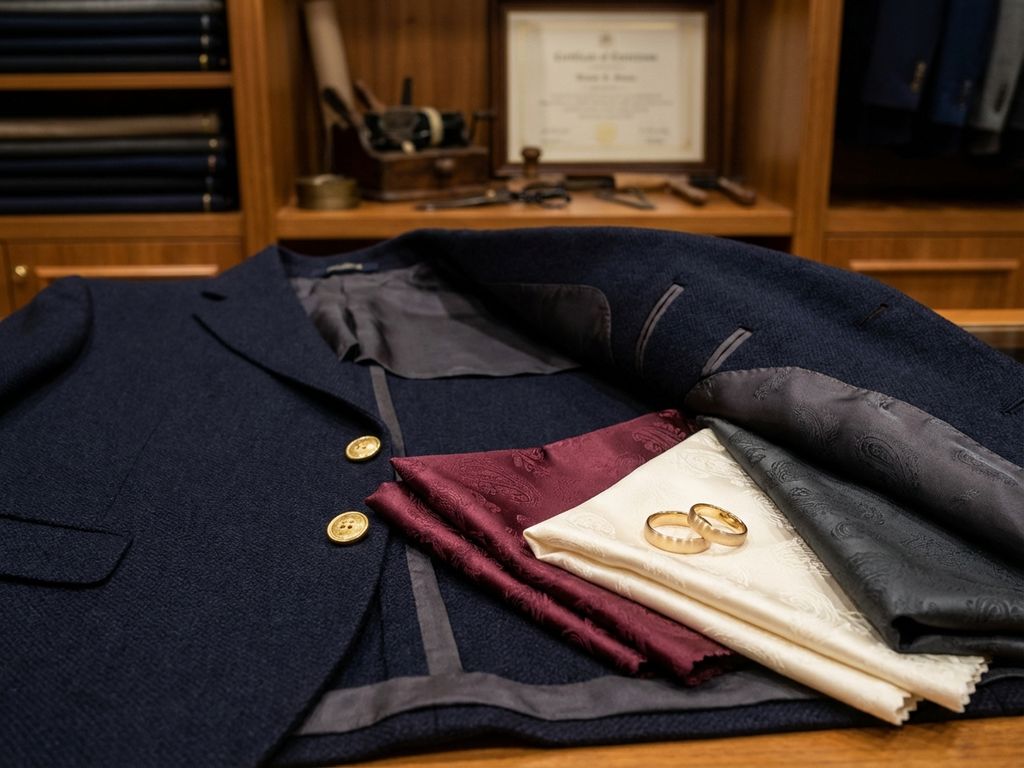
Choosing the right suit lining for your wedding involves considering material, colour, and coverage level. The lining affects comfort, breathability, and style while reflecting your personality through subtle details. Popular options include silk for luxury, viscose for versatility, and cotton blends for summer weddings. Your choice should complement the suit fabric, wedding season, and level of formality.
What is suit lining and why does it matter for your wedding?
Suit lining is the interior fabric layer that sits between your body and the outer suit material. It serves both functional and aesthetic purposes, making it particularly important for wedding suits, where comfort and appearance matter most.
The lining affects how your suit feels throughout your wedding day. It provides a smooth surface that allows the jacket to slide on easily and prevents the outer fabric from sticking to your shirt or skin. This becomes important during long ceremonies, photo sessions, and reception dancing, when you need to move comfortably.
From a style perspective, the lining influences how your wedding suit drapes and maintains its shape. Quality lining helps the jacket hang properly on your shoulders and prevents bunching or pulling. It also adds structure to areas like the chest and shoulders, creating the sharp, tailored look you want in your wedding photos.
The lining also impacts breathability, which affects your comfort level. Wedding suits for summer ceremonies need breathable linings that allow air circulation, while formal wedding suits for cooler months can accommodate heavier lining materials that add warmth and a sense of luxury.
Additionally, the lining colour and pattern offer a chance to express personality through subtle details. While guests won’t see it during the ceremony, it becomes visible when you remove your jacket during the reception or in candid moments.
What are the different types of suit lining materials available?
Silk lining represents the premium choice for wedding suits, offering exceptional smoothness and natural temperature regulation. It feels luxurious against your skin and drapes beautifully, making it ideal for formal wedding suits. Silk also has natural moisture-wicking properties that help keep you comfortable during emotional moments.
Viscose lining provides an excellent balance of comfort, durability, and affordability. This material mimics many of silk’s benefits while being more budget-friendly. It is smooth, breathable, and works well for most wedding suit colours and styles. Viscose is particularly good for grooms who want quality without the premium silk price.
Polyester lining offers durability and easy care, though it is less breathable than natural fibres. Modern polyester linings have improved significantly and can work well for wedding suits, especially for outdoor ceremonies where the suit might face more wear. It is also the most budget-conscious option.
Cotton-blend linings work excellently for summer wedding suits. These materials provide superior breathability and moisture absorption, keeping you cooler during warm-weather ceremonies. Cotton blends are particularly suitable for linen or cotton wedding suits, where natural fibres complement each other.
Cupro lining, made from cotton waste, offers silk-like properties at a mid-range price point. It is breathable, smooth, and has a natural feel that works well for various wedding suit styles and seasons.
How do you choose the right lining colour for your wedding suit?
The lining colour should complement your suit fabric while reflecting your personal style and wedding theme. Traditional choices include neutral tones that will not clash with your outer fabric, while bold options can add personality to your wedding look.
For classic wedding suit colours like navy, charcoal, or black, neutral linings work beautifully. Ivory, light grey, or pale blue linings provide subtle elegance without competing with the suit’s exterior. These choices photograph well and maintain a timeless appearance that will not look dated in future years.
If you want to incorporate your wedding colours subtly, consider a lining that matches your theme. A burgundy lining for autumn weddings, sage green for garden ceremonies, or dusty blue for beach weddings can tie your look to the overall aesthetic. Just ensure the colour is not so bold that it shows through the outer fabric.
Some grooms choose linings with personal significance. A pattern or colour that represents a hobby, favourite team, or meaningful symbol adds a personal touch that close family and friends might notice. This works particularly well for less formal wedding suits, where personality can shine through.
Consider how the lining will look in photos. Wedding photographers often capture moments when jackets are removed or partially open. A lining that complements your shirt, tie, and overall colour palette will look cohesive in these candid shots.
For summer wedding suits, lighter lining colours help reflect heat and maintain comfort. Pale colours also look fresh and appropriate for daytime ceremonies and outdoor venues.
What’s the difference between full lining, half lining, and unlined suits?
Full lining covers the entire interior of the jacket, providing maximum structure, warmth, and a formal appearance. Half lining covers only the upper portion, while unlined suits have no interior lining for the lightest, most casual feel.
Full lining works best for formal wedding suits and cooler-weather ceremonies. It provides the most structure, helping maintain the jacket’s shape throughout long wedding days. The complete coverage also offers the smoothest feel when putting on and removing the jacket. This option suits traditional wedding venues and black-tie events perfectly.
Half lining covers the shoulders, chest, and upper back while leaving the lower portion unlined. This option balances structure with breathability, making it suitable for three-season weddings. Half lining maintains a formal appearance while allowing better air circulation, which is particularly useful for receptions involving dancing.
Unlined suits offer maximum breathability and a more relaxed drape. They are ideal for summer wedding suits, beach ceremonies, or casual outdoor venues. The lighter weight makes them comfortable for destination weddings in warm climates. However, unlined suits require higher-quality outer fabrics, since there is no lining to provide structure.
Your body type can influence the best lining choice. Fuller figures often benefit from the structure and smooth lines of full lining. Athletic builds can wear any lining style, while slim builds might prefer half or full lining to add subtle bulk and structure.
Consider your wedding timeline when choosing lining coverage. Full-day events with multiple outfit changes favour full lining for easy on and off. Shorter ceremonies followed by casual receptions work well with half lining or unlined options.
The formality of your venue also matters. Traditional churches, elegant ballrooms, and formal venues call for full lining, while garden parties, beach ceremonies, and rustic venues can accommodate lighter lining options.
When selecting your wedding suit lining, think about comfort, style, and the specific demands of your wedding day. The right choice enhances both your appearance and your confidence, ensuring you look and feel your best during this important celebration. We specialise in helping grooms create the perfect wedding suit, with expert guidance on every detail, from fabric selection to lining choices that reflect your unique style and wedding vision.
