



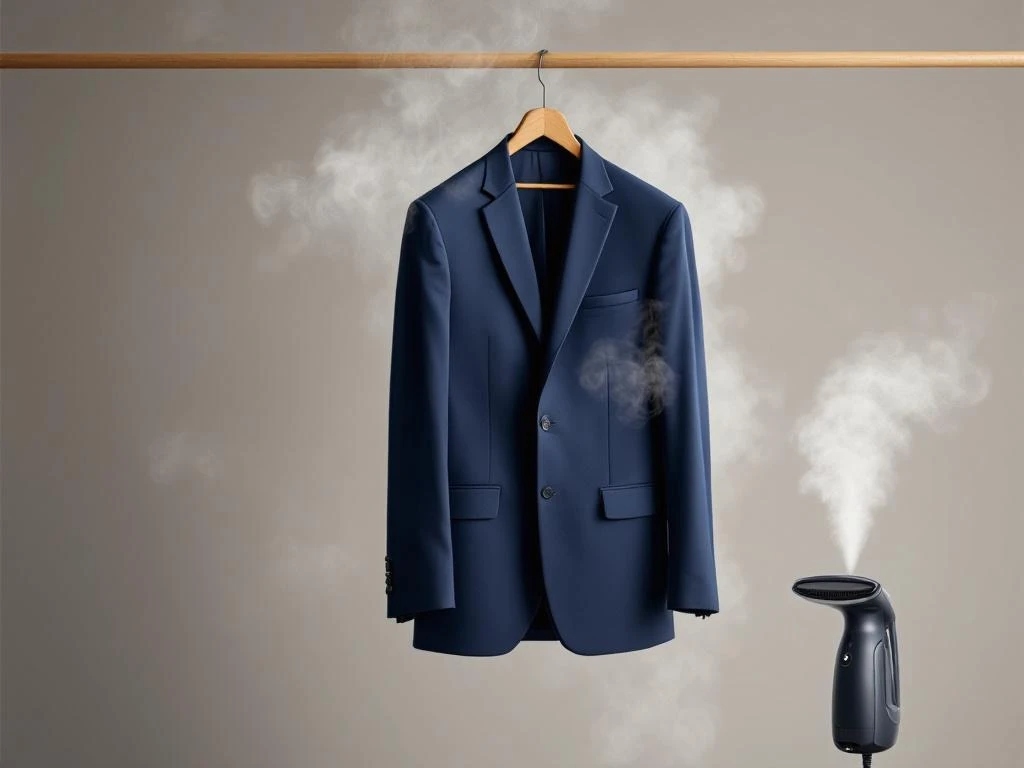
Steaming a suit at home is straightforward and helps maintain the fabric’s quality without the harsh pressure of ironing. You need a garment steamer, a sturdy hanger, and distilled water to produce gentle steam that relaxes wrinkles while preserving the suit’s structure. The process involves hanging your suit properly, working from top to bottom with smooth vertical motions, and maintaining the right distance to avoid water spots. This guide covers everything from choosing equipment to mastering the technique for both jackets and trousers.
What equipment do you need to steam a suit at home?
You need a garment steamer (either upright or handheld), a sturdy hanger, and distilled water. An upright steamer works better for regular suit care because it holds more water and produces consistent steam, whilst handheld models offer portability for travel or quick touch-ups. Both types work effectively for home use.
The quality of your steamer matters less than you might think. Mid-range models (around £40-80) perform nearly as well as professional equipment for home use. Look for a steamer with adjustable steam settings and a decent water tank capacity (at least 200ml for handheld, 1 litre for upright models). The steam head should have a flat surface that you can safely press against fabric without causing damage.
Always use distilled or filtered water rather than tap water. Tap water contains minerals that build up inside the steamer and can leave spots on your suit fabric. A wooden or padded hanger supports your suit’s shape better than wire hangers, which can create shoulder bumps or stretch the fabric. Keep a clean cloth nearby for wiping the steam head and catching any water drips.
How do you prepare your suit before steaming?
Check the fabric care label to confirm the suit can handle steam, then empty all pockets and fasten buttons. Use a clothes brush or lint roller to remove surface dust, hair, and debris before you start steaming. Hang the suit on a sturdy hanger in a space where you can move around it easily.
Preparation prevents damage and makes steaming more effective. Dirt and debris can become embedded in fabric fibres when exposed to heat and moisture. Buttoning the jacket and trousers helps maintain their intended shape during the steaming process. If your suit has been stored folded, like when travelling, give it time to hang naturally for 15-20 minutes before steaming—this allows major creases to begin relaxing on their own.
Check for any stains before steaming. Heat can set certain stains permanently, so address any spots with appropriate suit cleaning methods before applying steam. Inspect the lining for any tears or loose threads that might worsen with moisture. If you’re working with delicate fabrics like silk or lightweight wool, test the steamer on an inconspicuous area first.
What’s the correct technique for steaming a suit jacket?
Start with the jacket hanging at eye level and work from top to bottom. Hold the steamer head 15-20cm away from the fabric and move it in smooth vertical strokes. Use your free hand to gently pull the fabric taut as you steam, which helps the wrinkles release more effectively.
Begin with the lapels, moving the steamer along their length whilst using your hand to shape them properly. The shoulders require special attention—steam them from multiple angles without pressing the steamer directly against the padding, as this can flatten the structure. For sleeves, work from the shoulder seam down to the cuff, rotating the jacket as needed to reach all sides.
The body panels need systematic coverage. Steam the front panels first, working around buttons and pockets carefully. Move to the back, paying attention to the centre vent and side vents if present. Never hold the steamer in one spot for more than a second or two, as this can saturate the fabric and potentially cause water marks. Let each section dry for a moment before moving on.
Tricky areas like the armholes and collar require patience. Steam these areas from different angles, using your hand to manipulate the fabric into its natural position. The lining usually needs less attention than the outer fabric, but give it a quick pass if it’s wrinkled. After steaming, leave the jacket hanging for at least 30 minutes to dry completely before wearing or storing it.
How do you steam suit trousers without creating creases?
Hang trousers by the waistband using trouser clips or a clamp hanger so they hang straight down. Steam the front and back of each leg separately, working from waistband to hem in vertical motions. To maintain the centre crease, fold the trouser leg along the existing crease line and steam along it whilst pulling the fabric taut.
The waistband and pocket areas need careful attention. Steam around the pockets without pressing the steamer directly against them, as this can create unwanted impressions. Work the steam through the waistband area, including the button and zip section, to remove any sitting wrinkles. For pleated trousers, steam each pleat individually by holding it in place with your fingers whilst applying steam.
Common mistakes include over-steaming, which can flatten intentional creases, and steaming horizontally across the leg, which creates new crease lines. If your trousers don’t have a centre crease and you want to keep them crease-free, hang them with the inner and outer leg seams aligned and steam straight down each panel. For suit storage after steaming, fold trousers along their natural crease or hang them properly to maintain the fresh appearance.
What’s the difference between steaming and ironing a suit?
Steaming uses moisture and heat without direct pressure, whilst ironing applies direct heat and weight to fabric. Steaming is gentler on delicate suit fabrics and works better for structured garments because it doesn’t flatten the natural shape or crush padding. Ironing provides sharper creases but risks shine marks and fabric damage on wool and delicate materials.
You should choose steaming for most suit maintenance because it refreshes fabric, removes wrinkles, and eliminates odours without the risks associated with ironing. The steam penetrates fibres without compressing them, which helps suits maintain their intended drape and structure. This matters particularly for suit jackets with canvas construction and shoulder padding that can be permanently flattened by an iron.
Ironing becomes necessary in specific situations. If you need razor-sharp creases in trouser legs, a light iron (with a pressing cloth) works better than steaming alone. Some heavy wrinkles from improper storage might require ironing, though you should always use the lowest effective temperature and a protective cloth between the iron and suit fabric. Understanding how it works when caring for quality suits helps you make better decisions about when to steam versus iron.
The practical difference shows in daily use. Steaming takes slightly longer but requires less skill and carries minimal risk of damage. Ironing delivers faster results for specific tasks but demands more experience to avoid shine marks, scorching, or flattening. For regular suit care at home, steaming provides the best balance of effectiveness and safety.
Proper suit steaming keeps your garments looking sharp between professional cleanings whilst extending their lifespan. The technique takes practice, but the gentle nature of steam means you’re unlikely to cause damage whilst you learn. Whether you’re maintaining everyday business wear or preparing for a wedding, mastering home steaming gives you control over your suit’s appearance and condition. At Café Costume, we understand that caring for quality tailored garments properly helps them serve you well for years—and steaming is one of the most valuable skills in your suit maintenance routine. If you have questions about suit care or need expert advice, feel free to contact our team for personalized guidance.
