



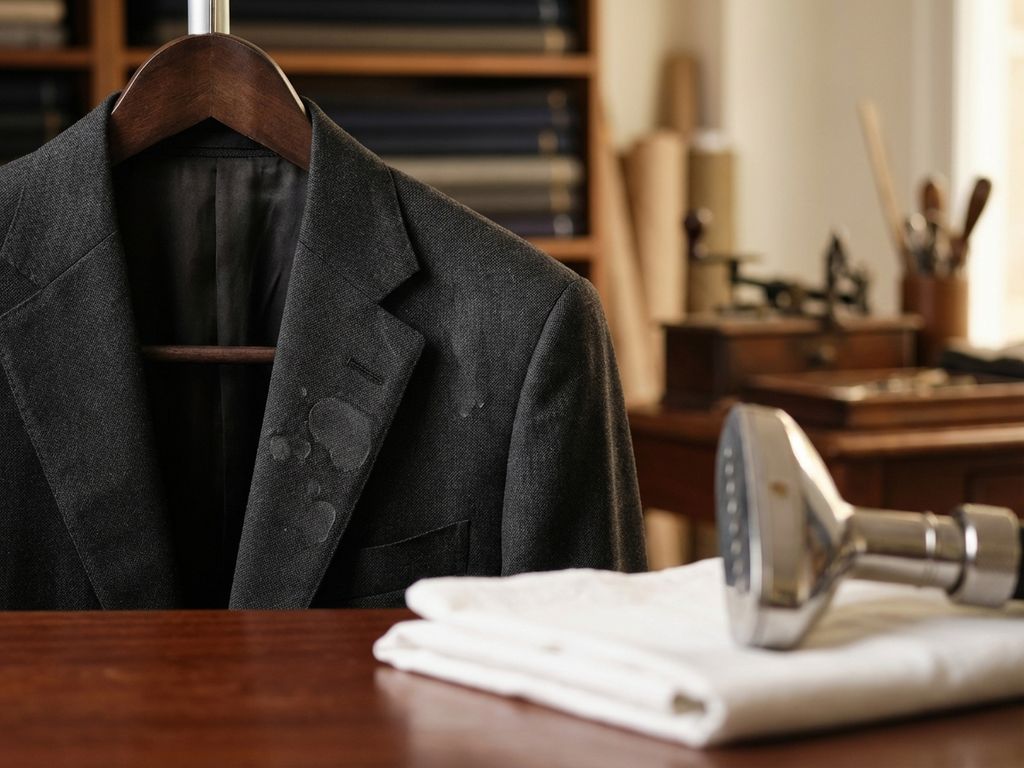
Water spots on suit jackets can usually be removed using gentle blotting techniques with distilled water and proper drying methods. The key is treating spots quickly before they set into the fabric and avoiding common mistakes like rubbing or using hot water. Different fabrics require different approaches, with some responding well to home treatment while others need professional suit care.
What causes water spots on suit jackets and why do they appear?
Water spots form when water evaporates from fabric, leaving behind mineral deposits, dirt particles, or fabric treatment residues. These visible marks appear because water acts as a carrier for dissolved substances that become concentrated as the liquid evaporates from the suit’s surface.
Different suit fabrics react uniquely to water exposure. Wool fibres naturally repel water initially, but once moisture penetrates, it can disturb the fabric’s natural oils and create uneven drying patterns. Cotton blends absorb water more readily, making them prone to ring-shaped spots where the water’s edge dries first. Synthetic materials often show water spots more prominently because their smooth surfaces don’t absorb moisture evenly.
The minerals in tap water, particularly calcium and magnesium, contribute significantly to spot formation. When water droplets sit on fabric and evaporate slowly, these minerals concentrate at the edges, creating the characteristic ring pattern. Fabric treatments like stain-resistant coatings can also cause water to bead up rather than absorb, leading to more noticeable spots when the water eventually evaporates.
Environmental factors play a role too. Humidity levels, air circulation, and temperature affect how quickly water evaporates, influencing whether spots form and how visible they become. Proper suit maintenance includes understanding these factors to prevent water damage before it occurs.
Can you remove water spots from a suit jacket at home?
Most fresh water spots can be safely removed at home using simple techniques and household items. Success depends on acting quickly, using the right method for your fabric type, and avoiding harsh treatments that could damage delicate suit materials.
Home treatment works best on wool and cotton-blend suits with fresh water spots that haven’t set into the fabric. Natural fibres generally respond well to gentle moisture and steam treatments. However, delicate fabrics like silk, linen, or suits with special finishes often require professional suit cleaning to avoid damage.
The most effective home method involves using distilled water to dilute and redistribute the minerals causing the spot. This technique works because you’re essentially reversing the concentration process that created the mark. Clean, lint-free cloths are important for this process – avoid paper towels or rough materials that could damage the fabric’s surface.
You’ll know home treatment isn’t working if the spot persists after gentle attempts or if you notice the fabric changing texture or colour. Some water spots, particularly those from hard water or spots that have been heat-set by improper drying, need professional garment care techniques that aren’t safe to attempt at home.
What’s the safest way to treat fresh water spots on suits?
Blot fresh water spots immediately with a clean, dry cloth, then gently dab the area with distilled water using another clean cloth. Work from the outside of the spot toward the centre, then allow the area to air-dry naturally away from direct heat or sunlight.
Start by removing any excess water without rubbing the fabric. Press a clean, absorbent cloth gently against the spot to lift moisture. This prevents the water from spreading further into the fabric and reduces the concentration of minerals that cause visible marks.
Next, take a separate clean cloth and dampen it slightly with distilled water. Gently dab the spotted area, working in small circular motions from the edge toward the centre. The distilled water helps dilute any mineral deposits and creates a more even moisture distribution across the fabric.
After treating the spot, lay the jacket flat or hang it properly to air-dry. Avoid placing it near radiators, direct sunlight, or using a hair dryer, as heat can set stains permanently and damage wool fibres. Good air circulation helps the fabric dry evenly, preventing new water rings from forming.
For stubborn fresh spots, you can repeat this process once the fabric is completely dry. Sometimes a second gentle treatment removes residual minerals that weren’t eliminated in the first attempt. Always test any treatment on an inconspicuous area first to ensure it won’t affect the fabric’s appearance.
How do you handle stubborn water stains that won’t come out?
Stubborn water stains require steam treatment or professional dry-cleaning services. Hold the affected area over steam from a kettle or use a garment steamer, then gently brush the fabric while it’s warm and slightly damp to redistribute fibres and remove set-in mineral deposits.
Steam works effectively because it relaxes fabric fibres and helps dissolve mineral deposits that have bonded with the material. Hold the jacket about six inches away from the steam source to avoid oversaturating the fabric. The gentle heat and moisture combination often releases stains that resist cold-water treatment.
While the fabric is slightly warm from steaming, use a soft-bristled clothing brush to gently work the area. Brush in the direction of the fabric’s grain using light, consistent strokes. This helps redistribute the fibres and can eliminate the texture changes that make water spots visible.
For valuable suits or persistent stains, professional dry cleaning is the safest option. Professional cleaners have specialized solvents and equipment designed for different fabric types. They can often remove set-in water stains without risking damage to the suit’s structure or finish.
White vinegar mixed with distilled water (one part vinegar to three parts water) can help with mineral-heavy stains, but test this solution on a hidden area first. The mild acid helps dissolve calcium and magnesium deposits, but it can affect some fabric dyes or finishes.
What mistakes should you avoid when cleaning water spots from suits?
Never rub water spots vigorously, use hot water, apply household cleaners, or dry the garment with direct heat. These actions can damage fabric fibres, set stains permanently, or create larger, more visible marks that are difficult to remove.
Rubbing or scrubbing pushes minerals deeper into fabric fibres and can damage the suit’s surface texture. This creates a permanently altered area that’s often more noticeable than the original water spot. Always use gentle blotting motions instead of aggressive rubbing when treating any stain.
Hot water sets protein-based stains and can cause wool fibres to shrink or felt. Even if the water spot seems heat-related, cold or lukewarm distilled water is always safer for suit maintenance. Hot water also opens fabric fibres, allowing stains to penetrate more deeply.
Household cleaners like washing-up liquid, bleach, or all-purpose cleaners can strip fabric treatments, alter colours, or leave residues that attract more dirt. Suits require gentle treatment because their construction and materials are more delicate than everyday clothing.
Direct heat from hair dryers, radiators, or direct sunlight can shrink wool, fade colours, and set water stains permanently. Heat changes the protein structure in wool fibres and can create shiny patches or texture changes that are impossible to reverse. Always allow suits to air-dry naturally in a well-ventilated area.
How can you prevent water spots on your suit jackets?
Apply fabric protection spray designed for suits, store garments properly in breathable covers, check weather conditions before wearing, and maintain regular cleaning schedules. Prevention is more effective than treatment and helps preserve your suit’s appearance and longevity.
Quality fabric protection sprays create an invisible barrier that helps water bead and roll off rather than soaking into the fabric. Apply these products according to manufacturer instructions, typically after professional cleaning when the fabric is completely clean and dry. Reapply protection every few months or after cleaning.
Proper storage prevents many water spot issues. Use breathable garment bags rather than plastic covers, which can trap moisture and create condensation. Ensure suits are completely dry before storing, and maintain good air circulation in your wardrobe to prevent humidity buildup.
Weather awareness helps you make informed decisions about when to wear different suits. Check forecasts for rain or high humidity, and consider alternative transportation or clothing choices during wet weather. Carrying a compact umbrella provides additional protection for valuable garments.
Regular professional cleaning maintains fabric treatments and removes accumulated dirt and oils that can make water spots more likely to form. Most suits benefit from professional cleaning every 6–12 months, depending on wear frequency. Between cleanings, proper brushing and airing help maintain fabric condition.
Understanding proper garment care helps you maintain your investment in quality clothing. Water spots are preventable with the right knowledge and habits, and quick action when accidents occur minimizes any potential damage.
At Café Costume, we understand that proper suit care extends far beyond the initial fitting. Our personal style consultation service includes guidance on maintaining your bespoke garments, ensuring they continue looking impeccable for years to come. When you invest in quality tailoring, you deserve to know how to protect that investment properly.
