



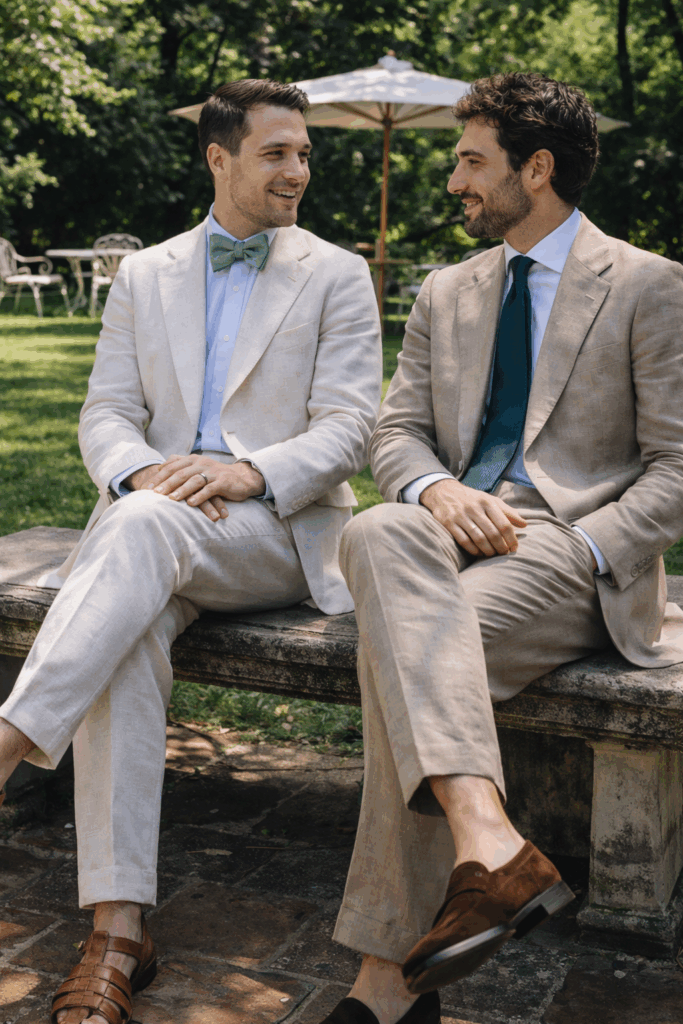
Both bow ties and neckties work beautifully with groom suits, and your choice depends on the formality level, wedding style, and personal preference. Bow ties create a polished, formal appearance perfect for black-tie weddings and vintage-inspired celebrations. Neckties offer versatility and work across nearly all wedding settings, from casual outdoor ceremonies to formal evening receptions. This guide answers the most common questions about choosing between these two classic neckwear options for your wedding day.
What’s the actual difference between a bow tie and necktie for weddings?
Bow ties and neckties differ in formality perception, visual impact, and how they complement your groom suit’s silhouette. Bow ties traditionally signal higher formality and create a horizontal focal point at the collar, drawing attention to your face and shoulders. Neckties create vertical lines that elongate your torso and work across a broader range of formality levels, from smart casual to black-tie optional events.
Historically, bow ties became the standard for the most formal occasions, particularly wedding tuxedos and white-tie events. They originated from Croatian mercenaries in the 17th century and evolved into the refined accessory we recognise today. Neckties followed a similar path but gained popularity as everyday business wear, making them feel slightly less formal in wedding contexts.
The visual difference extends beyond formality. A bow tie sits neatly at your collar without hanging down, which keeps the focus on your jacket’s lapels and overall suit construction. This works particularly well with peak lapels or shawl collars on formal wedding suits. A necktie, by contrast, adds a vertical element that can balance wider body types and creates an unbroken line from collar to trousers when styled properly.
Your choice also affects how comfortable you’ll feel throughout the wedding day. Bow ties stay in place and won’t swing into your dinner or champagne glass during toasts. Neckties offer more styling flexibility but require occasional adjustment, especially during dancing or outdoor summer wedding suits where heat might make any neckwear feel restrictive.
How do you decide between a bow tie or necktie for your groom suit?
Start by considering your wedding’s formality level and time of day. Evening receptions and black-tie weddings naturally pair with bow ties, whilst afternoon ceremonies and semi-formal celebrations work beautifully with neckties. If your wedding invitation specifies black-tie or formal attire, a bow tie reinforces that dress code. For cocktail attire or smart casual weddings, a necktie offers appropriate elegance without feeling overdressed.
Your venue type provides helpful guidance too. Historic estates, ballrooms, and traditional church settings complement the refined formality of bow ties. Garden parties, beach ceremonies, and rustic barn venues feel more relaxed with neckties, though both options can work with thoughtful styling. Summer wedding suits in lighter fabrics pair well with either choice, but consider that bow ties can feel slightly more comfortable in warm weather since they use less fabric around your neck.
Personal style preferences matter significantly. If you regularly wear suits for work or formal occasions, you’ll likely feel more comfortable in a necktie since it’s familiar territory. If you want your wedding day look to feel special and distinct from everyday attire, a bow tie creates that differentiation. Consider trying both options during your suit fittings to see which makes you feel most confident.
Body type considerations can influence your decision as well. Taller grooms can carry both styles easily, whilst shorter grooms might prefer bow ties to avoid shortening their visual height with a long necktie. Broader builds often look excellent in neckties that create vertical lines, whilst slimmer frames can benefit from the horizontal emphasis of bow ties that adds visual width to the shoulders.
Think about your partner’s attire too. If they’re wearing a structured, formal gown with traditional details, a bow tie complements that formality. If their dress has a more relaxed, flowing silhouette, a necktie might create better visual harmony. Your wedding suits should feel cohesive with the overall aesthetic you’re both creating.
What wedding styles work best with bow ties versus neckties?
Classic formal and black-tie weddings showcase bow ties at their finest. If you’re wearing a wedding tuxedo with satin lapels, a black silk bow tie creates the traditional formal look that’s stood the test of time. These weddings typically feature evening ceremonies, seated dinners, and elegant reception venues where refined details matter. The bow tie signals respect for traditional wedding formality whilst looking impeccably polished in photographs.
Modern minimalist weddings work beautifully with either option, depending on execution. A slim, solid-coloured necktie in silk or wool complements clean-lined suits and contemporary venues with architectural interest. Alternatively, a simple black or navy bow tie creates striking contrast against a light-coloured suit, perfect for the pared-back aesthetic of modern celebrations. Keep accessories minimal and let the neckwear make a subtle statement.
Vintage-inspired weddings practically demand bow ties, especially for 1920s, 1940s, or 1950s themes. Pair patterned or textured bow ties with three-piece suits, pocket watches, and classic leather shoes. These details transport your look to another era and create wonderful cohesion with vintage wedding themes. Consider velvet bow ties for autumn and winter vintage weddings, or linen and cotton varieties for warmer months.
Casual outdoor weddings and summer celebrations feel most natural with neckties, though you can absolutely wear bow ties if styled appropriately. For beach weddings or garden parties, choose linen or cotton neckties in lighter colours that complement relaxed summer wedding suits. Skip the tie entirely for truly casual celebrations, or opt for a knit necktie that bridges formal and relaxed aesthetics.
Destination weddings offer flexibility depending on location. Mediterranean or tropical settings work well with linen neckties in soft colours, whilst European city weddings might call for more traditional bow ties with formal suits. Consider the local culture and typical dress standards when making your choice.
Can you mix bow ties and neckties in your wedding party?
You can absolutely wear different neckwear than your groomsmen, and this distinction helps you stand out as the groom. The most common approach is wearing a bow tie whilst your groomsmen wear neckties, or vice versa. This creates visual hierarchy without looking mismatched, provided you maintain consistency in colour palette and formality level. Your neckwear choice should feel like an intentional styling decision rather than an oversight.
When mixing styles successfully, keep other elements coordinated. If you’re wearing a bow tie with a three-piece suit, your groomsmen might wear neckties with two-piece suits in the same colour family. Or wear a patterned bow tie whilst groomsmen wear solid neckties that pick up one colour from your pattern. These thoughtful connections create cohesion whilst maintaining your distinction as the groom.
Colour coordination matters more than matching neckwear styles exactly. You might wear a burgundy bow tie whilst groomsmen wear burgundy neckties, all paired with navy or charcoal wedding suits. This approach works particularly well for large wedding parties where you want clear visual distinction between the groom and groomsmen in group photographs.
Some scenarios work better with matching neckwear throughout the wedding party. Very formal black-tie weddings typically look most polished when everyone wears bow ties, maintaining consistent formality. Similarly, if you’re aiming for a relaxed, cohesive look at a casual wedding, matching neckties create that unified appearance without feeling stuffy.
Consider your best man as a middle ground. Some grooms choose to match their best man’s neckwear whilst groomsmen wear something slightly different, creating three tiers of distinction. This works well for larger wedding parties where you want to highlight key roles visually.
Practical examples that work well include: groom in black bow tie with groomsmen in black neckties for formal evening weddings; groom in patterned necktie with groomsmen in solid coordinating neckties for semi-formal celebrations; or groom in velvet bow tie with groomsmen in silk neckties for textured visual interest at autumn and winter weddings.
Choosing the right neckwear for your wedding
Your choice between a bow tie and necktie shapes your entire wedding day look and how you’ll remember yourself in photographs for years to come. Consider the formality level, venue, season, and personal comfort when making this decision. Both options offer timeless elegance when styled thoughtfully with quality wedding suits that fit properly and reflect your personal style.
At Café Costume, we help you navigate these styling decisions during your made-to-measure consultation, ensuring your groom suit and accessories work together beautifully. Whether you choose a classic bow tie or an elegant necktie, we’ll guide you towards neckwear that complements your suit’s fabric, cut, and overall wedding aesthetic. If you have questions about styling your wedding attire, please contact our team for personalised guidance. Learn more about our approach to creating exceptional wedding suits that make you feel confident and look exceptional from ceremony through to the final dance.
