



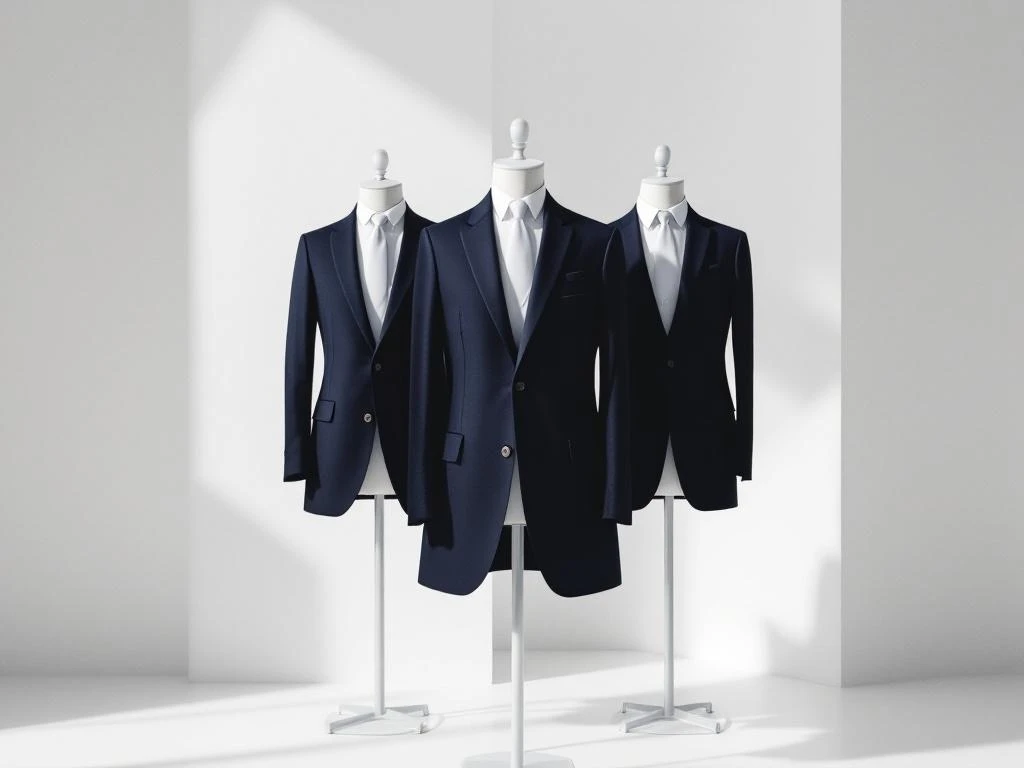
Navy wedding suits complement virtually all body types due to the colour’s sophisticated and slimming properties. The deep blue tone creates visual balance, enhances natural proportions, and works across different skin tones and builds. Whether you’re athletic, slim, tall, shorter, or broader, navy offers versatility that flatters through proper styling and fit choices.
Which body types look most flattering in navy wedding suits?
Navy wedding suits work exceptionally well across all body types because the colour naturally creates a slimming silhouette whilst maintaining sophistication. Athletic builds benefit from navy’s ability to highlight their natural proportions without overwhelming their frame, whilst broader builds appreciate how the deep tone minimises width and creates vertical lines.
Athletic builds can confidently choose fitted cuts that showcase their physique. The navy colour enhances muscle definition without appearing too flashy, making it perfect for grooms who want to look polished yet masculine. Single-breasted jackets with notched lapels work particularly well, as they maintain clean lines that complement an already well-proportioned frame.
For slim builds, navy provides an excellent foundation for adding visual weight and presence. The rich colour adds substance to a leaner frame, especially when paired with textured fabrics or subtle patterns. Double-breasted styles or three-piece suits can add bulk in all the right places, whilst the navy base keeps everything looking cohesive and elegant.
Taller grooms find that navy helps break up their height without losing sophistication. The colour works beautifully with horizontal elements like contrasting waistcoats or pocket squares, which create visual interest across the torso. Navy also pairs excellently with lighter accessories, allowing tall men to experiment with colour combinations that add personality to their look.
Shorter builds benefit tremendously from navy’s elongating properties. The monochromatic effect of a well-fitted navy suit creates unbroken vertical lines that add perceived height. When paired with matching trousers and minimal contrasting accessories, navy creates a streamlined silhouette that maximises stature whilst maintaining wedding-appropriate formality.
Broader builds particularly appreciate navy’s slimming qualities. The dark tone naturally recedes, creating a more streamlined appearance, whilst the colour’s sophistication ensures you never sacrifice style for flattery. Single-breasted jackets with minimal padding work best, allowing the navy to do its visual magic without adding unnecessary bulk.
What makes navy such a universally flattering colour for wedding suits?
Navy functions as a universally flattering colour because it combines the slimming properties of dark tones with warm undertones that complement various skin tones. Unlike black, which can appear harsh against certain complexions, navy offers depth whilst maintaining warmth, creating a sophisticated yet approachable appearance that photographs beautifully.
The colour psychology behind navy contributes significantly to its flattering nature. Navy conveys confidence, reliability, and sophistication without the severity of black or the casualness of lighter blues. This psychological impact translates into how others perceive you and, importantly, how you feel wearing it. Confidence naturally enhances any look, making navy an excellent choice for grooms who want to feel their best.
Skin tone compatibility makes navy particularly versatile. Men with warm undertones find that navy enhances their natural colouring without washing them out, whilst those with cool undertones appreciate how the colour complements their complexion. Even men who struggle with other dark colours often find navy works beautifully for them.
Navy’s slimming effect comes from its position on the colour spectrum. As a darker shade, it naturally recedes, creating a more streamlined silhouette. However, unlike pure black, navy retains enough colour depth to add visual interest and prevent the flat appearance that very dark colours can sometimes create. This balance makes it incredibly forgiving across different body types.
The versatility extends to wedding styles and seasons. Navy works equally well for beach ceremonies, garden parties, traditional church weddings, and modern venues. Its adaptability means you can adjust accessories and styling to match your specific celebration whilst maintaining the sophisticated foundation that navy provides.
Photography considerations also make navy an excellent choice. The colour photographs beautifully in various lighting conditions, from bright outdoor ceremonies to dimly lit reception venues. Navy maintains its richness without appearing too dark or losing detail in photos, ensuring your wedding images capture the suit’s elegance accurately.
How should different body types style navy wedding suits differently?
Different body types should approach navy wedding suit styling by focusing on specific elements that enhance their natural proportions. Understanding how it works in terms of lapel choices, button configurations, and trouser cuts all play important roles in creating the most flattering silhouette, whilst the navy base provides a sophisticated foundation for these styling decisions.
Athletic builds should opt for fitted cuts that showcase their physique without being overly tight. Single-breasted jackets with notched lapels create clean lines, whilst two-button configurations maintain proper proportions. Flat-front trousers with a slight taper work excellently, and these grooms can confidently choose slimmer lapels that complement their frame.
For slim builds, the goal is adding visual weight and presence. Double-breasted jackets or three-piece suits create additional layers and bulk. Wider lapels, particularly peak lapels, add breadth to the shoulders and chest. Pleated trousers can add substance to the lower body, whilst textured fabrics or subtle patterns within the navy family create visual interest.
Taller men benefit from styling choices that break up their height. Three-piece suits with contrasting waistcoats create horizontal lines across the torso. Double-breasted styles can add width, whilst wider lapels help balance proportions. Cuffed trousers create a horizontal break at the ankle, and these grooms can experiment with bolder accessories like patterned ties or pocket squares.
Shorter builds should focus on creating unbroken vertical lines. Single-breasted jackets with higher button stances elongate the torso, whilst narrow lapels maintain proportional balance. Flat-front trousers without cuffs create continuous lines from waist to shoe. Minimal contrasting accessories keep the look streamlined, allowing the navy to create maximum elongating effect.
Broader builds should choose elements that create vertical emphasis. Single-breasted jackets with minimal padding avoid adding bulk, whilst notched lapels in moderate widths maintain balance. Higher button stances help elongate the torso, and flat-front trousers with a straight or slight taper create clean lines. Avoiding double-breasted styles prevents adding unnecessary width across the chest.
Accessory choices should complement these body-specific styling decisions. Pocket squares, ties, and boutonnieres can add personality whilst supporting the overall silhouette goals. The key is ensuring these elements work with, rather than against, your natural proportions whilst maintaining the sophisticated elegance that navy provides.
What are the biggest mistakes men make when choosing navy wedding suits for their body type?
The most common mistake men make is choosing poor fit over proper tailoring, which negates navy’s naturally flattering properties. Additionally, many grooms select inappropriate styling elements that work against their body type or choose accessories that clash with navy’s sophisticated nature, ultimately diminishing the colour’s inherent advantages.
Poor fit choices represent the biggest error across all body types. Many men assume that because navy is flattering, fit becomes less important. However, ill-fitting navy suits look just as poor as badly fitted suits in any colour. Too-tight jackets create pulling and bunching, whilst oversized suits make even athletic builds appear sloppy. The key is ensuring proper fit at the shoulders, chest, and waist regardless of your build.
Inappropriate styling for body type frequently occurs when men follow trends rather than choosing what works for their proportions. Slim men often choose fitted cuts that emphasise their lean build rather than adding substance, whilst broader men sometimes select double-breasted styles that add unwanted width. Understanding your body type and choosing accordingly makes an enormous difference.
Accessory mistakes can undermine an otherwise excellent navy suit choice. Common errors include choosing ties that are too light and wash out the navy, selecting pocket squares in clashing colours, or adding too many contrasting elements that break up the suit’s clean lines. Navy works best when accessories complement rather than compete with the sophisticated base.
Ignoring trouser fit represents another frequent error. Many men focus solely on jacket fit whilst neglecting trouser proportions. Poorly fitted trousers can make legs appear shorter or longer than ideal, create unflattering breaks, or add bulk in the wrong places. Proper trouser fit is particularly important with navy suits because the dark colour emphasises any fit issues.
Seasonal inappropriateness sometimes occurs when men choose navy wedding suits without considering fabric weight and texture. Heavy wool navy suits can appear too formal for summer beach weddings, whilst lightweight fabrics might look too casual for winter church ceremonies. Matching fabric choice to season and venue ensures your navy suit looks appropriate for the occasion.
Finally, many grooms make the mistake of not considering their wedding party coordination. Navy suits offer excellent flexibility for groomsmen styling, but poor coordination can make the groom disappear into the group rather than standing out appropriately. Planning how your navy suit will work within the overall wedding party aesthetic prevents this common oversight.
Choosing the right navy wedding suit for your body type creates a sophisticated, flattering look that photographs beautifully and feels comfortable throughout your special day. The colour’s versatility means it works across different wedding styles and seasons, whilst proper styling ensures you look your absolute best. When you’re ready to find your perfect navy wedding suit, our company offers personalised consultations to help you select the ideal cut, fabric, and styling details that complement your unique build and wedding vision. If you have any questions about our services, please don’t hesitate to contact us.
Related Articles
- Pocket square: hoe vouw je die en wat zijn de ongeschreven regels?
- Moet ik een pak voor mijn trouwerij op maat laten maken?
- Wat is het verschil tussen het persen en stomen van een pak?
- Wat is de beste manier om een pak te luchten tussen het dragen door?
- Hoe kan ik er voor zorgen dat een blauw pak toch speciaal genoeg is voor mijn trouw?
