



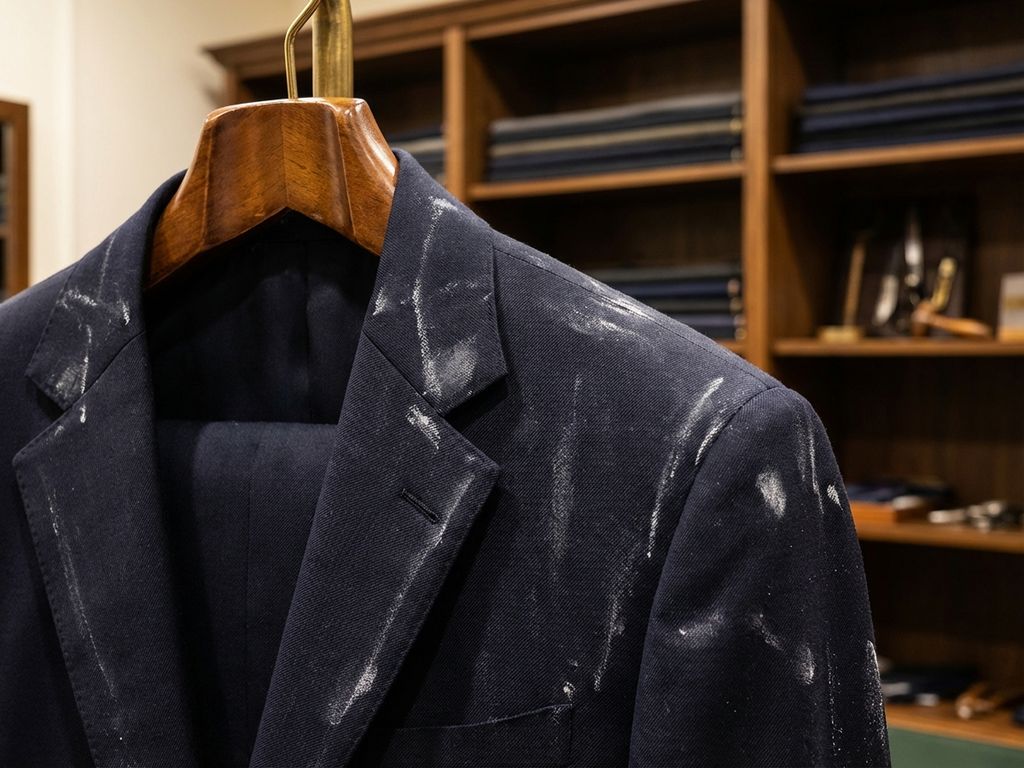
White residue on dark suits after cleaning appears as chalky, powdery marks or streaks that stand out starkly against dark fabrics. This common problem stems from detergent buildup, hard water minerals, or improper rinsing during the cleaning process. Understanding the causes and solutions helps maintain your suit’s appearance and prevents future residue issues.
What exactly is the white residue that appears on dark suits after cleaning?
White residue on dark suits manifests as chalky, powdery deposits that create visible streaks, spots, or a film-like coating on the fabric surface. The residue feels slightly gritty to the touch and appears most prominently on navy, black, and charcoal-coloured garments, where the contrast is most noticeable.
You’ll typically find this residue in areas where fabric rubs together during cleaning, such as under the arms, along seams, around the collar, and on trouser creases. The lapels and shoulders often show residue because these areas experience more agitation during washing or dry-cleaning processes.
The residue can appear immediately after cleaning or develop gradually as the garment dries. Sometimes it’s barely visible when wet but becomes obvious once the fabric is completely dry. This white coating can make an expensive suit look dingy and poorly maintained, affecting both its appearance and your professional image.
Different types of residue have varying textures. Detergent buildup feels slightly sticky or waxy, while mineral deposits from hard water feel more crystalline and gritty. Fabric softener residue tends to be slippery and can create uneven patches across the fabric surface.
What causes white residue to form on dark suits during cleaning?
Detergent buildup, hard water minerals, and improper rinsing are the primary culprits behind white residue formation. Using too much detergent or the wrong type for your water conditions creates deposits that don’t fully dissolve during the cleaning cycle.
Hard water contains high levels of calcium and magnesium minerals that react with soap and detergent to form insoluble compounds. These compounds stick to fabric fibres and appear as white, chalky deposits once the garment dries. The harder your water, the more likely you are to experience this problem with suit care.
Fabric softeners and conditioners can also leave residue, particularly when used in excess or with incompatible detergents. These products contain waxy substances that coat fibres to create softness but can accumulate over time, especially on synthetic suit fabrics or wool blends.
Temperature plays a role too. Water that’s too cool prevents proper detergent dissolution, while water that’s too hot can cause some cleaning agents to precipitate out of solution and onto your garments. Inadequate rinsing time or insufficient water volume during the rinse cycle allows residue to remain on the fabric instead of washing away completely.
Overloading washing machines reduces water circulation and prevents thorough rinsing. When suits don’t have enough space to move freely, cleaning solutions can’t reach all areas effectively, and residue gets trapped in fabric folds and creases.
How do you prevent white residue from appearing on your dark suits?
Use less detergent, choose products designed for dark fabrics, and ensure thorough rinsing to prevent white residue formation. Start with half the recommended detergent amount and adjust based on your water hardness and soil level.
Select detergents specifically formulated for dark colours, as these contain fewer optical brighteners and whitening agents that can leave visible residue. Liquid detergents generally dissolve better than powders, especially in cooler water temperatures suitable for delicate suit maintenance.
Test your water hardness using strips available at hardware stores. If you have hard water, consider installing a water softener or using distilled water for handwashing valuable suits. Alternatively, add white vinegar to the rinse cycle to help dissolve mineral deposits naturally.
Avoid fabric softeners when washing suits, especially those made from wool or synthetic blends. These products aren’t necessary for suit fabrics and often cause more problems than benefits. If you must use fabric softener, dilute it significantly and use it sparingly.
When machine-washing suits (only if care labels permit), use the delicate cycle with an extra rinse option. This ensures cleaning solutions are completely removed from the fabric. Never overload the machine – suits need space to move freely for proper cleaning and rinsing.
For garment care at home, always check care labels before attempting any cleaning. Many suits require professional dry cleaning, and attempting home washing can void warranties or damage expensive fabrics.
How can you safely remove white residue from dark suits at home?
White vinegar solution, gentle brushing, and proper rinsing effectively remove most types of white residue without damaging suit fabrics. Mix one part white vinegar with three parts distilled water for a safe, natural cleaning solution.
Start by testing the vinegar solution on an inconspicuous area, such as the inside seam or under the collar. Apply a small amount and wait 10 minutes to ensure no discolouration occurs. Once confirmed safe, proceed with treating the affected areas.
For light residue, dampen a clean, soft cloth with the vinegar solution and gently dab the affected areas. Avoid rubbing, which can damage delicate suit fabrics or push residue deeper into the fibres. Work from the outside of stains toward the centre to prevent spreading.
Stubborn residue may require gentle brushing with a soft-bristled clothes brush or a clean toothbrush. Use light, circular motions and frequently rinse the brush to avoid redistributing residue. This technique works particularly well for mineral deposits from hard water.
After treating with the vinegar solution, rinse the area thoroughly with distilled water to remove both the residue and the vinegar. Blot excess moisture with a clean towel and allow the garment to air-dry completely. Avoid direct sunlight or heat sources that could damage the fabric or cause shrinkage.
For persistent residue, repeat the process rather than using stronger chemicals that could damage your suit. Sometimes multiple gentle treatments prove more effective than one aggressive attempt at suit cleaning.
When should you take a suit with white residue to professional cleaners?
Professional cleaning becomes necessary when home methods fail, the residue covers large areas, or you’re dealing with expensive or delicate fabrics that require specialist care. Don’t risk damaging valuable suits with repeated DIY attempts.
Take your suit to professionals immediately if the residue appeared after dry cleaning, as this indicates a problem with their process that they should remedy at no charge. Reputable cleaners will re-clean garments that develop problems due to their procedures.
Vintage suits, designer garments, or those made from delicate fabrics like silk, cashmere, or fine wool warrant professional attention from the start. These materials require specific cleaning techniques and solutions that aren’t available for home use.
When communicating with dry cleaners, point out specific areas of residue and describe what type of cleaning caused the problem. Mention whether you’ve attempted any home treatments, as this affects their approach to removing the residue safely.
Choose dry cleaners with experience handling high-quality garments and ask about their process for removing residue. Professional cleaners have access to specialised solvents and equipment that can remove stubborn deposits without damaging the fabric structure or finish.
If multiple home cleaning attempts have failed, professional intervention prevents further damage that could make the problem permanent. Sometimes residue that seems impossible to remove at home dissolves easily with commercial cleaning solutions and proper equipment.
Understanding the causes of white residue and the available solutions helps maintain your suits’ appearance between professional cleanings. Whether you choose home treatment or professional cleaning depends on the residue’s severity, the fabric type, and the garment’s value. At Café Costume, we understand that proper suit maintenance extends far beyond the initial fitting process. Our personal style consultation service includes guidance on garment care, ensuring your investment in quality tailoring continues to serve you well for years to come.
