



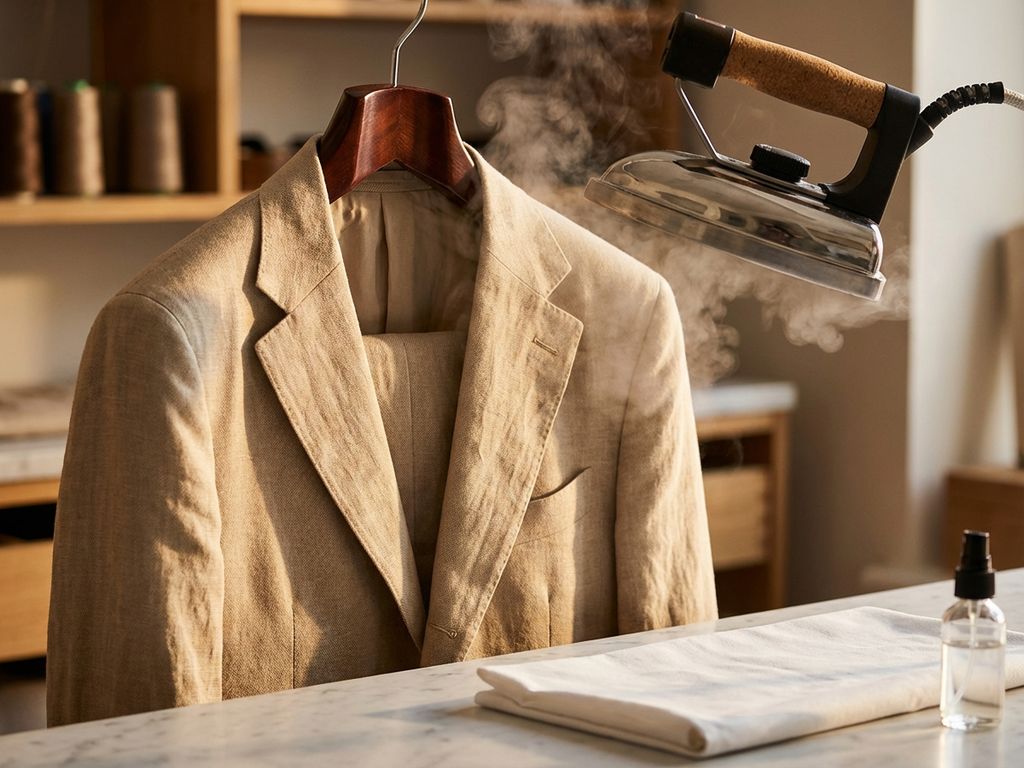
The best pressing method for linen suits combines medium-high heat with steam and gentle pressure. Use an iron set to the linen setting (around 200°C) with the steam function, press in the direction of the grain, and use a pressing cloth for protection. Steam helps relax the natural fibres, while proper technique prevents damage and maintains the suit’s structure.
What makes pressing linen suits different from other fabrics?
Linen requires special pressing techniques because of its unique flax fibre structure that naturally wrinkles and responds differently to heat and moisture than synthetic or wool fabrics. The loose weave and natural fibres make linen more sensitive to temperature changes, while still being more forgiving of higher heat settings than delicate materials.
The natural characteristics of linen fibres mean they contract and expand more dramatically when exposed to moisture and heat. This property actually works in your favour during pressing, as the fibres become more pliable and easier to smooth when properly steamed. However, this same quality means linen can develop permanent creases or shine if pressed incorrectly.
Linen’s cellular structure contains natural oils and waxes that can be damaged by excessive heat or pressure. Unlike synthetic fabrics that melt under high temperatures, linen fibres become brittle and can break, leading to a weakened fabric structure. The pressing technique must account for this by using appropriate temperature settings and avoiding excessive pressure.
The weave pattern in quality linen suits also affects how you should approach pressing. Looser weaves require gentler handling, while tighter weaves can withstand slightly more pressure. Understanding your specific linen’s weight and construction helps determine the exact pressing approach needed for optimal results.
Should you use steam or dry heat when pressing linen suits?
Steam pressing works better for most linen suits because moisture helps relax the natural fibres more effectively than dry heat alone. Steam penetrates the fabric structure, allowing fibres to reshape without the harsh direct contact that can cause shine or damage. Use steam for general pressing and dry heat only for final touch-ups.
Steam pressing offers several advantages for linen suit care. The moisture content helps restore the fabric’s natural flexibility, making it easier to remove wrinkles without excessive pressure. Steam also reduces the risk of creating unwanted creases or pressing marks that can occur with dry ironing.
Dry heat becomes useful in specific situations, particularly for the final pressing of trouser creases or when you need to remove excess moisture from the fabric. Some tailors prefer a combination approach: initial steam pressing followed by a light dry iron pass to set the shape and remove any remaining moisture.
Fabric weight influences your choice between steam and dry methods. Heavier linen fabrics benefit more from steam penetration, while lighter linens may respond adequately to dry heat with minimal pressure. Structured areas like jacket lapels often require steam to reshape the underlying canvas properly.
Consider the garment’s construction when choosing your method. Fully canvassed jackets respond better to steam because it affects both the outer fabric and internal structure. Fused constructions may require more careful steam application to avoid affecting the adhesive layers.
What temperature setting works best for pressing linen without damage?
Set your iron to the linen setting, typically around 200°C (392°F), for most linen suits. Start with medium-high heat and test on an inconspicuous area like an inside seam. Watch for any colour changes, stiffening, or shine that indicate the temperature is too high for your specific fabric.
Different linen weights require slight temperature adjustments. Lightweight summer linens may need slightly lower temperatures around 180°C, while heavier winter-weight linens can handle the full 200°C setting. The key lies in testing your specific fabric’s response before proceeding with the entire garment.
Temperature testing should be done on fabric scraps if available, or on hidden areas like inner jacket facings or trouser hem allowances. Press a small section and observe the fabric’s response. The proper temperature will smooth wrinkles without changing the fabric’s texture or appearance.
Warning signs of excessive heat include fabric stiffening, colour changes, or a shiny appearance on the fabric surface. If you notice any of these signs, reduce the temperature immediately and allow the iron to cool before continuing. Linen that becomes shiny from overheating is often permanently damaged.
Modern irons with precise temperature controls make this process easier, but older irons may require more careful monitoring. Allow the iron to reach a stable temperature before testing, as fluctuating heat can give inconsistent results during your fabric assessment.
How do you properly prepare a linen suit before pressing?
Inspect the entire suit for stains, damage, or areas needing special attention before heating your iron. Check that pockets are empty, remove any pins or accessories, and lay the garment on a clean, padded surface. Lightly mist heavily wrinkled areas with distilled water and allow the fabric to absorb moisture for better pressing results.
Begin preparation by examining each garment piece thoroughly. Look for stains that might set permanently under heat, loose buttons that could be damaged, or areas where the fabric appears stretched or distorted. Address these issues before pressing to avoid creating permanent problems.
Set up your pressing area with a well-padded ironing board or pressing table. The padding should be sufficient to support the fabric without creating hard edges that might leave marks. Ensure your pressing surface is clean and free from any residue that could transfer to the linen.
Gather the necessary tools, including a pressing cloth (cotton or linen works well), a spray bottle with distilled water, and appropriate hangers for the finished garments. Distilled water prevents mineral deposits that can leave marks on light-coloured linen fabrics.
Check that the iron’s steam vents are clean and functioning properly. Mineral buildup in steam holes can cause spitting or uneven steam distribution, leading to water spots on your linen suit. Clean the iron if necessary before beginning the pressing process.
What’s the correct technique for pressing different parts of a linen suit?
Press jacket lapels from the underside using steam and a pressing cloth, working from the shoulder towards the point. For sleeves, press along the natural crease line without creating new folds. Trouser creases require pressing from the inside first, then setting the crease from the outside with minimal pressure and steam.
Jacket pressing requires systematic attention to each component. Start with the back panel, pressing from shoulder to hem in smooth, overlapping strokes. Move to the front panels, taking care around the lapel area where the fabric curves and may require additional shaping with steam.
Sleeve pressing demands particular attention to avoid creating unwanted creases. Lay the sleeve flat with the seam running down the underside. Press from the shoulder towards the cuff, rotating the sleeve slightly to ensure even coverage without pressing in the seam lines.
Trouser pressing technique involves creating sharp, straight creases that enhance the suit’s appearance. Begin by aligning the inseam and outseam to find the natural crease line. Press from the inside first to set the shape, then finish from the outside for a crisp appearance.
Delicate areas like pocket flaps, collar points, and button areas require reduced pressure and careful steam application. Use the tip of the iron for precision work, and always use a pressing cloth in these areas to prevent shine or impressions from showing on the fabric surface.
Directional pressing follows the fabric grain to avoid distorting the weave. Linen responds best when pressed in the direction of the strongest threads, typically running lengthwise in the garment. Cross-grain pressing can stretch or distort the fabric shape permanently.
When should you take your linen suit to a professional instead?
Take your linen suit to a professional cleaner when dealing with structured garments with complex construction, stubborn set-in wrinkles, or valuable suits where mistakes could be costly. Professional pressing is also recommended for suits with mixed fabrics, intricate details, or when you lack confidence in your pressing skills.
Structured jackets with full canvas construction benefit from professional attention because the internal layers require specific handling that home pressing cannot adequately address. Professional pressers understand how it works with these complex constructions without damaging the internal structure or shape.
Stubborn wrinkles that have been set through improper storage or repeated wear often require professional treatment. Commercial pressing equipment can apply consistent steam and pressure that domestic irons cannot match, making it possible to remove creases that resist home treatment.
Valuable or vintage linen suits warrant professional care due to their irreplaceable nature. The cost of professional pressing becomes insignificant compared to the potential loss from pressing mistakes on garments with sentimental or monetary value.
Mixed-fabric suits containing linen blends with silk, wool, or synthetic components require expertise in handling multiple fabric types simultaneously. Each component may have different pressing requirements that conflict with each other, making professional knowledge necessary.
When seeking professional help, choose cleaners experienced specifically with linen garments. Ask about their pressing methods and whether they use appropriate techniques for natural fibres. Quality professionals will discuss the garment’s specific needs and explain their approach to suit pressing before beginning work.
Understanding proper linen suit pressing techniques helps you maintain your garments between professional cleanings while knowing when to seek expert help. The combination of home maintenance and professional care ensures your linen suits remain crisp and well-presented for years. At Café Costume, we understand the importance of proper garment care and recommend developing these skills to protect your investment in quality tailored pieces. For special occasions like weddings, proper pressing becomes even more crucial to ensure your linen suit looks impeccable. If you need assistance with garment care or have questions about maintaining your suits, feel free to contact our team for expert advice.
