



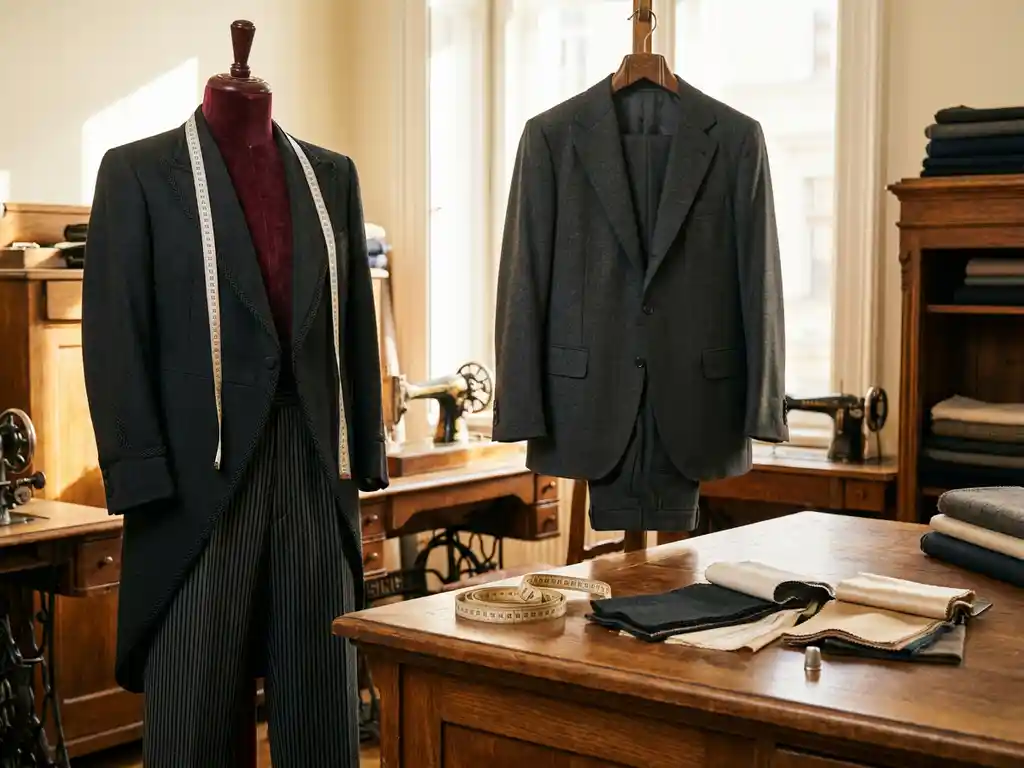
Morning suits and lounge suits serve completely different purposes in men’s formalwear. A morning suit is the most formal daytime attire, featuring a tailcoat, waistcoat, and striped trousers, traditionally worn for weddings and ceremonial events. A lounge suit consists of a matching jacket and trousers, making it the versatile standard for business and semi-formal occasions.
What exactly is a morning suit and when do you wear one?
A morning suit represents the pinnacle of formal daytime dress, consisting of three distinct components: a morning coat (tailcoat), waistcoat, and striped trousers. The morning coat features a cutaway front that slopes back to form tails, creating an elegant silhouette that distinguishes it from all other suit styles.
The traditional morning suit ensemble includes a grey or black morning coat, typically made from wool or a wool blend. The waistcoat, often in grey or buff (pale yellow), provides a contrasting layer beneath the coat. The trousers feature distinctive black and grey stripes and should fit precisely, without turn-ups (cuffs).
You wear a morning suit for the most prestigious daytime occasions. Royal events, state ceremonies, and formal weddings represent the primary settings where morning dress is appropriate. Many grooms choose morning suits for traditional church weddings, particularly for ceremonies held before 6 p.m. Horse racing events like Royal Ascot also maintain strict morning dress requirements in certain enclosures.
The historical context explains why morning suits remain relevant today. Developed in the 19th century as informal daywear for gentlemen, the morning suit evolved into formal attire as fashion standards changed. This evolution created the distinction between daytime formalwear (morning dress) and evening formalwear (white tie), establishing protocols that continue to influence modern dress codes.
What defines a lounge suit and why is it so versatile?
A lounge suit consists of a matching jacket and trousers cut from the same fabric, creating a coordinated appearance that forms the foundation of modern menswear. Unlike the morning suit’s ceremonial components, the lounge suit’s unified design makes it adaptable to numerous occasions and dress codes.
The jacket typically features a standard length that covers the seat, with various lapel styles including notched, peaked, or shawl collars. Modern lounge suits offer multiple cut options: slim fit for contemporary styling, regular fit for classic proportions, and relaxed fit for comfort. The trousers coordinate perfectly with the jacket, creating a seamless visual line.
Business meetings, social gatherings, and semi-formal events represent the lounge suit’s natural habitat. You can wear different lounge suit styles for job interviews, dinner parties, theatre visits, and countless other occasions. The versatility extends through colour choices, from navy and charcoal for business settings to lighter shades for summer weddings.
The lounge suit’s evolution mirrors changing social patterns. Originally developed as casual wear in the 1860s, it gradually replaced more formal options as society became less rigid. This transformation established the lounge suit as the default choice for most professional and social situations, explaining why it dominates modern wardrobes and remains the go-to option for wedding suits across various settings.
What are the key visual differences between these two suit styles?
The most striking difference lies in the jacket design: morning coats feature dramatic tails that extend to knee length at the back, while lounge suit jackets maintain a consistent length around the hips. This fundamental distinction makes each style instantly recognisable from any angle.
The morning suit’s tailcoat creates a distinctive silhouette with its cutaway front that curves back sharply. The single-breasted design typically includes one button, worn fastened to emphasise the coat’s elegant lines. In contrast, lounge suit jackets present a uniform appearance with various button configurations and lapel styles that maintain consistent proportions.
Trouser styles reveal another clear distinction. Morning suit trousers feature bold black and grey stripes with a high waistline designed to complement the waistcoat. These trousers never include turn-ups and often feature side adjusters rather than belt loops. Lounge suit trousers match the jacket fabric exactly and can include various styling details like pleats, turn-ups, or different waistband treatments.
Colour schemes differ significantly between the styles. Morning suits traditionally use a limited palette of greys and blacks with specific contrast elements. Lounge suits embrace the full spectrum of colours and patterns, from conservative navy and charcoal business suits to lighter summer wedding suits in blues, tans, or even bold formal wedding suits in unconventional shades.
The required accessories also distinguish these styles. Morning suits demand specific elements: a waistcoat, formal shirt (often with a wing collar), silk tie or cravat, and often a top hat for complete traditional dress. Lounge suits require minimal accessories and work with standard dress shirts, regular ties, and optional waistcoats for added formality.
How do you choose between a morning suit and lounge suit for your event?
The time of day provides your first decision point: morning suits are appropriate for daytime events before 6 p.m., while lounge suits work throughout the day and evening. This traditional guideline helps determine appropriate formality levels and ensures you match the event’s expected dress standards.
Dress code interpretation requires understanding specific terminology. “Morning dress” explicitly calls for a morning suit, while “formal,” “black tie optional,” or “cocktail attire” typically indicate lounge suit appropriateness. Wedding invitations often specify dress expectations, helping you choose between these dramatically different styles.
Venue formality influences your choice significantly. Historic churches, stately homes, and royal venues often expect morning dress for daytime celebrations. Modern venues, hotels, and outdoor locations typically suit lounge suits better. Consider the setting’s architectural style and traditional associations when making your decision.
Cultural expectations vary by region and social circle. British society maintains stronger morning suit traditions, particularly for formal weddings and racing events. Other cultures may find lounge suits more appropriate for equivalent occasions. Understanding your specific social context prevents overdressing or underdressing for important events.
For summer wedding suits, consider fabric and comfort alongside formality. Morning suits in heavy wools can prove uncomfortable in warm weather, making lightweight lounge suits more practical. However, some summer weddings specifically request morning dress regardless of temperature, requiring careful fabric selection for comfort.
Personal style preferences matter when both options are acceptable. Some men prefer the dramatic elegance of morning dress for special occasions, while others feel more comfortable in the familiar lines of a well-fitted lounge suit. Your confidence in wearing either style affects how you present yourself at important events.
Understanding the distinction between morning suits and lounge suits helps you navigate formal dress codes with confidence. Whether you’re planning wedding suit colours for a summer celebration or selecting formal wedding suits for a traditional ceremony, knowing when each style is appropriate ensures you dress correctly for life’s important moments. We specialise in creating both morning suits and lounge suits tailored to your exact measurements, helping you look and feel your best for any formal occasion.
