



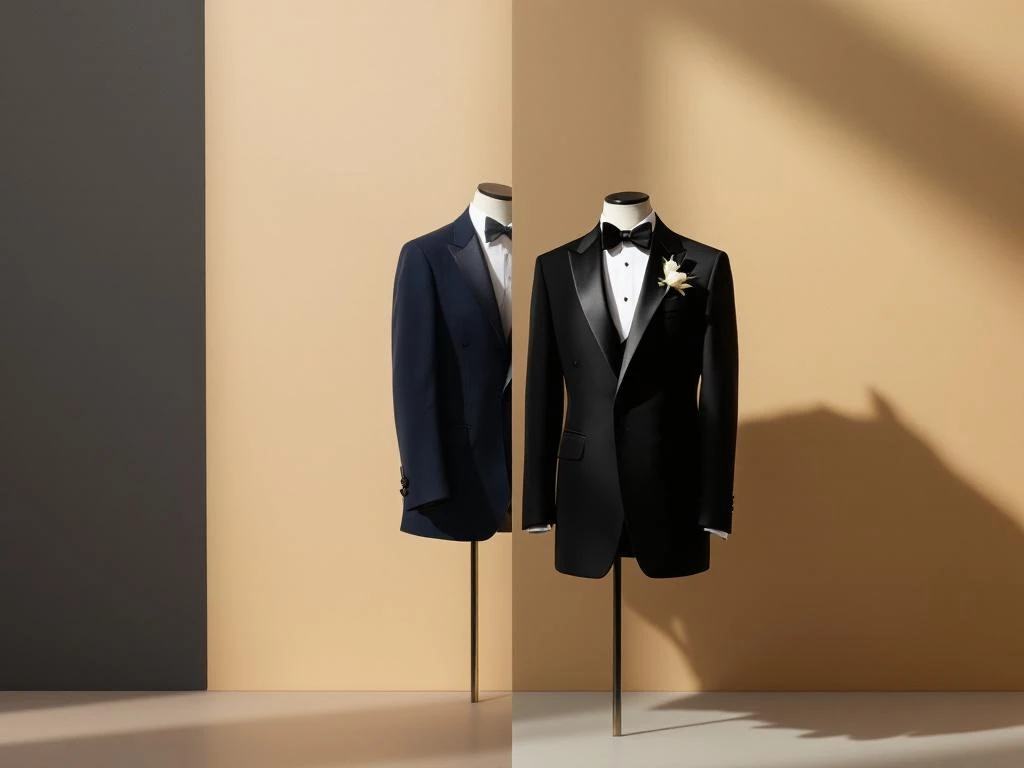
The main difference between a wedding suit and a tuxedo lies in their formal details. A tuxedo features satin accents on the lapels, buttons, and trouser side stripe, while a wedding suit uses standard fabric throughout. Tuxedos are traditionally worn with bow ties for black tie events, whereas wedding suits offer more flexibility in styling and work for various formality levels. Both can be perfect groom suit choices depending on your wedding‘s dress code and time of day.
What exactly is the difference between a wedding suit and a tuxedo?
A tuxedo distinguishes itself through specific formal elements that a standard wedding suit doesn’t have. The most noticeable difference is the satin detailing that appears on a tuxedo’s lapels, buttons, and the side stripe running down each trouser leg. Wedding suits use the same fabric throughout the entire garment without these satin accents.
The lapel styles also differ between the two. Tuxedos typically feature shawl, peak, or notch lapels covered in satin, creating that distinctive formal shine. Wedding suits come with standard fabric lapels, usually in notch or peak styles, that match the rest of the jacket.
Button construction sets them apart as well. Tuxedo buttons are often covered in satin or fabric to maintain the sleek, formal appearance. Wedding suit buttons can be horn, plastic, or metal, offering more variety in styling options.
The trousers tell their own story too. Tuxedo trousers always include a satin stripe along the outer seam and never have belt loops, as they’re designed to be worn with braces or side adjusters. Wedding suit trousers look like standard suit trousers with belt loops and no decorative stripe.
When should you wear a tuxedo versus a wedding suit?
Wear a tuxedo for black tie events and formal evening weddings that start after 6 PM. If your wedding invitation specifies “black tie” or “formal attire,” a wedding tuxedo is the appropriate choice. Evening ceremonies, particularly those in grand venues like ballrooms or historic estates, call for this level of formality.
Wedding suits work brilliantly for daytime ceremonies, semi-formal events, and celebrations with a more relaxed atmosphere. They’re perfect for garden weddings, beach ceremonies, and afternoon receptions. Summer wedding suits in lighter fabrics and colours suit warm-weather celebrations beautifully.
Seasonal considerations matter too. Tuxedos traditionally appear at autumn and winter weddings when formality naturally increases. Spring and summer weddings often favour lighter wedding suits in breathable fabrics that keep you comfortable while looking sharp.
Your venue influences this decision as well. Hotel ballrooms, country estates, and traditional churches lean towards tuxedos for evening events. Barns, vineyards, restaurants, and outdoor settings pair wonderfully with well-tailored wedding suits that match the venue’s character.
Consider your wedding theme and overall aesthetic. Formal, traditional weddings suit tuxedos, while modern, casual, or themed celebrations give you freedom to choose wedding suits that reflect your personality and style preferences.
Can you wear a regular suit to a black tie wedding?
You can wear a dark, well-tailored suit to a black tie wedding when a tuxedo isn’t available, though it’s not the traditional choice. A black or midnight blue suit in a fine wool fabric comes closest to matching the formality level. Pair it with a white dress shirt, black bow tie, and polished black shoes to elevate the look.
Modern interpretations of black tie have become more flexible, particularly for guests rather than the wedding party. Many couples now accept dark suits as appropriate alternatives, understanding that not everyone owns or wants to rent a tuxedo.
The key is making your suit look as formal as possible. Choose a suit in excellent condition with sharp tailoring. Avoid anything too casual like light colours, heavy textures, or fashion-forward patterns. Stick with classic cuts and dark, solid colours.
Your accessories make a significant difference here. A crisp white dress shirt with French cuffs and cufflinks adds formality. A black bow tie works better than a necktie for approximating tuxedo formality. Patent leather or highly polished black Oxford shoes complete the formal appearance.
If you’re the groom or part of the wedding party, you should honour the black tie dress code with an actual tuxedo. This shows respect for the occasion and ensures you match the formality your partner has chosen for the celebration.
What are the key styling details that make a tuxedo formal?
The satin lapels create the most recognizable formal element of a tuxedo. This glossy fabric catches light differently than the wool jacket body, creating visual contrast that signals elevated formality. The satin can appear in shawl, peak, or notch lapel styles, each offering a different aesthetic.
Tuxedo trousers include a single satin stripe running down the outer seam of each leg. This stripe matches the lapel satin, creating a coordinated formal appearance from head to toe. The absence of belt loops reinforces the formal nature, as tuxedo trousers are worn with braces or feature side adjusters.
The buttons on a tuxedo jacket are covered in satin or the jacket fabric itself, maintaining the sleek silhouette without shiny distractions. This detail extends to the trouser buttons and any waistcoat or cummerbund fastenings.
Formal shirt requirements differ from standard dress shirts. Tuxedo shirts typically feature a pleated or piqué front, wing or turndown collars, and French cuffs that require cufflinks. The shirt should always be white or ivory to maintain traditional formal standards.
The bow tie remains the classic neckwear choice for tuxedos, traditionally in black silk. While long ties have become acceptable in some modern contexts, the bow tie represents true formal tradition. Patent leather or highly polished black Oxfords complete the formal footwear requirements.
Understanding these differences helps you choose the right option for your wedding. Whether you select a classic tuxedo for a formal evening celebration or opt for a beautifully tailored wedding suit that matches your venue and season, the most important thing is feeling confident and comfortable on your special day. At Café Costume, we help you create the perfect groom suit through our made-to-measure approach, ensuring every detail reflects your personal style whilst respecting the formality your occasion deserves. If you have questions about which option is right for your celebration, our team is here to help—contact us to discuss your vision, or learn more about our commitment to creating exceptional wedding attire.
