



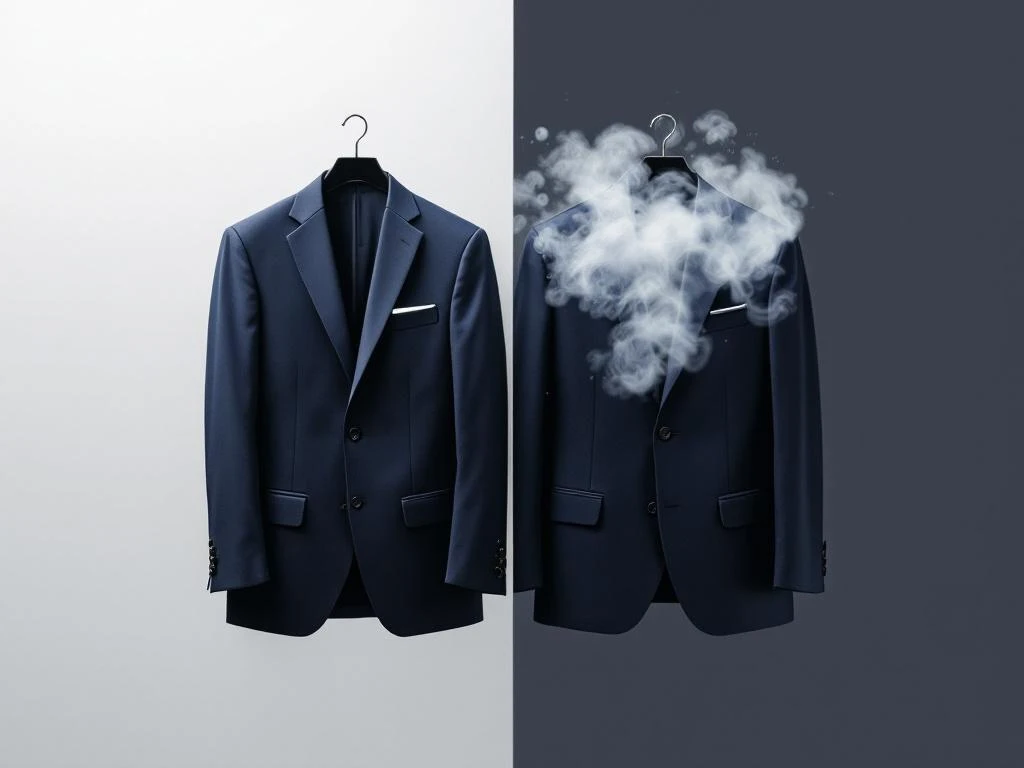
Dry cleaning uses liquid chemical solvents instead of water to clean your suit, while wet cleaning is a professional water-based process that’s gentler than home washing. Both methods effectively clean suits, but they work differently and suit different fabrics and stain types. The choice between them depends on your suit’s fabric, the type of stains, and how the garment is constructed.
What exactly is dry cleaning and how does it work?
Dry cleaning cleans your suit using chemical solvents rather than water. Despite the name “dry,” the process uses liquid—just not water. The most common solvent is perchloroethylene (perc), which dissolves oils and dirt that water can’t remove. Your suit goes into a large machine that looks similar to a washing machine, where it’s gently tumbled in the solvent, then spun and dried.
The process starts when your suit arrives at the cleaner. They inspect it for stains and pre-treat problem areas with specialized spotting agents. The garment then goes into the dry cleaning machine, where it’s washed in the solvent for about 8-15 minutes. The machine drains the solvent (which is filtered and reused), then spins the suit to remove remaining liquid before drying it with warm air.
After cleaning, your suit gets pressed and steamed to restore its shape and remove wrinkles. The solvents evaporate completely during drying, leaving no residue. This method works brilliantly for removing oil-based stains like body oils, cooking grease, and makeup. It’s called “dry” because the solvents contain no water molecules, which means fabrics don’t swell or shrink the way they would with water-based cleaning.
What is wet cleaning and how is it different from regular washing?
Professional wet cleaning uses water and specialized detergents in computer-controlled machines that precisely manage temperature, agitation, and moisture levels. This isn’t like tossing your suit in your home washing machine. The equipment and techniques are designed specifically for delicate garments that would typically be dry cleaned, using gentle processes that protect fabric integrity.
The machines control water temperature down to the degree, use specific spin speeds for different fabrics, and regulate how much mechanical action the garment receives. Professional wet cleaners also use biodegradable detergents formulated for delicate fabrics, along with fabric conditioners that prevent shrinkage and maintain texture. The drying process is equally controlled, often using specialized equipment that shapes the garment as it dries.
What makes this different from home washing is the level of control and expertise. Your home machine uses preset cycles with standard temperatures and agitation levels that are too harsh for suits. Professional wet cleaning tailors every aspect of the process to your specific garment. The cleaner assesses the fabric type, construction, and any special finishes before choosing the appropriate cleaning parameters. They also use tension-finishing equipment that reshapes the garment during drying, preventing the distortion that would happen in your home dryer.
What’s the difference between dry cleaning and wet cleaning for suits?
The main difference lies in the cleaning agent: dry cleaning uses chemical solvents while wet cleaning uses water. This fundamental difference affects everything from environmental impact to how each method handles different stains. Dry cleaning excels at removing oil-based stains like body oils, grease, and lipstick. Wet cleaning works better on water-based stains like wine, coffee, perspiration, and food spills.
Environmental impact differs significantly between the two methods. Dry cleaning solvents can be harsh on the environment if not properly managed, though modern facilities recycle solvents and follow strict regulations. Wet cleaning is generally more environmentally friendly, using biodegradable detergents and no harsh chemicals. However, it does use more water and energy for heating.
Cost varies by location and cleaner, but dry cleaning typically costs slightly more due to the equipment and solvent expenses. Wet cleaning can be more affordable, though professional wet cleaning with proper equipment isn’t always cheaper than dry cleaning.
How each method affects your suit over time matters for suit longevity. Dry cleaning can gradually break down certain fabric finishes and may cause colours to fade slightly with repeated cleaning. However, it maintains fabric structure well and doesn’t cause shrinkage. Wet cleaning is gentler on fibres and better preserves colours and finishes, but requires more skill to prevent shrinkage or distortion. When done properly, wet cleaning can actually extend your suit’s life compared to dry cleaning.
Which cleaning method is better for your suit?
Choose your cleaning method based on fabric type, stain type, and garment construction. Wool suits typically handle both methods well, though traditional wool often goes to dry cleaning. Cotton and linen suits can be wet cleaned successfully, while synthetic blends depend on their specific composition. Always check your suit’s care label for manufacturer recommendations.
For stain types, think about what caused the mark. Oil-based stains (makeup, cooking oil, body oils) respond better to dry cleaning. Water-based stains (wine, coffee, sweat, food) come out more effectively with wet cleaning. If you’re dealing with perspiration stains, wet cleaning often works better because it actually removes the salts and acids that dry cleaning can leave behind.
Garment construction matters too. Suits with structured shoulders, canvas interlining, or complex tailoring often do better with dry cleaning because the process doesn’t involve water that might affect these structural elements. Unstructured or deconstructed suits can usually handle wet cleaning without issues. Consider how often you’re cleaning as well—if you’re doing proper suit storage and only cleaning when truly necessary, either method works fine. For frequent cleaning, wet cleaning might be gentler on your suit over time.
You can also alternate between methods. Some people dry clean for general maintenance and use wet cleaning specifically for perspiration or water-based stains. When learning how it works for professional suit care, remember that clean suits store better than worn ones, regardless of which cleaning method you choose. The best approach is finding a quality cleaner who understands both methods and can recommend the right one for your specific suit and situation. At Cafe Costume, we understand that proper suit cleaning is just one part of maintaining your investment in quality tailoring, and choosing the right method helps your garments look their best for years to come. Whether you’re preparing your suit for a wedding or maintaining your everyday business attire, proper cleaning ensures your suit maintains its impeccable appearance. If you have questions about caring for your specific garment, feel free to contact us for personalized advice on the best cleaning approach for your needs.
