



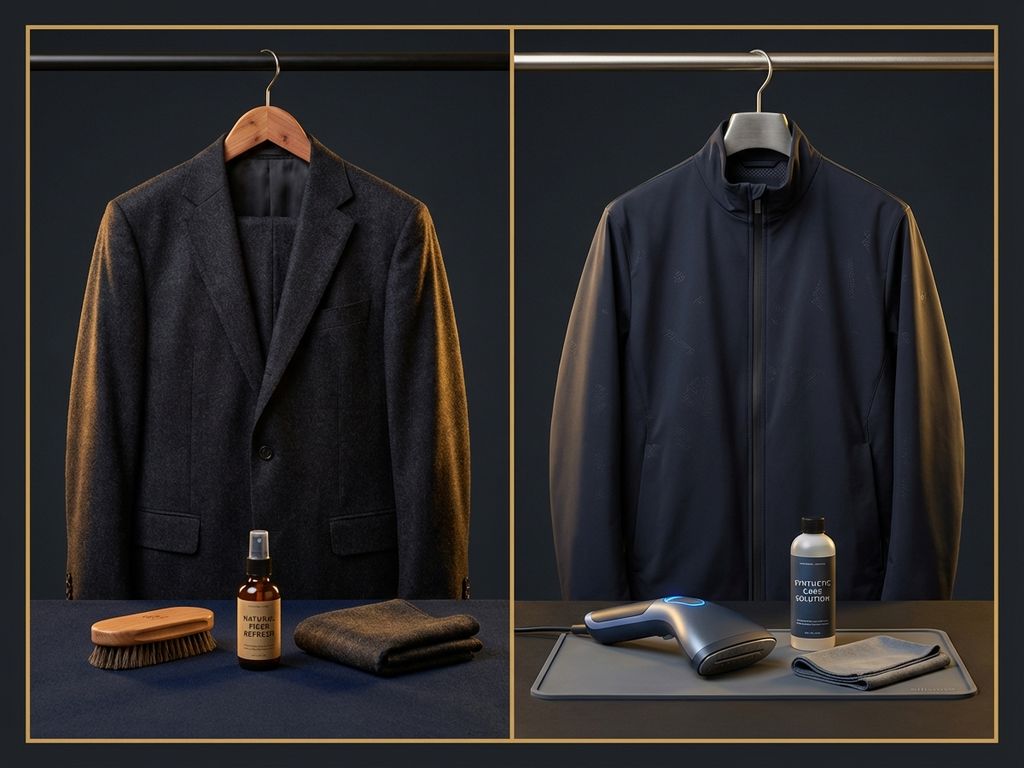
Understanding the difference between natural and synthetic suit fabric care helps you extend your garments’ lifespan and maintain their appearance. Natural fabrics like wool and cotton require gentle cleaning and careful temperature control, while synthetic materials can handle more frequent washing but need specific wrinkle-prevention techniques. The key difference lies in fibre structure—natural materials have scales and breathable properties that synthetic fabrics lack.
What’s the actual difference between natural and synthetic suit fabrics?
Natural suit fabrics come from plant and animal sources, while synthetic materials are manufactured through chemical processes. Natural fabrics include wool from sheep, cotton from cotton plants, linen from flax, and silk from silkworms. These materials have complex fibre structures with natural scales, breathable properties, and moisture-wicking abilities that regulate temperature and comfort.
Synthetic fabrics like polyester, nylon, and rayon are created in laboratories using petroleum-based chemicals or processed natural materials. These man-made fibres have uniform, smooth structures that resist wrinkles and stains but don’t breathe as well as natural materials.
The structural differences significantly impact how you wear and care for these fabrics. Natural fibres regulate moisture and temperature, making wool suits comfortable in various climates. However, they’re more delicate and prone to shrinking, stretching, or damage from heat and chemicals.
Synthetic materials offer durability and easy maintenance but can trap moisture and odours. They resist wrinkles well and maintain their shape, but they may feel less comfortable during extended wear and can develop static electricity.
How do you properly care for natural suit fabrics like wool and cotton?
Natural suit fabrics require gentle care with minimal heat and chemicals. Professional dry cleaning every 4–6 wears maintains fabric integrity without over-cleaning. Between cleanings, hang suits on proper wooden hangers and allow them to air out for 24 hours between wears.
For daily maintenance, use a clothes brush to remove surface dirt and lint. Brush in downward strokes following the fabric’s grain. This prevents dirt from embedding in the fibres and maintains the fabric’s natural texture.
Steam rather than press natural fabrics when possible. Steaming removes wrinkles without applying direct heat and pressure that can damage delicate fibres. If you must press, use a pressing cloth and low heat settings appropriate for the specific fabric type.
Store natural fabric suits in breathable garment bags or well-ventilated wardrobes. Avoid plastic covers that trap moisture and can cause mildew. Cedar blocks or lavender sachets naturally repel moths without harsh chemicals that might damage the fabric.
Spot-clean minor stains immediately with cold water and gentle blotting. Avoid rubbing, which can spread stains or damage the fabric weave. For significant stains, take the garment to a professional cleaner promptly.
What’s the best way to maintain synthetic and blended suit fabrics?
Synthetic and blended fabrics can handle more frequent cleaning and higher temperatures than natural materials. Many synthetic suits are machine-washable on gentle cycles with cool water, though you should always check care labels first. Use mild detergents without bleach or fabric softeners that can break down synthetic fibres.
For wrinkle prevention, remove synthetic suits from washing machines immediately and hang them while slightly damp. The weight of the water helps smooth out wrinkles naturally. You can also use a steamer or iron on low heat settings for touch-ups.
Synthetic fabrics respond well to stain treatment with appropriate cleaning products. Act quickly on spills, using cold water and gentle blotting. Many synthetic materials resist oil-based stains better than natural fibres, but they can hold onto odours more persistently.
Store synthetic suits on regular hangers in standard wardrobes. These materials don’t require the same breathability as natural fibres, though good air circulation still helps prevent odour build-up. Avoid excessive folding, which can create permanent creases in some synthetic materials.
Professional cleaning every 8–10 wears is usually sufficient for synthetic suits, though you can clean them more frequently if needed without damage. The durability of synthetic fibres makes them more forgiving of regular cleaning cycles.
Why do natural and synthetic fabrics require different cleaning approaches?
The molecular structure of natural and synthetic fibres determines their cleaning requirements. Natural fibres have complex, irregular structures with scales and air pockets that make them sensitive to heat, agitation, and chemical exposure. Excessive heat can cause wool to shrink by tightening these natural scales, while harsh chemicals can break down protein-based fibres like silk.
Natural fibres absorb moisture differently than synthetic materials. Wool can absorb up to 30% of its weight in moisture without feeling wet, but this same property makes it vulnerable to water-based stains and requires careful drying to prevent shrinkage or distortion.
Synthetic fibres have uniform, smooth structures that resist moisture absorption but can trap oils and odours. Their chemical composition makes them more resistant to heat and agitation, allowing for machine washing and higher-temperature cleaning methods that would damage natural materials.
The dye processes also differ between fabric types. Natural fibres often use dyes and treatments that may not be colourfast under harsh cleaning conditions. Synthetic materials typically use more stable colouring processes that withstand frequent washing.
Understanding these structural differences helps you choose appropriate cleaning methods, temperatures, and products that work with, rather than against, the fabric’s natural properties.
How can you tell if your suit fabric care routine is working?
Healthy fabric maintains its original texture, colour, and shape over time. Well-cared-for suits show minimal pilling, retain their structured silhouette, and feel smooth to the touch. The fabric should spring back when lightly pressed and show no signs of thinning or wear patterns except in high-friction areas after extensive use.
Look for warning signs of improper care, including excessive wrinkling that doesn’t steam out easily, colour fading or yellowing, fabric stiffness, or a rough texture. Shrinkage, stretching around stress points, or persistent odours indicate your current care routine needs adjustment.
Monitor how long your suits maintain their pressed appearance. Properly cared-for garments should hold their shape throughout a full day of wear. If suits become wrinkled quickly or lose their structure, you may need to adjust cleaning frequency or methods.
Professional assessment helps when you’re unsure about fabric condition. Experienced cleaners can identify early signs of damage and recommend care adjustments before problems become irreversible. They can also suggest when alterations or repairs might extend a suit’s lifespan.
Track your suits’ longevity compared with your wearing frequency. Well-maintained suits should provide years of regular wear with proper rotation. If garments show significant wear after minimal use, review your care routine, storage methods, and cleaning practices.
Proper suit maintenance becomes particularly important when you invest in quality tailored garments. At Café Costume, we understand that choosing the right fabric is just the beginning—knowing how to care for your investment ensures your made-to-measure suit maintains its perfect fit and appearance for years to come. Our personal style consultations include guidance on fabric selection and care recommendations tailored to your lifestyle and preferences.
