



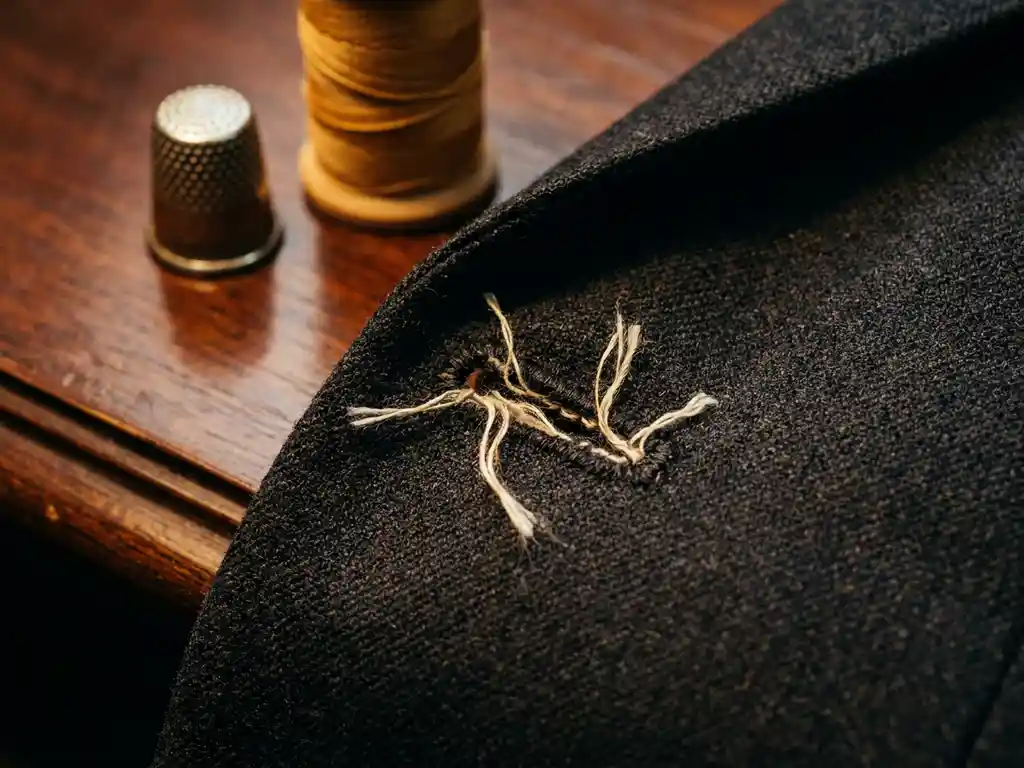
Suit buttonholes stretch out over time due to repeated stress from buttoning and unbuttoning, fabric fatigue, and natural wear patterns. The constant pulling motion gradually loosens the threads and distorts the fabric around the opening. Quality construction methods, proper care, and good buttoning habits can significantly slow this process and extend your garment’s life.
What causes suit buttonholes to stretch out over time?
Buttonhole stretching happens when the fabric fibres and supporting threads gradually weaken under repeated stress. Every time you button your jacket, you create tension that pulls at the buttonhole edges, causing microscopic damage that accumulates over time.
Fabric stress is the primary culprit. The constant push-and-pull motion of buttoning creates friction and stretches the weave structure. Natural fibres like wool have some elasticity, but they eventually lose their ability to return to their original shape after repeated stretching.
Button size mismatches accelerate the problem significantly. When buttons are too large for their holes, you need extra force to push them through. This additional pressure puts unnecessary strain on the fabric and stitching. Conversely, buttons that are too small allow excessive movement within the hole, causing gradual enlargement through friction.
The quality of your suit’s construction plays a major role in buttonhole durability. Cheaper garments often use thinner interfacing or skip reinforcement altogether. Without proper support behind the fabric, buttonholes stretch much faster under normal use.
Different fabrics respond differently to wear. Looser weaves stretch more easily than tight ones. Synthetic blends may hold their shape longer than pure natural fibres, but they can also develop permanent distortion once stretched. The thread count and fabric weight both influence how well buttonholes maintain their integrity over time.
How can you tell if your suit buttonholes are getting stretched?
The most obvious sign of buttonhole stretching is a loose button fit. When buttons slide through holes too easily or feel wobbly when fastened, the openings have likely enlarged beyond their original size. You might notice that buttons don’t sit as snugly against the fabric as they once did.
Visual inspection reveals several telltale signs. Look for fabric distortion around the buttonhole edges – the fabric may appear puckered, wavy, or pulled out of shape. The stitching around the hole might look loose or frayed, and you may see small gaps between the bartack stitches that should form a solid barrier.
Pay attention to how your jacket hangs when buttoned. Stretched buttonholes often create pulling or bunching in the fabric because the buttons no longer align properly with their intended positions. You might notice diagonal stress lines radiating from the buttonholes or areas where the fabric doesn’t lie flat.
Run your fingers along the buttonhole area. Healthy buttonholes feel firm and structured, while stretched ones feel soft or loose. The fabric around damaged holes often feels thinner or weaker than surrounding areas.
Gaps around fastened buttons are another clear indicator. When properly fitted, buttons should sit flush against the fabric without visible space around the edges. If you can see daylight around a buttoned closure, the hole has definitely stretched beyond its optimal size.
What’s the difference between machine and hand-sewn buttonholes when it comes to stretching?
Hand-sewn buttonholes typically offer superior durability and resistance to stretching compared to machine-made alternatives. The denser stitching and stronger thread used in traditional hand sewing create a more robust structure that better withstands repeated use and stress.
Traditional tailoring techniques involve cutting the buttonhole by hand and reinforcing it with closely spaced blanket stitches. This method allows the tailor to adjust thread tension and stitch density based on the specific fabric characteristics. The result is a buttonhole that’s perfectly matched to the material’s properties and intended use.
Thread quality makes a significant difference in longevity. Hand-sewn buttonholes often use silk thread, which is stronger and more flexible than the cotton or synthetic threads commonly used in machine operations. Silk thread also has natural elasticity that helps the buttonhole maintain its shape under stress.
Machine buttonholes, while faster to produce, typically use a standardised approach that may not account for fabric variations. The stitching pattern is consistent but may not provide optimal reinforcement for every material type. However, high-quality machine buttonholes with proper interfacing can still offer excellent durability.
The bartack construction differs significantly between methods. Hand-sewn bartacks are built up gradually with multiple thread layers, creating a thick, cushioned end that distributes stress effectively. Machine bartacks, while precise, may not achieve the same level of reinforcement density.
Suit care and maintenance become more important with machine-sewn buttonholes, as they may require more careful handling to achieve the same lifespan as their hand-sewn counterparts.
How do you prevent suit buttonholes from stretching in the first place?
Proper buttoning technique is your first line of defence against buttonhole stretching. Always support the fabric behind the buttonhole with your fingers while pushing the button through. This prevents the fabric from pulling and reduces stress on the hole edges.
Button your jacket from bottom to top, which allows the fabric to settle naturally and reduces strain on individual buttonholes. Never force buttons through holes – if there’s resistance, check that you’re aligning the button correctly rather than pushing harder.
Choose quality construction when purchasing suits. Look for garments with proper interfacing and reinforced buttonholes. Well-made suits often feature keyhole buttonholes for coat buttons, which include a circular end that accommodates the button shank and reduces stress on the fabric.
Your daily garment care routine significantly impacts buttonhole longevity. Always unbutton your jacket before sitting down, as the additional tension from body movement while seated puts extra strain on closures. This simple habit can double the life of your buttonholes.
Storage matters too. Hang your suits properly on quality hangers and avoid cramming them into tight spaces where buttons might catch on other garments. When travelling, unbutton jackets completely before folding or packing.
Regular suit cleaning and professional pressing help maintain the fabric’s structure and interfacing, which support the buttonholes. However, avoid over-cleaning, as excessive processing can weaken fibres and stitching over time.
Consider the button material as well. Smooth buttons like horn or quality plastic slide through holes more easily than rough or textured surfaces, reducing friction and wear during use.
Can stretched buttonholes be repaired or do you need a new suit?
Stretched buttonholes can often be repaired by skilled tailors, though the success depends on the extent of the damage and the garment’s overall condition. Professional repair techniques can restore functionality and extend the suit’s life significantly, making replacement unnecessary in many cases.
Reinforcement techniques work well for minor stretching. Tailors can add interfacing behind the buttonhole and re-stitch the edges to tighten the opening. This approach works best when the fabric itself isn’t severely damaged, and only the stitching has loosened.
Re-sewing methods involve completely removing the old stitching and reconstructing the buttonhole from scratch. Skilled tailors can often make the repair nearly invisible, especially on textured fabrics where slight colour variations in thread won’t show.
For severely damaged holes, tailors might need to patch the area with matching fabric before creating a new buttonhole. This is more complex and expensive but can save an otherwise excellent garment. The success of this repair depends heavily on finding fabric that matches perfectly.
Cost considerations vary widely based on the repair’s complexity and your location. Simple re-stitching might cost £15–30 per buttonhole, while complete reconstruction with patching could run £50–100 or more. Compare this against the suit’s value and your attachment to the garment.
Some damage simply isn’t worth repairing. If multiple buttonholes are stretched, the fabric is severely weakened, or the suit has other significant wear issues, replacement might be more economical. A good tailor will give you honest advice about whether repair makes sense.
Prevention remains far more cost-effective than repair. Proper suit maintenance and careful handling will help you avoid buttonhole problems altogether, protecting your investment for years to come.
Understanding buttonhole construction and care helps you make better decisions about garment quality and maintenance. Whether you’re dealing with current stretching issues or want to prevent future problems, working with experienced professionals ensures you get the most from your tailored garments. At Café Costume, we understand that proper construction and ongoing care are vital to creating suits that maintain their quality and appearance throughout years of wear.
