



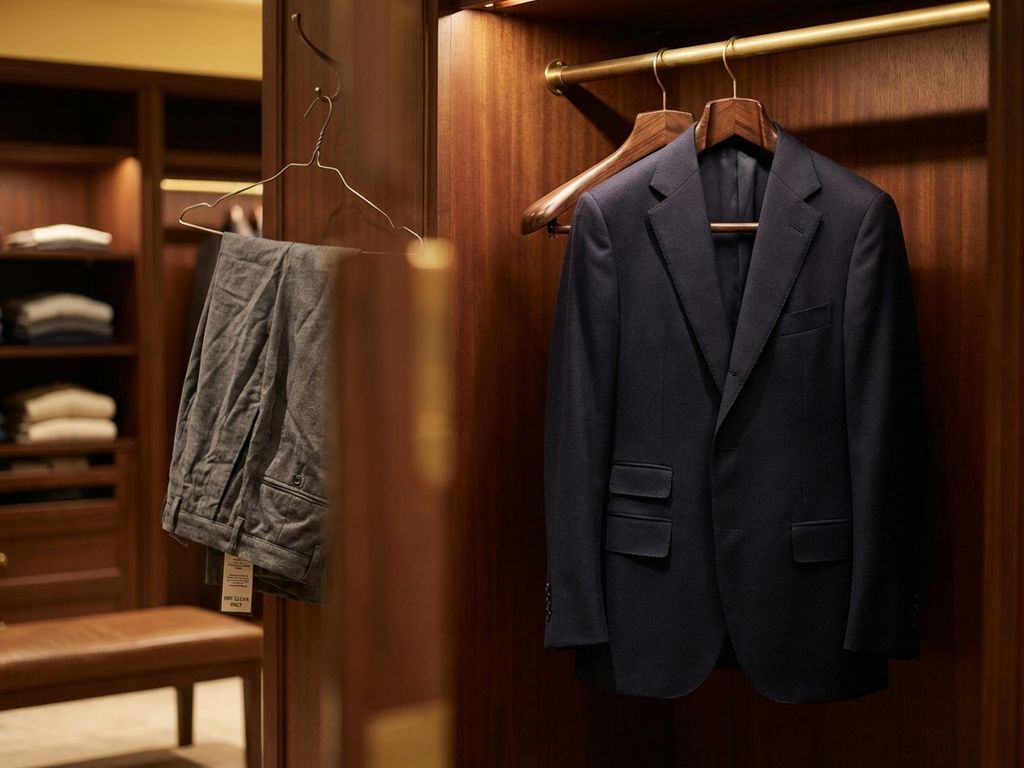
Proper hanger selection protects your suit’s structure, prevents fabric damage, and maintains the tailored fit you paid for. The wrong hangers cause shoulder dimples, stretching, and permanent shape distortion that can ruin even expensive garments. The right wooden hangers with broad shoulders preserve your suit’s silhouette and extend its lifespan significantly.
What happens to your suit when you use the wrong hangers?
Wire hangers and narrow plastic hangers create shoulder dimples and permanent fabric stretching that destroy your suit’s professional appearance. These hangers concentrate the garment’s weight on small pressure points, causing the fabric to stretch and the shoulder structure to collapse over time.
The damage happens gradually but becomes irreversible. Wire hangers dig into the jacket’s shoulder area, creating unsightly bumps that show through the fabric. The thin wire can’t support the suit’s weight properly, causing the shoulders to sag and lose their structured shape. This is particularly problematic because the shoulder construction is the most important part of a suit’s fit and the most expensive to repair.
Plastic hangers with narrow shoulders cause similar problems. They create stress points where the hanger ends meet the fabric, leading to permanent creases and fabric weakening. The jacket’s natural drape becomes distorted, and you’ll notice pulling or bunching around the shoulder and chest areas.
Fabric stretching occurs when hangers don’t match your jacket’s shoulder width. Hangers that are too narrow cause the fabric to fold inward, creating permanent creases. Hangers that are too wide stretch the shoulders beyond their intended shape. Both scenarios damage the internal structure that gives your suit its professional silhouette.
Wrinkles become set in when suits hang improperly for extended periods. These aren’t simple wrinkles that steam or pressing can remove – they’re structural changes in the fabric’s weave that require professional restoration or may be permanent.
What type of hanger actually protects your suit’s shape?
Wooden hangers with broad, contoured shoulders provide the best protection for suit care and garment maintenance. Cedar or hardwood hangers that match your jacket’s shoulder width distribute weight evenly and maintain the garment’s natural shape without creating pressure points or distortion.
The ideal hanger width should match your jacket’s shoulder measurement from seam to seam. Most men need hangers between 17 and 19 inches wide, but the exact measurement depends on your specific build and jacket cut. The hanger should fill the jacket’s shoulders without stretching or compressing the fabric.
Wooden hangers offer several advantages over alternatives. They’re sturdy enough to support heavy fabrics like wool and tweed without bending. The smooth, contoured surface prevents snagging and fabric damage. Cedar varieties naturally repel moths and absorb moisture, providing additional protection for your investment.
Plastic hangers, even thick ones, lack the structural integrity needed for proper suit maintenance. They can crack under weight, have sharp edges that damage fabric, and don’t provide the smooth surface necessary for delicate materials. They’re also more likely to leave permanent impressions in the fabric.
Wire hangers are the worst option for suit storage. They’re too thin to distribute weight properly, too weak to maintain shape, and their sharp edges can tear or permanently crease fabric. Professional dry cleaners use them for transport only – never for long-term storage.
Quality hangers also feature smooth, rounded edges and proper proportions. The hook should be sturdy enough to support weight without bending, and the overall construction should feel solid in your hands.
How do you properly hang a suit to prevent damage?
Button the jacket completely before hanging to maintain its intended shape, and position the hanger carefully inside the shoulders so it supports the jacket’s structure without stretching the fabric. Proper hanging technique prevents wrinkles and preserves the garment’s tailored silhouette.
Start by buttoning all the jacket buttons, including any interior buttons. This maintains the jacket’s designed shape and prevents the front panels from pulling or twisting. Unbuttoned jackets lose their structure and develop permanent creases along the front edges.
Insert the hanger by placing one shoulder completely onto the hanger, then carefully working the other shoulder into position. Don’t force or stretch the fabric. The hanger should slide smoothly into place and fill the shoulders naturally.
For trouser hanging, you have two effective options. Fold trousers along the existing crease and drape them over a trouser bar, or use clip hangers positioned at the trouser hem. Avoid clipping at the waistband, which can create permanent marks and stretch the fabric.
Spacing between garments matters for proper suit care and maintenance. Allow at least two inches between hanging suits so air can circulate freely. Crowded closets prevent proper ventilation and can cause wrinkles from garments pressing against each other.
Common mistakes include hanging jackets unbuttoned, using hangers that don’t fit properly, and overcrowding closet space. These practices lead to shape distortion, permanent wrinkles, and fabric damage that professional cleaning can’t always fix.
Check your hanging setup regularly. Jackets should hang straight without pulling or twisting. The shoulders should maintain their natural curve, and the front should close properly when buttoned.
Why do expensive suits need different storage care than off-the-rack clothing?
Premium suits require specialized storage because their superior construction and delicate fabrics are more susceptible to damage from improper handling. High-end materials like fine wool, cashmere, and silk need careful treatment to maintain their quality and appearance.
Expensive suits often feature hand-padded shoulders, canvas construction, and precise tailoring that create their superior fit and drape. These construction methods use traditional techniques that make the garments more structured but also more vulnerable to damage from poor storage practices.
Fine fabrics used in premium suits are often lighter and more delicate than mass-market alternatives. Super 120s wool and above can be easily damaged by sharp edges, pressure points, or improper support. These materials require gentle handling and proper hanging to maintain their luxurious feel and appearance.
The investment value of expensive suits makes proper care financially important. A well-made suit can last decades with proper garment care, but poor storage can ruin it within months. Quality hangers and proper storage techniques protect your investment and extend the garment’s useful life.
Custom and made-to-measure suits have precise fits that can be permanently altered by poor storage. The careful tailoring that creates their superior appearance can be undone by hangers that don’t support the garment properly or storage conditions that allow the fabric to stretch or distort.
Professional maintenance becomes more important with expensive suits. These garments often require specialized cleaning methods and should be stored in breathable garment bags when not worn regularly. The extra care required is justified by the superior quality and longevity these suits provide.
Temperature and humidity control also matter more for premium garments. Fine fabrics can be damaged by extreme conditions that wouldn’t affect lower-quality clothing. Proper storage includes maintaining stable conditions that preserve the fabric’s integrity.
Understanding proper suit maintenance helps you get the most from your clothing investment. Whether you’re caring for an existing wardrobe or considering a new suit, proper storage techniques ensure your garments maintain their appearance and fit for years to come. We specialize in creating suits that deserve this level of care, and our personal style consultation process includes guidance on maintaining your investment properly.
