



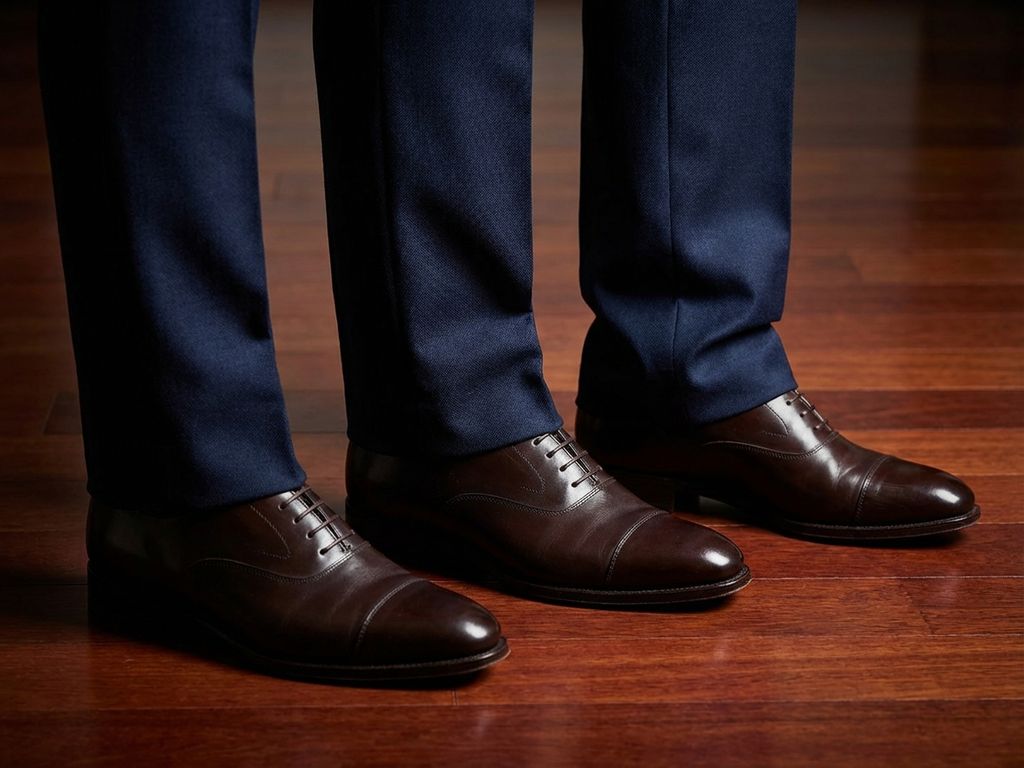
Trouser break refers to how the fabric of your trousers falls and creases where it meets your shoes. This detail significantly impacts your wedding suit’s overall appearance, affecting the silhouette’s clean lines and sophisticated finish. The right break creates visual balance and ensures your wedding suit looks polished and professionally tailored for your special day.
What exactly is trouser break and why does it matter for wedding suits?
Trouser break is the horizontal crease or fold that forms when your trouser hem rests on your shoes. This happens because the fabric needs somewhere to go when it meets the resistance of your footwear, creating a natural fold or “break” in the material.
For wedding suits, proper break matters because it directly affects how refined and well-fitted your entire outfit appears. A well-chosen break creates a smooth, uninterrupted line from your waist to your shoes, which is particularly important in wedding photography, where every detail will be captured and remembered.
The break influences several visual elements of your wedding attire. It affects the perceived length of your legs, the overall proportions of your silhouette, and how formal or casual your look appears. When you’re wearing formal wedding suits, the wrong break can make even the most expensive garment look ill-fitting or unprofessional.
Your trouser break also needs to work harmoniously with your shoe choice and the formality level of your wedding. Different wedding styles call for different approaches to this detail, making it an important consideration in your overall styling decisions.
What are the different types of trouser breaks for wedding suits?
Four main break styles work for wedding suits: no break, quarter break, half break, and full break. Each creates a different aesthetic and works better with certain body types, shoe styles, and levels of formality.
No break means your trousers hit right at the top of your shoe with no fabric touching the shoe itself. This creates the cleanest, most modern look and works exceptionally well with summer wedding suits in lighter fabrics. This style suits shorter grooms particularly well, as it doesn’t cut the leg line.
Quarter break allows just a slight touch of fabric on the shoe, creating a minimal horizontal crease. This represents the most versatile option for wedding suits, working with both formal wedding suits and more relaxed styles. It provides a contemporary look while maintaining traditional tailoring principles.
Half break creates a more pronounced fold where the fabric rests more substantially on the shoe. This traditional approach works beautifully with classic formal wedding suits and creates a timeless, elegant appearance. Taller grooms often find this break most flattering, as it adds visual weight to the lower leg.
Full break produces a deep fold, with the fabric covering a significant portion of the shoe. While less common in modern wedding styling, this break can work for very formal, traditional ceremonies when paired with the right wedding suit colours and classic styling elements.
How do you choose the right trouser break for your wedding day look?
Choose your trouser break based on your wedding’s formality level, venue, personal proportions, and shoe choice. Consider these factors together rather than focusing on just one element, as they all influence which break will look best.
For outdoor or destination weddings, no break or quarter break works best, as they appear lighter and more relaxed. These breaks complement summer wedding suits in linen or cotton beautifully and won’t drag on grass or sand. They also photograph well in natural lighting conditions.
Formal church ceremonies or black-tie events typically call for quarter break or half break. These provide the sophistication expected with formal wedding suits while maintaining clean lines. The choice between them depends largely on your height and personal preference.
Your body proportions play an important role in break selection. Shorter grooms benefit from no break or a minimal quarter break, as this creates an unbroken leg line that adds height. Taller grooms can wear a half break or even a full break without overwhelming their frame.
Shoe style significantly influences your break choice. Sleek dress shoes work with any break level, while chunkier shoes or boots may require slight adjustments. Consider how your chosen wedding suit colours will work with your footwear and break combination.
Your personal style preferences matter too. If you gravitate towards modern, minimalist aesthetics, no break or quarter break will feel more natural. Those who prefer classic, traditional styling often find a half break most appealing.
What mistakes do grooms make with trouser break styling?
The most common mistake is choosing trouser length without considering the break, resulting in trousers that are either too long and bunchy or too short and awkward. Many grooms focus solely on avoiding “high waters” and end up with excess fabric that ruins their silhouette.
Mismatching break formality with the overall wedding style creates visual discord. Wearing a very formal full break with casual summer wedding suits looks outdated, while pairing no break with traditional formal wedding suits can appear too modern for the setting.
Ignoring shoe height when determining break leads to poor proportions. The same trouser length will create different breaks depending on whether you’re wearing thin-soled dress shoes or thicker-soled alternatives. Always have fittings done while wearing your actual wedding shoes.
Many grooms choose their break based on trends rather than their body type. What looks excellent on a tall, slim groomsman might not work for different proportions. Consider your individual frame when making this decision.
Rushing the fitting process often results in compromise breaks that don’t look intentional. Take time to try different lengths and see how each affects your overall appearance. A good tailor will show you multiple options and explain how each works with your specific wedding suit colours and styling.
Failing to consider the break’s interaction with your wedding suit’s overall fit is another common error. The break should complement your jacket length, trouser cut, and overall silhouette rather than working in isolation.
Getting your trouser break right contributes significantly to achieving the perfectly polished wedding day look you’re after. When you’re ready to create your ideal wedding suit, with expert guidance on every detail, including the perfect break for your style and proportions, we’re here to help you look and feel your absolute best on your special day.
