



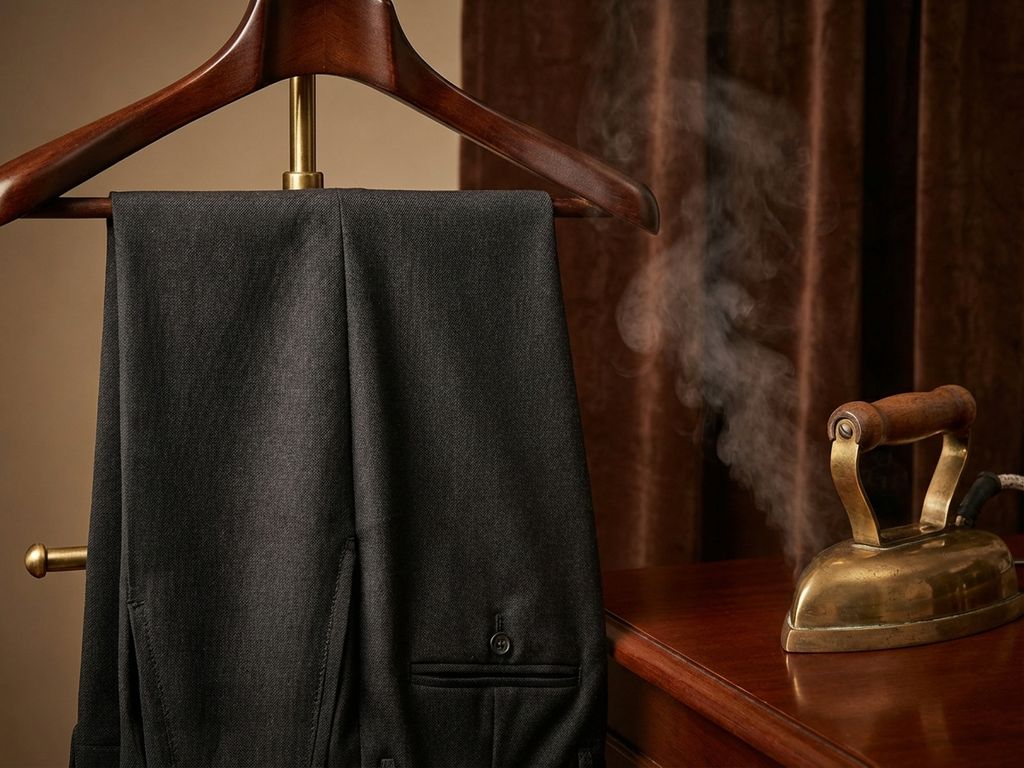
Maintaining crisp trouser creases requires regular pressing, proper storage, and careful handling. Use an iron with appropriate temperature settings, hang trousers correctly when not worn, and avoid common mistakes such as overwashing or improper folding. This guide covers the main challenges with trouser creases and practical solutions for keeping your suit trousers looking professionally pressed.
Why do suit trousers lose their crease so quickly?
Suit trousers lose their creases due to fabric memory, body movement, and environmental factors that gradually break down the pressed fold. Natural fibres such as wool relax over time, while synthetic blends may lose their shape more quickly when exposed to moisture and heat from your body during wear.
The fabric composition plays a significant role in crease retention. Pure wool maintains creases longer than wool–synthetic blends because of its natural structure. However, even high-quality wool will eventually lose its sharp fold through normal movement and sitting. When you sit, bend, or walk, the fabric stretches and contracts, gradually weakening the pressed crease.
Body heat and moisture accelerate this process. Your body temperature warms the fabric fibres, making them more pliable and prone to losing their shape. Humidity in the air also affects fabric behaviour, particularly with natural fibres that absorb moisture from the environment.
The construction quality of your trousers influences crease longevity as well. Well-made trousers with proper interfacing and quality stitching maintain their shape better than cheaper alternatives. The way the fabric was originally cut and sewn affects how well it holds a pressed crease over time.
Frequent wear without proper rest periods prevents the fabric from recovering its structure. Suit care experts recommend rotating between multiple pairs to allow each garment adequate recovery time between wears.
What’s the best way to press a crease back into suit trousers?
Press trouser creases using an iron set to the appropriate temperature for your fabric, a pressing cloth for protection, and careful alignment of the existing crease line. Work from the waistband down to the hem, applying steady pressure rather than dragging the iron across the fabric.
Start by checking your fabric care label to determine the correct iron temperature. Wool typically requires medium heat, while wool blends may need lower settings. Always use a pressing cloth — a clean cotton tea towel or muslin works perfectly — to protect the fabric from direct heat and prevent shine.
Lay your trousers on an ironing board with the legs aligned and the existing crease visible. Match the inseam to the outseam to ensure proper alignment. Place the pressing cloth over the crease area and position your iron on top without moving it side to side.
Apply firm, steady pressure for 10–15 seconds, then lift the iron and move to the next section. This pressing technique, rather than sliding the iron, prevents fabric distortion and creates sharper creases. Work systematically from the waistband to the hem on both legs.
For stubborn creases, lightly dampen the pressing cloth with distilled water. The moisture creates steam that helps set the crease more effectively. Allow the fabric to cool completely before moving the trousers to preserve the newly pressed fold.
Professional pressing techniques include using a tailor’s ham for curved areas and a sleeve board for narrow sections. These tools provide better support and help achieve more precise results than a standard ironing board alone.
How do you maintain trouser creases between wears?
Proper hanging immediately after wear is the most effective way to maintain trouser creases between wears. Use trouser hangers with clips or fold-over bars that support the full width of the waistband, and hang trousers by the cuffs to maintain the crease line through gravity.
Choose the right hanger for your trousers. Clip-style hangers work well for most fabrics, but ensure the clips have rubber or fabric padding to prevent marking. Alternatively, use hangers with a horizontal bar that allows you to fold the trousers along the existing crease.
When hanging by the cuffs, align the trouser legs so the creases match perfectly. This method uses gravity to help maintain the pressed fold while allowing air circulation around the garment. Ensure there is adequate space between garments to prevent crushing.
Allow trousers to air out for several hours before storing them in your wardrobe. This rest period lets moisture from wear evaporate and allows the fabric fibres to relax back into their pressed shape. Hanging in a well-ventilated area speeds up this process.
Store trousers in a cool, dry environment away from direct sunlight. Heat and UV rays can weaken fabric fibres and cause fading. Cedar accessories in your wardrobe help absorb excess moisture while providing natural moth protection.
Brush your trousers gently with a clothes brush after each wear to remove surface dirt and lint. This maintenance prevents particles from embedding in the fabric and helps preserve the overall appearance between professional cleanings.
Avoid folding suit trousers for storage unless absolutely necessary. Folding creates additional creases that compete with your desired pressed line and can permanently damage the fabric structure over time.
What mistakes ruin trouser creases and how do you avoid them?
The most damaging mistakes include using excessive heat when pressing, washing instead of dry cleaning, and improper storage that creates competing fold lines. Overwashing destroys fabric structure, while incorrect ironing techniques can create permanent shine or scorch marks that ruin the garment’s appearance.
Excessive heat is particularly destructive to natural fibres. Using an iron temperature that is too high can scorch wool, create permanent shine, or even melt synthetic blends. Always test the iron temperature on an inconspicuous area and use a pressing cloth as protection.
Machine washing suit trousers damages both the fabric and any internal construction elements. The agitation breaks down fibres, while water and detergent can cause shrinkage and colour changes. Professional dry cleaning preserves fabric integrity and maintains the garment’s original structure.
Improper folding creates unwanted creases that compete with your pressed lines. Folding trousers in random places or stuffing them into drawers creates permanent marks that are difficult to remove. Always follow the existing crease lines when folding is unavoidable.
Leaving trousers in cramped spaces or under heavy items crushes the fabric and flattens carefully maintained creases. Ensure adequate hanging space and avoid overcrowding your wardrobe. The weight from other garments can permanently flatten pressed folds.
Using starch or sizing products incorrectly can create a buildup of residue that attracts dirt and makes fabric stiff. If you use these products, apply them sparingly and ensure even distribution. Professional cleaners can remove buildup that accumulates over time.
Ignoring fabric care labels leads to damage that professional repair may not be able to fix. Different fabric blends require specific care approaches, and following manufacturer recommendations prevents irreversible damage to your investment.
Wearing the same pair of trousers repeatedly without rest periods prevents fabric recovery and accelerates wear. Rotating between multiple pairs allows each garment time to return to its natural shape and extends its overall lifespan.
Maintaining perfect trouser creases requires understanding fabric behaviour, using proper techniques, and avoiding common care mistakes. With consistent attention to garment care and suit maintenance, your trousers will maintain their professional appearance for longer. When you are ready to invest in expertly tailored trousers that hold their shape beautifully, we are here to help you create the perfect pair through our personalised consultation process.
