



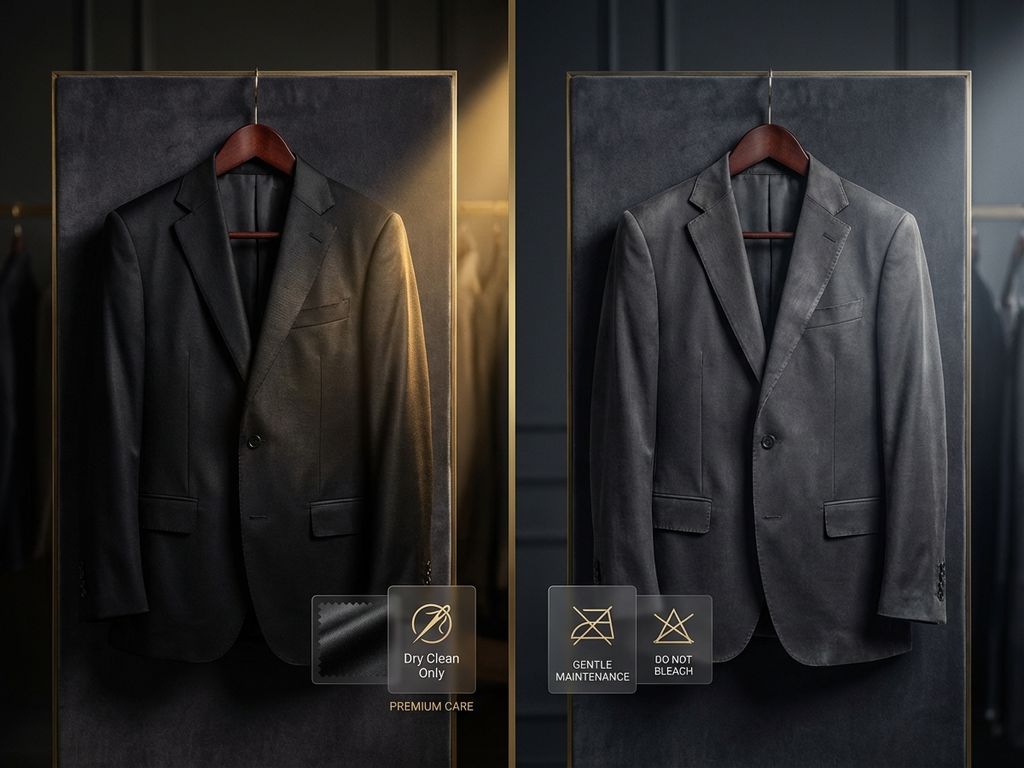
Black and navy suits fade due to ultraviolet light exposure, improper cleaning methods, low-quality dyes, and chemical reactions with environmental pollutants. Dark colours show fading more noticeably because the contrast becomes visible as pigments break down. Understanding the causes helps you protect your investment and maintain that crisp, professional appearance for longer.
What actually causes black and navy suits to fade over time?
Ultraviolet radiation from sunlight breaks down the molecular structure of fabric dyes, causing permanent colour loss in black and navy suits. Heat, humidity, chemical exposure from cleaning products, and air pollution accelerate this process. Natural fibres like wool react differently from synthetic materials, but both are vulnerable to environmental damage.
Sunlight poses the biggest threat to your suit’s colour integrity. UV rays penetrate fabric fibres and destroy the chemical bonds that hold dye molecules together. This process happens gradually but becomes noticeable over months of regular exposure. Even indoor lighting, particularly fluorescent bulbs, emits small amounts of UV radiation that contribute to fading over time.
The dyeing process itself determines how well your suit resists fading. High-quality garment care starts with understanding that cheaper dyes often sit on the fabric surface rather than penetrating deeply into the fibres. Premium suits use solution-dyed fibres or reactive dyes that form stronger chemical bonds with the fabric, creating better colour retention.
Chemical reactions with cleaning solvents, deodorants, and air pollutants create additional fading. Dry-cleaning chemicals can strip colour if used too frequently or if the cleaner uses harsh solvents. Body oils, perfumes, and urban air pollution contain compounds that react with fabric dyes, particularly affecting areas around the collar, underarms, and shoulders.
Heat accelerates all these chemical processes. Storing suits in hot environments, hanging them near radiators, or leaving them in sunny car boots speeds up colour degradation. The combination of heat and moisture creates particularly damaging conditions for maintaining colour integrity.
How do you tell if your suit is starting to fade before it becomes obvious?
Early fading appears as subtle colour variations in areas exposed to light and friction, particularly the shoulders, lapels, and seat. Compare these areas with protected sections like the inside of trouser legs or jacket linings. Look for slight greyish tinges in black suits or brownish undertones in navy pieces.
Check your suit in different lighting conditions to spot early fading. Natural daylight reveals colour changes that indoor lighting masks. Hold fabric sections together to compare areas that receive different amounts of light exposure. The shoulders and back panel often fade before other areas because they face upward when hanging.
Examine high-friction areas where fabric rubs against itself or other surfaces. The seat of the trousers, elbow areas, and collar edges show wear patterns that include colour loss. Proper suit maintenance involves regular inspection of these vulnerable spots during your normal wearing routine.
Feel the fabric texture alongside visual inspection. Faded areas often feel slightly different because the chemical changes affecting colour also impact fibre structure. The fabric might feel rougher or thinner in spots where the dye has broken down significantly.
Document your suit’s appearance with photos in consistent lighting. This creates a reference point for tracking gradual changes that happen too slowly to notice day to day. Take pictures every few months, focusing on areas most prone to fading.
What’s the difference between cheap and expensive suit fabrics when it comes to fading?
Premium suit fabrics use superior dye processes and higher-quality fibres that resist fading significantly longer than budget alternatives. Expensive suits often feature solution-dyed fibres where colour is added during fibre production, creating permanent colour integration. Cheaper suits typically use surface dyeing methods that fade more quickly.
The fibre quality itself affects colour retention. High-grade wool fibres accept and hold dyes better than lower-quality alternatives. Premium fabrics undergo multiple dyeing stages and colour-setting treatments that create deeper, more stable colour penetration throughout each fibre.
Manufacturing processes distinguish expensive from cheap fabrics in terms of colour durability. Quality mills use controlled temperature and pH conditions during dyeing, ensuring optimal chemical bonding between dyes and fibres. They also apply protective treatments that help resist UV damage and chemical reactions.
Professional suit cleaning requirements differ between fabric qualities. Premium fabrics can withstand proper care routines better, while cheaper materials may fade even with gentle treatment. The initial dye quality determines how well the suit responds to cleaning and maintenance efforts.
Weave density impacts fading resistance. Tighter weaves in expensive fabrics provide better protection for interior fibres, creating more even colour distribution and slower overall fading. Loose weaves allow more light penetration and create uneven wear patterns.
Colour depth varies between price points. Premium suits achieve richer, deeper colours through multiple dye applications and finishing treatments. This colour depth provides a buffer against fading, maintaining an acceptable appearance for longer even as some surface colour degrades.
How can you prevent your black and navy suits from fading?
Rotate your suits regularly, limit direct sunlight exposure, and use proper storage techniques to prevent fading. Hang suits in dark, cool wardrobes away from windows, and avoid wearing the same suit more than once per week. Professional cleaning every 6–8 wears maintains fabric integrity without over-processing.
The storage environment significantly impacts colour retention. Keep suits in breathable garment bags in consistently cool, dry spaces. Cedar wardrobes or closets with good ventilation work well. Avoid plastic bags that trap moisture and create conditions for chemical reactions that damage dyes.
Control light exposure throughout your daily routine. Remove jackets when sitting by windows in offices or restaurants. Hang suits immediately after wearing rather than leaving them draped over chairs or beds where they receive unnecessary light exposure.
Choose your dry cleaner carefully for optimal garment care. Find cleaners who understand fabric types and use appropriate solvents for different materials. Avoid frequent cleaning, but don’t wait too long between services, as accumulated soil and oils can cause permanent staining and colour damage.
Brush your suits regularly with a quality clothes brush to remove surface dirt and particles that can cause abrasion and colour loss. Brush in the direction of the fabric grain using gentle, consistent strokes. This simple maintenance step extends the time between professional cleanings.
Address stains immediately to prevent permanent damage. Blot liquids gently without rubbing, and take stained garments to professional cleaners promptly. Home stain-removal attempts often cause more colour damage than the original stain.
Invest in quality hangers that maintain suit shape without creating stress points. Wooden hangers with broad shoulders distribute weight properly and allow air circulation. Poor hangers create pressure points that accelerate wear and colour loss in specific areas.
Understanding what causes suit fading helps you make informed decisions about care and maintenance. The investment in proper storage, rotation, and professional cleaning pays dividends in extending your suit’s lifespan and maintaining its professional appearance. When you’re ready to invest in a quality suit built to last, we’re here to help you create something exceptional that will maintain its colour and character for years to come.
