



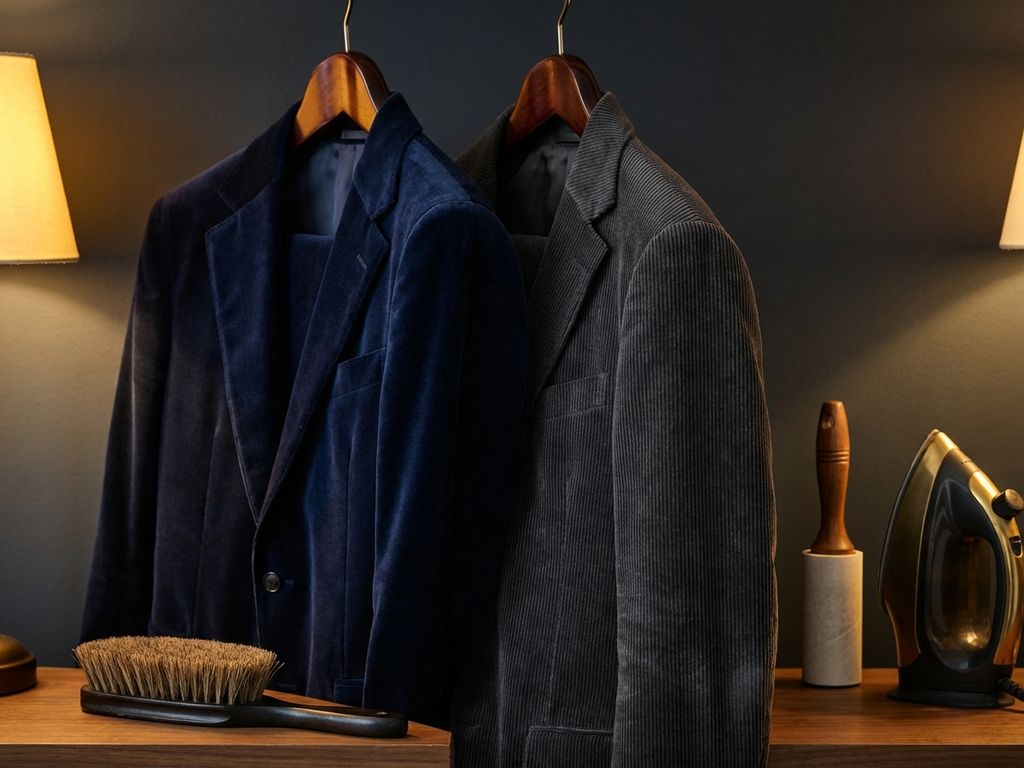
Maintaining velvet and corduroy suits requires special care because these fabrics have raised pile fibres that can easily be damaged by standard cleaning methods. The pile structure creates unique texture and appearance challenges that require gentle brushing, proper steaming, and careful storage to preserve their distinctive look and feel.
What makes velvet and corduroy suits different from regular fabric suits?
Velvet and corduroy fabrics feature a raised pile construction where short fibres stand upright from a woven base, creating their characteristic texture and appearance. This pile structure makes these materials fundamentally different from smooth-weave suit fabrics like wool gabardine or cotton twill.
The pile fibres in velvet are densely packed and cut to create a smooth, luxurious surface that reflects light differently depending on the direction in which you brush it. Corduroy has parallel ridges called wales, with pile fibres running between these raised lines. Both fabrics have a directional quality where the pile leans in one direction, affecting how light catches the surface.
Standard suit cleaning methods do not work for these materials because the pile can be crushed, matted, or pushed in the wrong direction. Regular pressing with an iron will flatten the fibres permanently, while aggressive brushing can pull out or damage the delicate pile structure. The raised fibres also trap dust, lint, and debris more readily than smooth fabrics.
These textural differences mean that proper garment care becomes more important for maintaining the suit’s appearance. The pile needs to be kept upright and flowing in the correct direction to preserve the fabric’s visual appeal and tactile qualities.
How do you clean velvet and corduroy suits without damaging the fabric?
Clean velvet and corduroy suits using gentle brushing with a soft-bristled clothes brush, always working in the direction of the pile. Steam cleaning with a handheld steamer helps refresh the fabric without crushing the fibres, while professional dry cleaning remains the safest option for thorough suit maintenance.
Start your cleaning routine with a soft clothes brush specifically designed for delicate fabrics. For velvet, brush gently in one direction, following the natural lay of the pile. You can determine the correct direction by running your hand over the fabric – it should feel smooth rather than rough. For corduroy, brush along the wales rather than across them.
Steam cleaning works well for both fabrics when done properly. Hold a handheld steamer 6–8 inches away from the garment and move it slowly across the surface. The steam refreshes the fibres and helps them stand upright again. Never let the steamer head touch the fabric directly, as this can create permanent marks or flatten the pile.
For spot cleaning, use a clean, damp cloth to gently dab at stains rather than rubbing. Rubbing can damage the pile structure and spread the stain. Work from the outside of the stain towards the centre, and always test any cleaning solution on a hidden area inside the jacket.
Professional dry cleaning remains the best option for comprehensive suit maintenance. Choose a cleaner experienced with velvet and corduroy who understands these fabrics’ special requirements. Avoid cleaners who use aggressive pressing techniques or standard suit finishing methods.
What’s the best way to store velvet and corduroy suits?
Store velvet and corduroy suits on wide, padded hangers inside breathable garment bags to prevent pile crushing and maintain proper air circulation. Keep them in a cool, dry environment with adequate spacing between garments to avoid compression that can permanently flatten the raised fibres.
Choose wide shoulder hangers with padding or covers to distribute the weight evenly and maintain the jacket’s shape. Wire hangers or narrow plastic hangers can create pressure points that leave permanent marks on the pile. Cedar hangers work well, as they also help repel moths naturally.
Breathable garment bags made from cotton or linen protect against dust while allowing air circulation. Avoid plastic bags, which can trap moisture and lead to mildew problems. The bag should be large enough that the suit does not feel cramped or pressed against the sides.
Maintain proper humidity levels between 45–55% in your storage area. Too much moisture can cause mildew, while overly dry conditions can make the fibres brittle. Keep suits away from direct sunlight, heat sources, and areas with temperature fluctuations like attics or basements.
Space garments adequately in your wardrobe so they are not pressed against each other. The pile needs room to breathe and maintain its natural position. For seasonal storage, stuff the jacket sleeves and body with acid-free tissue paper to help maintain shape and prevent crushing.
How do you handle stains and wrinkles in velvet or corduroy suits?
Address stains immediately by gently blotting with a clean cloth without rubbing, then use steam to remove wrinkles by holding a steamer 6–8 inches away from the fabric. Never use a direct iron on these materials, and seek professional help for oil-based stains or significant damage to the pile structure.
For liquid spills, act quickly by gently blotting the area with a clean, absorbent cloth. Press down firmly but do not rub or scrub, which can push the liquid deeper into the fabric and damage the pile. Work from the outside edges of the stain towards the centre to prevent spreading.
Remove wrinkles using the steam method rather than traditional ironing. Hang the garment and use a handheld steamer, keeping it at a safe distance to avoid water droplets forming on the fabric. For stubborn wrinkles, hang the suit in a steamy bathroom after a hot shower, ensuring the fabric does not get wet.
If you must use an iron, place a pressing cloth or clean towel between the iron and the fabric, and use the lowest heat setting. Press very lightly and briefly, lifting the iron rather than sliding it across the surface. This method should only be used as a last resort.
For oil-based stains, grease marks, or significant pile damage, take the suit to a professional cleaner immediately. These issues require specialised treatment that home methods cannot address safely. Attempting to clean oil stains yourself often makes them permanent.
When dealing with crushed or flattened pile areas, try the steam method combined with gentle brushing once the area is completely dry. Sometimes the pile will recover its position, but severely damaged areas may require professional restoration or may be permanent.
Understanding proper suit care and maintenance for specialty fabrics like velvet and corduroy helps preserve your investment and keeps these distinctive garments looking their best. When you are considering adding velvet or corduroy pieces to your wardrobe, we can guide you through fabric selection and care requirements during your personal style consultation, ensuring you choose materials that suit both your lifestyle and maintenance preferences.
Related Articles
- Wat draag je naar een prijsuitreiking als man?
- What is the difference between a morning suit and a lounge suit?
- How do you coordinate groomsmen suits with bridesmaids' dresses?
- Moet je lichtgrijs of donkergrijs kiezen voor een lentebruiloft?
- 6 eenvoudige manieren om de levensduur van je pak te verlengen
