



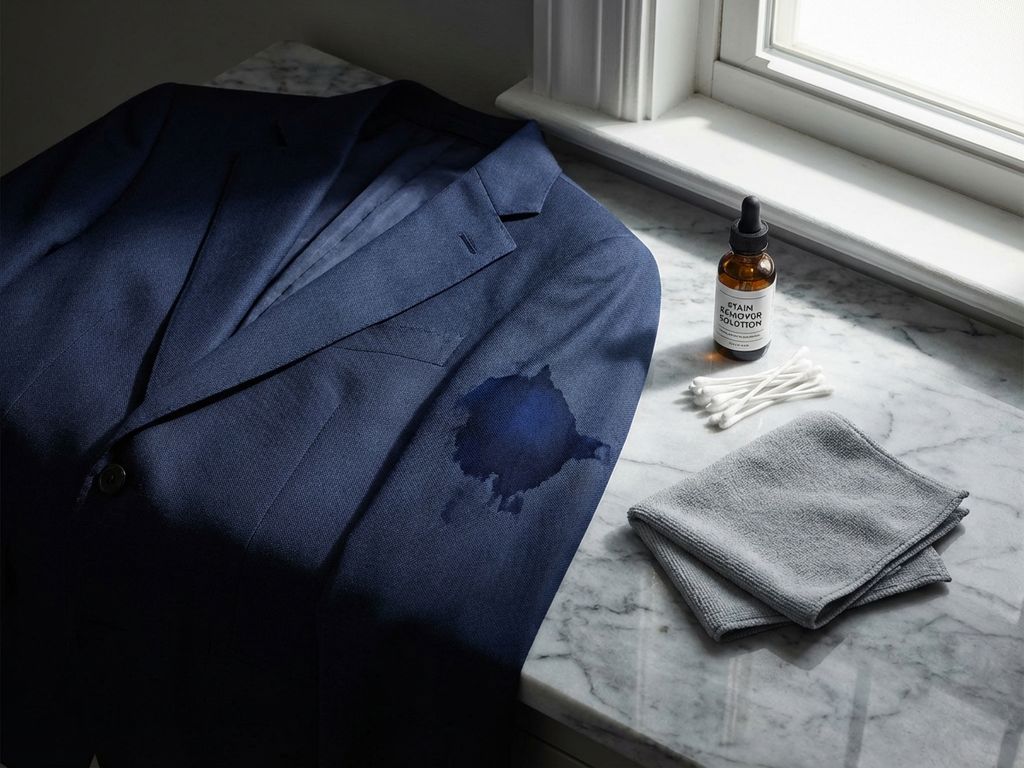
Treating ink stains on suit fabric requires immediate action and the right approach for your fabric type. Blot the stain gently without rubbing, apply isopropyl alcohol or milk to break down the ink, and work from the outside edges inward to prevent spreading. Different ink types and fabrics need specific treatments, and timing determines whether home remedies work or professional cleaning becomes necessary.
What should you do immediately when ink gets on your suit?
Act within the first few minutes by blotting the excess ink with a clean cloth, avoiding any rubbing motion that pushes ink deeper into the fibres. Remove the garment immediately if possible to prevent the stain from setting and spreading to other areas of the suit.
The moment ink touches your suit fabric, time becomes your most valuable ally in successful stain removal. Your immediate response determines whether you’ll need professional suit cleaning or can handle the situation with home treatment methods.
Start by gently blotting away any wet ink using a clean, white cloth or paper towel. Press down lightly and lift straight up rather than wiping across the stain. This technique prevents the ink from spreading to clean areas of the fabric and stops it from penetrating deeper into the fibres.
Avoid these common mistakes that make ink stains worse:
- Never rub or scrub the stain, as this pushes ink deeper into the fabric weave.
- Don’t use hot water, which can set the stain permanently.
- Avoid applying multiple cleaning products at once, as they can react unpredictably.
- Don’t let the stain air-dry before treatment, as dried ink becomes much harder to remove.
Place a clean cloth or towel underneath the stained area to catch any ink that bleeds through during treatment. This prevents the stain from transferring to other parts of your suit or surrounding surfaces.
Which home remedies actually work for removing ink from suit fabric?
Isopropyl alcohol (70% concentration) is the most effective option for ballpoint pen ink on most suit fabrics. Apply it with a cotton swab, working from the stain’s outer edges toward the centre, then blot with a clean cloth. Milk also works well for fresh ink stains on wool and cotton blends.
Different ink types respond to specific treatment methods, making it important to identify what caused your stain before choosing your approach.
For ballpoint pen ink: Isopropyl alcohol breaks down oil-based inks effectively. Dab a cotton swab in rubbing alcohol and gently work the stain from the outside edges inward. The ink should begin dissolving and transferring to your blotting cloth within minutes.
For fountain pen ink: Cold water often works for water-based fountain pen inks. Rinse the stained area with cold water immediately, then apply a small amount of liquid laundry detergent and work it gently into the fabric before rinsing again.
For gel pen ink: These stains require stronger treatment. Mix equal parts white vinegar and water, apply to the stain, and let it sit for five minutes before blotting with a clean cloth.
Milk provides a surprisingly effective treatment for fresh ink stains, particularly on natural fibres like wool. The proteins in milk help break down ink compounds. Soak the stained area in cold milk for 30 minutes, then rinse with cold water and assess the results.
Hairspray containing alcohol can work in emergency situations, though modern formulations often lack the alcohol content that made this remedy famous. If you try this method, use an aerosol hairspray, spray it directly onto the stain, wait 30 seconds, then blot with a clean cloth.
Test any home remedy on an inconspicuous area of your suit first, such as an inner seam or the inside of a pocket, to ensure it won’t damage or discolour the fabric.
How do you know when an ink stain needs professional cleaning?
Professional cleaning becomes necessary when home treatments fail after two attempts, the stain covers a large area, or you’re dealing with delicate fabrics like silk or high-end wool. Expensive suits, vintage garments, and stains that have been heat-set through ironing or hot water exposure always require expert treatment.
Several warning signs indicate that DIY methods won’t achieve the results you need for proper suit care and maintenance.
Size and location play crucial roles in determining treatment needs. Stains larger than a coin typically require professional equipment and solvents to remove completely. Stains on highly visible areas like lapels, the chest, or front panels need perfect removal, making professional treatment worth the investment.
Fabric composition significantly affects your chances of success. Silk suits, cashmere blends, and suits with special finishes or linings need professional attention to avoid permanent damage. The cleaning solvents and techniques used by professionals won’t harm these delicate materials when applied correctly.
Multiple ink colours or mixed stains (ink combined with food, drink, or other substances) create complex removal challenges that benefit from professional expertise. Dry cleaners have access to specialised solvents and can treat different stain components separately.
When communicating with your dry cleaner, provide specific information about:
- The type of ink (ballpoint, fountain, gel, marker)
- How long the stain has been present
- Any home treatments you’ve already attempted
- The suit’s fabric composition and any special care requirements
Professional garment care specialists can often salvage suits that seem beyond help, using techniques and solvents unavailable for home treatment. They understand how different fabrics react to various cleaning agents and can adjust their approach accordingly.
What’s the difference between treating fresh and set-in ink stains?
Fresh ink stains respond to gentle treatments like alcohol or milk because the ink hasn’t bonded with fabric fibres yet. Set-in stains require stronger solvents, longer treatment times, and often multiple applications because the ink has chemically bonded with the fabric structure.
The chemical changes that occur as ink dries create fundamentally different removal challenges that affect your suit maintenance approach.
Fresh stains remain on the fabric surface and in the immediate fibre structure, making them accessible to simple solvents. The ink hasn’t had time to oxidise or chemically bond with the fabric, so gentle blotting and alcohol application can lift most of the stain within minutes.
Set-in stains have undergone chemical changes that make removal more complex. Heat, time, and exposure to air cause ink compounds to bond more strongly with fabric fibres. These stains often require:
- Pre-treatment with stronger solvents for 15–30 minutes before blotting
- Multiple treatment cycles with rinsing between applications
- Combination approaches using different solvents in sequence
- Professional-grade stain removers designed for aged stains
Heat-set stains (those exposed to hot water, ironing, or tumble drying) are the most challenging to remove. The heat essentially cooks the ink into the fabric, requiring professional treatment with specialised equipment and solvents.
For set-in stains you want to tackle at home, create a stronger treatment solution by mixing one part white vinegar with one part isopropyl alcohol. Apply this mixture to the stain, let it penetrate for 20 minutes, then work it gently with a soft brush before blotting with clean cloths.
Prevention remains the best strategy for maintaining your suits in pristine condition. Keep stain removal supplies readily available, address spills immediately, and understand your suit’s fabric care requirements to make informed treatment decisions.
Proper suit care and garment care extend beyond stain removal to include regular professional cleaning, proper storage, and immediate attention to any soiling. When you invest in quality tailoring, protecting that investment through proper maintenance ensures your suits continue looking their best for years to come. We understand the importance of preserving fine garments and can guide you through proper care techniques during your personal style consultation, helping you maintain your suits between professional cleanings and handle minor issues before they become major problems.
Related Articles
- Pak, ceremonieel kostuum of smoking: wat kies je voor welke gelegenheid?
- Wat is het verschil tussen een shawl collar en een peak lapel?
- Zakelijk pak in juni: hoe kleed je je professioneel bij 30 graden?
- Wat veroorzaakt pilling op pakstof en hoe kun je het voorkomen?
- Why do suit vents split and how can you prevent it?
