



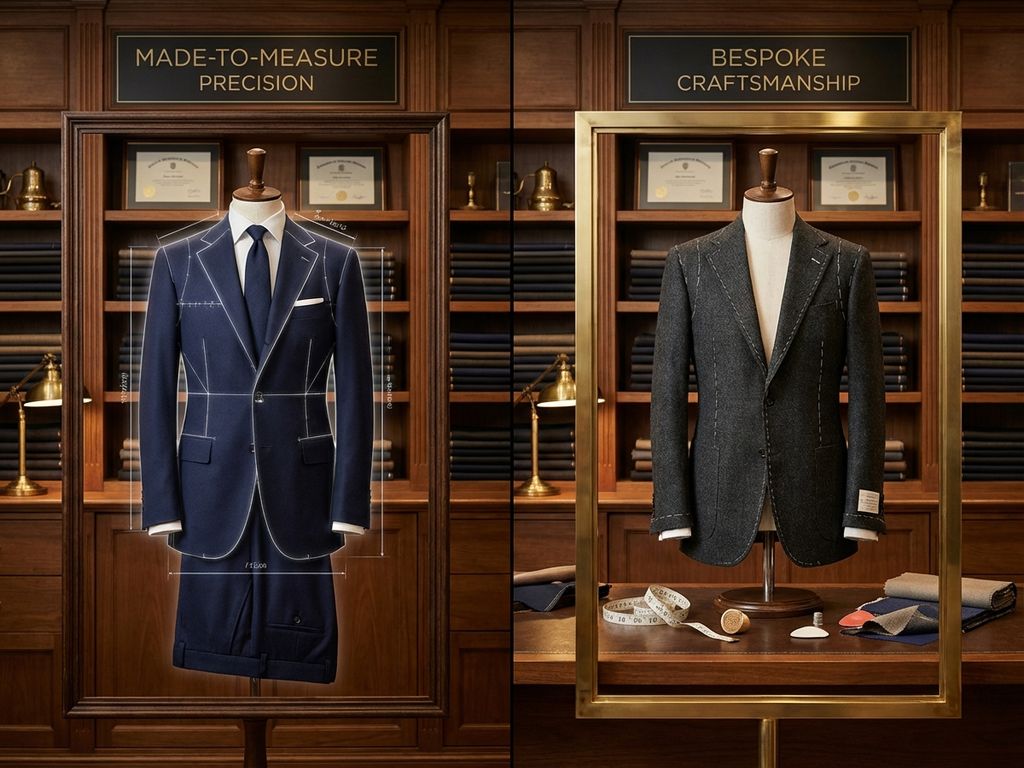
Made-to-measure wedding suits use pre-existing patterns adjusted to your measurements, while bespoke suits are created entirely from scratch with a unique pattern designed specifically for your body. Made-to-measure offers excellent customisation at a more accessible price point, while bespoke provides the ultimate in personalisation and craftsmanship. Understanding these differences helps you choose the right approach for your wedding day needs and budget.
What exactly is the difference between made-to-measure and bespoke suits?
Made-to-measure suits start with an existing pattern that is then adjusted to fit your specific measurements and preferences. The tailor takes your measurements and modifies the base pattern accordingly, allowing for fabric choice, styling details, and fit adjustments. This process offers significant customisation while maintaining efficiency in construction.
Bespoke suits involve creating an entirely new pattern from scratch, designed exclusively for your body shape and posture. Every aspect is individually crafted, from the initial paper pattern to the hand-sewn construction details. Multiple fittings ensure perfect alignment with your unique physique.
The construction methods differ significantly. Made-to-measure suits typically combine machine and hand work, using proven techniques to deliver consistent quality. Bespoke suits rely heavily on traditional hand-sewing methods, with tailors spending considerably more time on each garment.
For wedding suits, both approaches offer extensive fabric selection and styling options. Made-to-measure provides excellent customisation for details like lapel styles, button choices, and lining colours. Bespoke takes this further, allowing for unique design elements and construction techniques tailored to your specific requirements and preferences.
How much more expensive are bespoke wedding suits compared to made-to-measure?
Bespoke wedding suits typically cost three to five times more than made-to-measure options. Made-to-measure suits generally range from £800 to £2,500, while bespoke suits start at around £3,000 and can exceed £8,000 for premium fabrics and extensive handwork.
The price difference reflects several factors. Labour intensity plays the largest role, as bespoke suits require significantly more hand-sewing and individual attention from skilled craftsmen. A made-to-measure suit might take 15–25 hours to complete, while bespoke suits often require 50–80 hours of work.
Pattern creation adds substantial cost to bespoke suits. Creating your individual pattern from scratch requires multiple fittings and adjustments, whereas made-to-measure uses existing patterns that simply need modification. This difference in approach affects both time investment and final pricing.
Fabric costs remain similar between both options when choosing comparable materials. However, bespoke tailors often offer access to more exclusive fabrics and can accommodate special requests that might not be available through made-to-measure services.
For wedding suits specifically, consider the long-term value. Both options deliver significantly better fit and quality than off-the-rack alternatives. Your choice should align with your budget priorities and how much customisation matters for your special day.
Which option gives you a better fit for your wedding day?
Both made-to-measure and bespoke suits deliver a superior fit compared to ready-to-wear options, but bespoke offers the most precise fit possible. Made-to-measure suits provide excellent fit for most body types, while bespoke suits accommodate unique posture characteristics and asymmetries with unmatched precision.
Made-to-measure fitting typically involves two to three appointments. The initial consultation captures your measurements and style preferences, followed by a fitting to check proportions and make adjustments. This process works well for standard body proportions and delivers consistently good results.
Bespoke fittings involve four to six appointments, allowing for more detailed adjustments throughout construction. The tailor can address specific fit challenges, unusual proportions, or posture considerations that might not be fully resolved through made-to-measure adjustments.
For wedding suit colours and styling, both approaches offer extensive options. Made-to-measure suits excel at delivering classic fits in traditional wedding colours like navy, charcoal, and black. Bespoke suits can accommodate more adventurous colour choices and unique design elements while maintaining an impeccable fit.
Consider your body type when choosing. If you have a relatively standard build, made-to-measure will likely provide excellent results. Those with significant asymmetries, unusual proportions, or specific fit requirements may benefit from the additional precision and customisation capabilities of bespoke construction.
How long does it take to create made-to-measure versus bespoke wedding suits?
Made-to-measure wedding suits typically require 6–8 weeks from initial consultation to completion, while bespoke suits need 12–16 weeks or longer. For wedding planning, this means starting your suit process at least 3–4 months before your wedding date to allow for any unexpected adjustments.
The made-to-measure timeline includes an initial consultation and measurement session, followed by construction time and one or two fitting appointments. This streamlined process works efficiently because tailors use proven patterns and construction methods.
Bespoke timelines involve more complex scheduling. Pattern creation alone takes several weeks, followed by multiple construction phases and fitting appointments. Each stage requires careful attention and cannot be rushed without compromising quality.
For summer wedding suits, consider seasonal demand when planning your timeline. Popular wedding months create higher demand for tailoring services, potentially extending delivery times. Starting your suit process early ensures adequate time for any adjustments needed.
Formal wedding suits in classic styles may have slightly shorter timelines than more complex designs. However, always allow extra time for your wedding suit, regardless of which approach you choose. Having your suit ready well before your wedding date eliminates stress and allows for final adjustments if needed.
What should you consider when choosing between made-to-measure and bespoke for your wedding?
Choose made-to-measure if you want excellent customisation and fit within a reasonable budget and timeline. Select bespoke if you have specific fit challenges, want maximum customisation, or view your wedding suit as a long-term investment piece worthy of the highest level of craftsmanship.
Budget considerations extend beyond the initial purchase price. Factor in the value you will receive from wearing your suit after the wedding. Both options create garments suitable for future formal occasions, making them worthwhile investments compared to rental options.
Timeline requirements matter significantly for wedding planning. Made-to-measure suits fit better into typical wedding planning schedules, while bespoke requires earlier commitment and planning. Consider your overall wedding timeline when making this decision.
Your fit requirements play an important role in this choice. Standard body proportions work well with made-to-measure, while unique fit challenges benefit from bespoke attention. Be honest about your specific needs when evaluating options.
Style preferences also influence this decision. Made-to-measure offers extensive customisation for traditional wedding suit styles and colours. Bespoke allows for more unique design elements and construction details that might not be available through made-to-measure services.
Consider your long-term wardrobe needs. If you regularly attend formal events, the investment in either option provides ongoing value. For occasional formal wear, made-to-measure typically offers the best balance of quality, fit, and value for most grooms.
When you are ready to create your perfect wedding suit, we are here to guide you through every detail of the made-to-measure process. Our experienced tailors will help you choose from thousands of premium fabrics and styling options to create a wedding suit that reflects your personality and fits your special day perfectly.
