



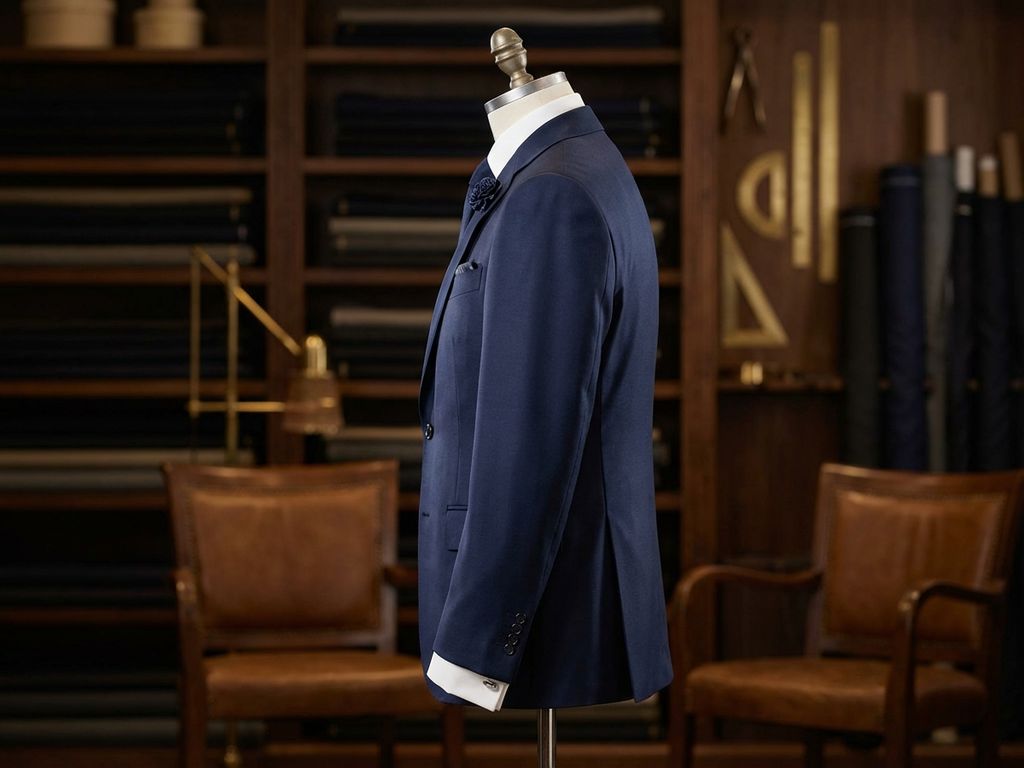
A properly fitted wedding suit jacket should have shoulders that align with your natural shoulder line, a chest that allows comfortable movement without pulling or bunching, and sleeves that reveal about half an inch of shirt cuff. The jacket length should cover your seat while maintaining clean lines that create a polished, confident appearance for your special day.
What does a properly fitted wedding suit jacket actually look like?
A properly fitted wedding suit jacket creates a clean, tailored silhouette that enhances your natural frame without restriction. The jacket should lie smoothly across your chest and back, with the shoulder seams sitting exactly at your shoulder points. When you button the jacket, you should see a gentle drape through the torso without any pulling or bunching of fabric.
The overall silhouette forms a structured V-shape that flatters your body type. Your jacket should follow your natural waistline, creating definition without being overly tight. The back should lie flat against your body, with no horizontal wrinkles or pulling across the shoulder blades when you move your arms naturally.
Visual indicators of proper fit include smooth lapels that lie flat against your chest, a collar that sits snugly against your neck without gaps, and side vents that hang straight without flaring open. The button stance should allow the jacket to close comfortably without straining the fabric, while the overall length creates balanced proportions with your trousers.
Wedding suit colours can affect how fit appears visually. Darker formal wedding suits tend to be more forgiving of minor fit issues, while lighter summer wedding suits may highlight any pulling or bunching more prominently.
How should the shoulders and chest fit on your wedding suit jacket?
The shoulder seams should sit precisely at the edge of your shoulders, where your arm naturally meets your shoulder. This is the most important fitting point because shoulder adjustments are difficult and expensive. The seam should create a clean line without extending beyond your shoulder or falling short of the shoulder point.
For chest fit, you should be able to button the jacket comfortably without any pulling across the front. A good test is the “pinch test” – you should be able to pinch about an inch of fabric on each side of the jacket when it’s buttoned. This ensures proper room for movement and breathing without the jacket appearing oversized.
The armholes should sit close to your body without binding when you raise your arms. You should be able to move naturally, reach forward, and embrace someone without feeling restricted. The chest area should follow your natural contours, creating a smooth line from shoulder to waist without excess fabric pooling anywhere.
Common fitting mistakes include shoulders that are too wide, creating a boxy appearance, or too narrow, causing pulling and restriction. The chest should never pull so tightly that you see an “X” shape forming when the jacket is buttoned, nor should it be so loose that it billows away from your body.
Testing your shoulder and chest fit
Move your arms naturally while wearing the jacket. You should feel comfortable reaching, hugging, and gesturing without the jacket riding up or pulling tight. The shoulders should stay in place during movement, and the chest should maintain its shape without gaping or straining.
What’s the correct sleeve length and button stance for wedding jackets?
The proper sleeve length shows approximately half an inch of your shirt cuff below the jacket sleeve. This creates a polished, layered look that’s traditional for formal wear. The sleeve should end at your wrist bone, allowing for natural arm movement while maintaining the proper shirt reveal.
Button stance refers to where the buttons sit on your torso and how the jacket closes. For single-breasted jackets, the button should sit at your natural waist, creating a flattering silhouette. The button stance affects how the lapels roll and how the jacket drapes, influencing your overall proportions.
When buttoned, the jacket should close smoothly without pulling or gaping. The lapels should lie flat against your chest, creating clean lines that draw the eye upward. The button stance works with the jacket’s cut to enhance your natural waistline and create a proportioned appearance.
Summer wedding suits often feature higher button stances for a more modern look, while traditional formal wedding suits may have slightly lower button placements for classic proportions. The key is ensuring the button stance complements your body type and the jacket’s overall design.
Sleeve and proportion guidelines
Your sleeve length should remain consistent whether your arms are at your sides or slightly bent. The shirt cuff should always be visible, creating a clean finish that shows attention to detail. This small detail significantly impacts your overall polished appearance.
How do you know if your wedding suit jacket needs alterations?
Your wedding suit jacket needs alterations if you notice pulling, bunching, or gaps when wearing it normally. Signs include horizontal wrinkles across the back, sleeves that are too long or short, shoulders that don’t align with your natural shoulder line, or difficulty moving comfortably when the jacket is buttoned.
Easily adjustable elements include sleeve length, trouser hemming, and minor waist adjustments. However, shoulder alterations are complex and expensive, often costing more than the adjustment is worth. Chest adjustments are possible but limited – you can typically take in or let out about two inches in total.
Timeline considerations are important for wedding planning. Allow at least 4–6 weeks for alterations, with multiple fittings scheduled. Rush alterations are possible but may compromise quality and cost significantly more. Book your first fitting appointment as soon as possible after ordering or purchasing your suit.
Professional fitting assistance becomes necessary when you’re unsure about fit quality, when multiple adjustments are needed, or when working with expensive fabrics that require expert handling. A skilled tailor can assess what’s achievable and recommend the best approach for your timeline and budget.
What can and cannot be altered
Alterable elements include sleeve length, trouser length and waist, jacket waist and length, and minor chest adjustments. Non-alterable or difficult elements include shoulder width, jacket chest size beyond minor adjustments, and overall jacket proportions. Understanding these limitations helps you make informed decisions about your wedding suit.
Getting the perfect fit for your wedding suit jacket involves understanding these fundamental principles and working with experienced professionals who can guide you through the process. The investment in proper fit pays dividends in confidence and comfort on your special day. We specialise in creating perfectly fitted wedding suits that help grooms look and feel their absolute best, with personal consultations that ensure every detail meets your vision for this important milestone.
