



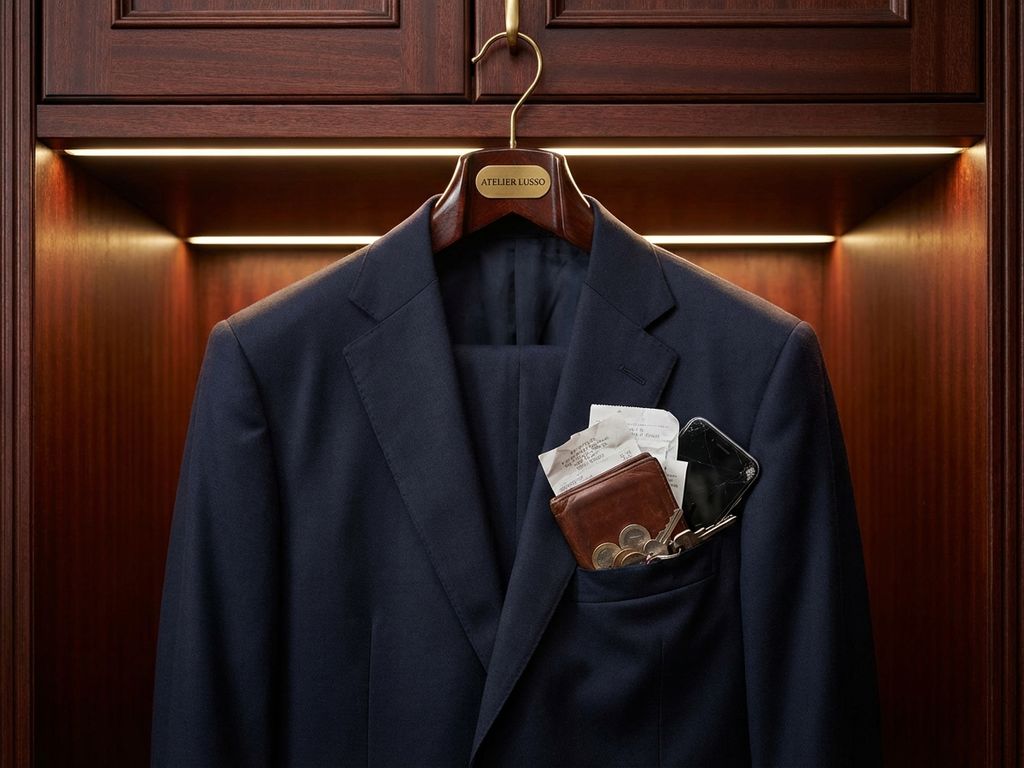
Emptying suit pockets before storage prevents permanent creases, fabric distortion, and damage to both your garment and any forgotten items. Items left in pockets create weight-related stretching and memory marks that become increasingly difficult to remove over time. Proper suit care requires thorough pocket inspection, gentle preparation, and attention to storage details that preserve your investment for years.
What happens when you leave items in suit pockets during storage?
Items left in suit pockets create permanent creases and fabric distortion that can ruin your garment’s appearance and fit. The weight of forgotten objects pulls on delicate pocket construction, stretching the fabric and creating unsightly bulges that persist even after professional pressing.
Fabric memory plays a significant role in this damage. When weight presses against suit fabric for extended periods, the fibers gradually conform to that shape. Natural fibers like wool and cotton are particularly susceptible to this memory effect, especially when combined with humidity and temperature fluctuations in storage areas.
The physics behind this damage involves constant pressure points that break down fabric structure. Coins, keys, or phones create concentrated stress areas that weaken the weave. Over months of storage, these pressure points develop into permanent indentations that no amount of steaming or pressing can fully eliminate.
Prevention proves far easier than correction with suit maintenance. Professional suit cleaning and restoration can address minor pocket damage, but severe distortion often requires costly alterations or complete replacement. The investment in proper garment care significantly outweighs the expense of fixing storage mistakes.
The items themselves also suffer damage when left in pockets. Leather wallets can develop permanent creases, electronic devices may experience moisture damage, and metal objects can tarnish or corrode in humid storage conditions. This creates a double loss that affects both your suit and your personal belongings.
How do you properly empty and prepare suit pockets for storage?
Thoroughly check all pockets, including hidden ones like ticket pockets, interior chest pockets, and trouser watch pockets. Start with obvious exterior pockets, then systematically examine every compartment your suit contains. Many garments have six to eight different pockets that require individual attention.
Remove all items completely, including small debris like lint, coins, or receipts. Turn pockets inside out gently to ensure nothing remains hidden in corners or seams. This process also allows you to inspect pocket construction for any existing damage that might worsen during storage.
Clean pocket interiors using a lint roller or soft brush to remove accumulated debris. Pay special attention to trouser pockets, which typically collect more lint and small particles than jacket pockets. This cleaning step prevents staining and odors that can develop during long-term storage.
Gently reshape pocket openings after emptying them. Smooth any wrinkles or folds that might set during storage. For trouser pockets, ensure they lie flat against the leg. For jacket pockets, check that flaps sit naturally and pocket mouths maintain their intended shape.
Consider using tissue paper or acid-free padding to maintain pocket structure during extended storage. This technique works particularly well for structured jacket pockets that might collapse or lose their shape. The padding should be minimal and removable to avoid creating new pressure points.
Which suit storage mistakes cause the most damage over time?
Improper hanging methods cause more long-term damage than any other storage mistake. Using wire hangers, inadequate shoulder support, or overcrowded closets leads to shoulder distortion, fabric stretching, and permanent wrinkles that compromise your suit’s appearance and fit.
Incorrect hanger selection ranks among the most common errors. Wire hangers lack proper shoulder support and can create permanent indentations in jacket shoulders. Plastic hangers often prove too narrow for suit jackets, while overly wide hangers can stretch shoulder seams beyond repair.
Overcrowded storage spaces prevent proper air circulation and create compression wrinkles. Suits need adequate space to hang naturally without touching other garments. Cramped conditions also make it difficult to remove suits without disturbing neighboring items, increasing the risk of snags or pulls.
Humidity issues destroy suits faster than most owners realize. Excessive moisture promotes mold growth, while extremely dry conditions can make natural fibers brittle. Basements, attics, and poorly ventilated closets often have humidity levels that damage fabric over time.
Lack of garment bags exposes suits to dust, moths, and environmental pollutants. Quality breathable garment bags protect against these threats while allowing necessary air circulation. Plastic bags should never be used for long-term storage, as they trap moisture and promote mold growth.
Direct sunlight exposure causes irreversible color fading and fabric weakening. Even brief exposure during daily selection can accumulate significant damage over months. Proper suit storage requires protection from all light sources, not just direct sunlight.
What’s the difference between storing ready-to-wear and tailored suits?
Tailored suits require more careful storage attention due to their superior construction quality and significantly higher replacement cost. Made-to-measure garments use premium materials and hand-finished details that demand specialized care techniques to preserve their investment value and custom fit.
Construction quality affects storage requirements substantially. Ready-to-wear suits often use fused interfacing and machine stitching that can withstand casual storage conditions. Tailored suits feature floating canvas construction and hand-padded details that need gentle handling and proper support to maintain their shape.
Investment protection considerations make proper storage techniques more important for bespoke garments. A quality tailored suit represents a significant financial commitment that proper care can preserve for decades. Ready-to-wear suits, while still requiring care, typically have lower replacement costs that make storage mistakes less financially devastating.
Tailored suits often feature unique details like hand-sewn buttonholes, custom linings, and personalized adjustments that cannot be replicated if damaged. These bespoke elements require storage methods that protect their integrity. Ready-to-wear suits use standardized components that can sometimes be repaired or replaced more easily.
Fabric quality differences also influence storage needs. Tailored suits typically use superior wool grades and luxury materials that respond better to proper care but can also suffer more dramatically from poor storage conditions. The higher thread counts and finer weaves common in bespoke tailoring require gentler handling throughout the storage process.
Professional maintenance schedules differ between garment types. Tailored suits benefit from regular professional inspections and preventive care that can identify potential issues before they become serious problems. This proactive approach to garment care helps preserve the substantial investment in custom tailoring.
Proper suit storage protects your investment while maintaining the impeccable appearance that quality tailoring provides. Whether you own ready-to-wear or bespoke garments, attention to storage details ensures your suits remain ready for any occasion. At Café Costume, we understand that proper care begins the moment you bring your tailored suit home, and our team provides guidance on maintaining your garment’s exceptional quality for years to come.
