



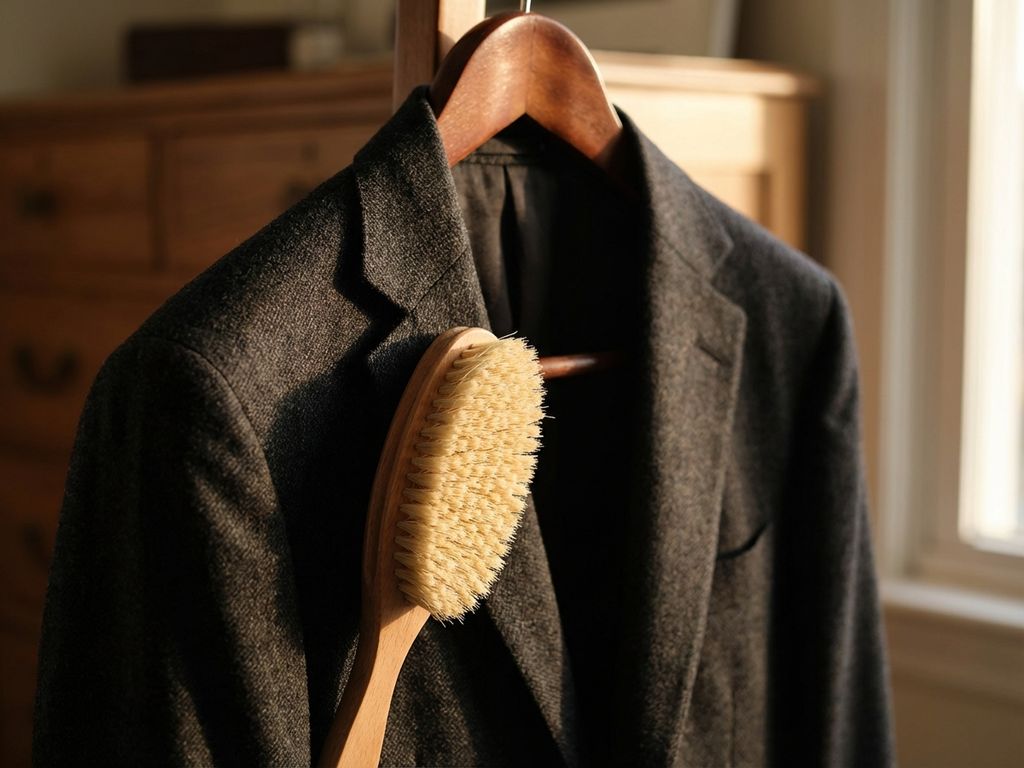
Brushing a wool suit properly involves using gentle, downward strokes with a natural bristle brush to remove dust, lint, and surface debris. This simple maintenance routine preserves the fabric’s appearance, prevents matting, and extends your garment’s lifespan. Regular brushing is one of the most important aspects of suit care and should be done after each wear.
Why do wool suits need regular brushing?
Wool suits require regular brushing because wool fibres naturally attract dust, lint, and debris throughout daily wear. The microscopic scales on wool fibres create tiny spaces where particles accumulate, causing the fabric to look dull and feel rough over time.
When you wear a wool suit, friction from movement, contact with surfaces, and environmental exposure causes fibres to lift and become dishevelled. Without proper garment care, these lifted fibres trap more dirt and can begin to mat together, creating a worn appearance even in relatively new garments.
Regular brushing removes surface contaminants before they penetrate deeper into the fabric weave. This preventive approach to suit maintenance helps maintain the wool’s natural lustre and smooth texture. Brushing also realigns disturbed fibres, restoring the fabric’s uniform appearance and preventing permanent damage that would require professional cleaning.
The practice extends your suit’s lifespan significantly by reducing the frequency of dry cleaning needed. Excessive chemical cleaning can weaken wool fibres over time, making gentle brushing an important alternative for routine maintenance between professional cleanings.
What type of brush should you use on a wool suit?
The best brush for wool suits is a natural horsehair brush with soft to medium bristles. Horsehair brushes effectively remove debris without damaging delicate wool fibres, making them ideal for regular suit cleaning maintenance.
Horsehair brushes come in different bristle firmness levels. Lightweight wools and fine fabrics require softer horsehair bristles, while heavier tweeds and robust weaves can handle medium-firm bristles. The natural properties of horsehair create the right balance of cleaning power and gentleness.
Boar bristle brushes offer another excellent option, particularly for heavier wool fabrics. These brushes provide slightly more aggressive cleaning action than horsehair, making them suitable for removing stubborn lint or pet hair from textured wool surfaces.
Avoid synthetic brushes for regular wool suit care, as they can create static electricity that attracts more lint and may be too harsh for delicate fibres. Natural bristles move more smoothly across wool surfaces and don’t generate the static that synthetic materials produce.
Choose a brush with a comfortable handle and bristles approximately 2–3 centimetres long. The brush head should be wide enough to cover a reasonable surface area while allowing precise control around suit details like lapels and pocket areas.
How do you properly brush a wool suit step by step?
Start by hanging your suit on a sturdy hanger and ensuring adequate lighting to see the fabric surface clearly. Always brush in downward strokes following the natural direction of the wool fibres, never against the grain.
Begin with the jacket back, using gentle, overlapping strokes from shoulder to hem. Apply light pressure and let the brush bristles do the work rather than pressing firmly. Work systematically across the entire back surface, paying attention to areas that contact chair backs or car seats.
Move to the jacket front, brushing each panel separately. Take extra care around the lapels, using shorter strokes that follow their shape. Brush the chest area gently, as this region often collects lint and debris from ties or accessories.
For the sleeves, brush from shoulder to cuff in long, smooth strokes. The sleeve undersides and elbow areas typically accumulate more debris and may require additional attention. Always maintain the downward direction to avoid lifting fibres unnecessarily.
Brush trouser legs from waist to hem, working on both the front and back surfaces. Pay particular attention to the knee and thigh areas where fabric stretches during sitting. For trouser creases, brush parallel to the crease line to maintain their sharp appearance.
Finish by inspecting the entire garment for any missed areas or stubborn debris. This systematic approach to garment care ensures thorough cleaning while protecting the wool’s integrity.
How often should you brush your wool suit?
Brush your wool suit after every wear to maintain optimal condition and appearance. This frequency prevents debris accumulation and keeps the fabric looking fresh between professional cleanings.
The timing of brushing matters as much as frequency. Brush your suit while it’s still slightly warm from body heat, as this makes debris removal more effective. The warmth helps release particles that have settled into the fabric during wear.
For suits worn multiple days per week, daily brushing becomes part of your evening routine. This consistent suit maintenance prevents the buildup that occurs when debris sits on fabric for extended periods.
Seasonal considerations affect brushing needs as well. During autumn and winter, increased contact with wool coats, scarves, and indoor heating systems means suits collect more lint and require more thorough brushing. Spring and summer may allow slightly less frequent attention, depending on environmental factors.
Watch for visual cues that indicate immediate brushing needs: visible lint, dull appearance, or rough texture when touching the fabric. These signs suggest debris accumulation that requires prompt attention regardless of your regular schedule.
Suits stored for extended periods should receive thorough brushing before storage and again before wearing. This prevents long-term particle embedding that becomes increasingly difficult to remove over time.
What mistakes should you avoid when brushing wool suits?
Never brush against the wool grain or use upward strokes, as this lifts fibres and creates a fuzzy appearance that’s difficult to correct. Always follow the natural fibre direction with gentle downward movements.
Avoid using excessive pressure when brushing. Heavy-handed brushing can damage wool fibres and create permanent texture changes. Let the brush bristles do the work through gentle, repeated strokes rather than aggressive scrubbing motions.
Don’t use synthetic brushes or clothes brushes designed for other materials. These can create static electricity and may be too harsh for delicate wool fibres. Stick to natural bristle brushes specifically designed for suit cleaning purposes.
Timing mistakes can reduce brushing effectiveness. Never brush a wet or damp suit, as this can damage the fibres and potentially cause water stains. Allow suits to dry completely before brushing, and avoid brushing immediately before wearing when you might transfer oils from your hands.
Rushing the brushing process leads to missed areas and inadequate debris removal. Take time to work systematically across all surfaces rather than using quick, random strokes that leave some areas uncleaned.
Don’t neglect brush maintenance itself. A dirty brush transfers debris rather than removing it. Clean your brush regularly by tapping out accumulated lint and occasionally washing natural bristles with mild soap and water, allowing complete drying before use.
Proper wool suit brushing forms the foundation of effective garment care, preserving your investment while maintaining a polished appearance. When you’re ready to invest in a perfectly fitted wool suit that deserves this level of care, we offer comprehensive consultations to help you select fabrics and styles that match your lifestyle and preferences. Our experienced tailors guide you through every detail, ensuring your suit not only looks exceptional but also responds beautifully to proper maintenance techniques.
