



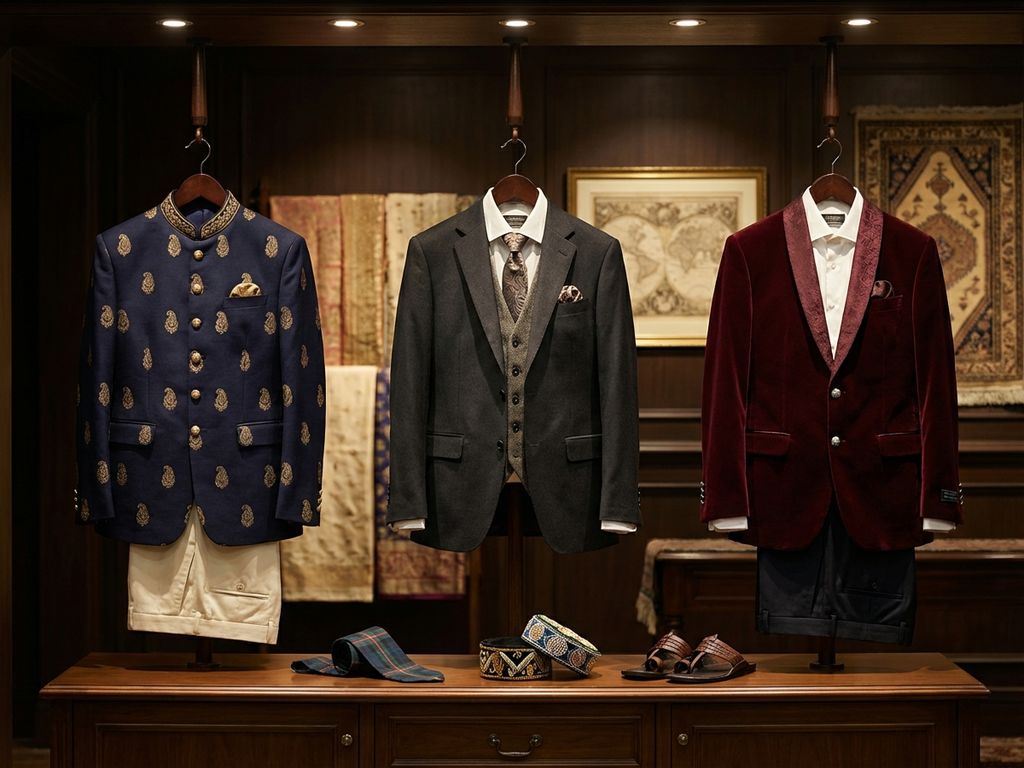
Incorporating cultural elements into wedding suits means weaving meaningful heritage details into your formalwear through fabric choices, colours, embroidery, or traditional cuts. You can honour your background with subtle touches like culturally significant colours or patterns, or go bold with traditional ceremonial elements. The key is balancing personal heritage with your wedding’s overall aesthetic while ensuring authentic, respectful representation.
What cultural elements can you incorporate into modern wedding suits?
You can incorporate cultural heritage through fabric choices, colour symbolism, embroidery patterns, traditional cuts, and ceremonial accessories that reflect your background. These elements range from subtle nods to bold statements, allowing you to honour your heritage whilst maintaining a contemporary look.
Fabric selection offers one of the most elegant ways to honour your culture. Consider traditional textiles like Scottish tartan, Indian silk brocades, African kente cloth accents, or Japanese silk weaves. These materials can appear as waistcoat panels, pocket squares, or lining details that remain visible when you move or remove your jacket.
Embroidery and decorative elements provide another meaningful approach. Chinese dragon motifs, Celtic knotwork, Mexican Otomi patterns, or Middle Eastern geometric designs can be subtly incorporated into jacket linings, cufflinks, or buttons. These details create personal significance without overwhelming the suit’s classic silhouette.
Traditional cuts and styling offer structural ways to honour heritage. Consider Nehru-collar jackets for Indian influence, mandarin collars for Chinese heritage, or modified traditional silhouettes that blend cultural elements with contemporary tailoring. These approaches create unique wedding suits that tell your story.
Ceremonial accessories complete the cultural integration. Think traditional headwear, family heirloom jewellery, cultural sashes, or meaningful symbols incorporated into cufflinks or tie clips. These elements can be worn throughout the ceremony or added for specific cultural portions of your celebration.
How do you choose colours that honour your heritage without clashing with wedding themes?
Choose culturally significant colours by understanding their traditional meanings and finding complementary shades that work within your wedding palette. Start with your culture’s auspicious colours, then adapt the intensity or incorporate them as accent pieces rather than dominant features.
Research your culture’s colour symbolism thoroughly. Red represents luck and prosperity in Chinese culture, gold signifies wealth in Indian traditions, and green holds special meaning in Irish heritage. Understanding these associations helps you choose colours that carry authentic significance rather than arbitrary preferences.
Adapt colour intensity to match your wedding theme. If your heritage calls for bright red but your wedding features soft pastels, consider deep burgundy or wine shades that honour the cultural significance whilst harmonising with your overall aesthetic. This approach maintains meaning without creating visual discord.
Use cultural colours strategically as accents. Incorporate heritage colours through waistcoats, pocket squares, boutonnieres, or lining details rather than entire suits. This technique allows you to honour tradition whilst keeping your formal wedding suits cohesive with your partner’s attire and wedding decorations.
Consider seasonal appropriateness when selecting cultural colours. Rich jewel tones work beautifully for autumn and winter weddings, whilst lighter interpretations of traditional colours suit summer wedding suits. This balance ensures your cultural elements enhance rather than compete with your wedding’s natural setting.
What’s the difference between incorporating cultural details versus wearing traditional ceremonial attire?
Cultural details involve subtle heritage touches within contemporary wedding suits, whilst traditional ceremonial attire means wearing complete cultural garments. The choice depends on your ceremony type, family expectations, venue requirements, and personal comfort with cultural expression.
Cultural incorporation works through accent pieces and design elements that enhance modern formal wedding suits. This approach includes heritage-inspired colours, traditional fabric panels, cultural embroidery, or meaningful accessories. You maintain a contemporary silhouette whilst honouring your background through thoughtful details.
Traditional ceremonial attire involves wearing complete cultural garments like Scottish kilts, Indian sherwanis, African dashikis, or Chinese changshan. These outfits follow traditional construction methods, authentic fabrics, and historical styling that may differ significantly from Western formalwear conventions.
Consider your ceremony structure when deciding between approaches. Multiple outfit changes allow you to wear traditional attire for cultural portions and formal wedding suits for other segments. This flexibility accommodates different family expectations whilst ensuring appropriate dress for various celebration elements.
Family and community expectations often influence this decision. Some families prefer authentic traditional dress to honour ancestors and maintain cultural continuity. Others appreciate subtle integration that respects heritage whilst embracing contemporary life. Discuss these preferences early in your planning process.
Venue and season considerations also matter. Traditional garments may not suit all climates or locations. Summer wedding suits with cultural accents might work better for outdoor celebrations than heavy traditional robes, whilst formal venues might call for subtle integration rather than bold traditional statements.
How do you work with tailors to ensure cultural elements are executed respectfully and accurately?
Work with tailors by providing detailed research, visual references, and cultural context about your heritage elements. Prepare historical background, symbolic meanings, and authentic examples to guide accurate execution whilst avoiding cultural appropriation or misrepresentation.
Research your cultural elements thoroughly before your consultation. Understand the historical significance, proper construction methods, traditional colour combinations, and symbolic meanings. This preparation helps you communicate authentically with your tailor and ensures respectful representation of your heritage.
Gather visual references from multiple authentic sources. Include historical photographs, museum pieces, cultural documentation, and family heirlooms that demonstrate proper execution. These references help tailors understand proportions, placement, and traditional techniques rather than relying on potentially inaccurate interpretations.
Explain the cultural significance behind each element you want to incorporate. Share why specific colours, patterns, or construction methods matter to your heritage. This context helps tailors approach the work respectfully and make informed decisions about adaptation for contemporary formal wedding suits.
Consider consulting cultural experts or community elders during the design process. Their guidance ensures authentic representation whilst avoiding elements that might be inappropriate for non-ceremonial use or require specific cultural permissions. This collaboration demonstrates respect for your heritage traditions.
Schedule multiple fittings to review cultural elements specifically. Examine embroidery placement, colour accuracy, and traditional proportions at each stage. This attention to detail ensures your cultural elements are executed beautifully whilst maintaining the overall elegance of your wedding suit.
What should you consider when blending multiple cultural traditions in one wedding suit?
When blending multiple cultures, focus on harmonious design balance, symbolic compatibility, and family sensitivities from all backgrounds. Choose elements that complement rather than compete, ensuring each culture receives respectful representation without overwhelming the overall design.
Assess symbolic compatibility between different cultural elements. Some colours or symbols may have conflicting meanings across cultures, whilst others complement beautifully. Research thoroughly to avoid combinations that might be culturally inappropriate or create unintended symbolic conflicts.
Create visual balance by distributing cultural elements thoughtfully across your outfit. If you incorporate bold patterns from one culture, balance them with subtle colour choices from another. This approach ensures no single heritage dominates whilst giving each tradition meaningful representation.
Consider family sensitivities from all cultural backgrounds involved. Some families may have strong preferences about how their heritage appears alongside other cultures. Open communication helps navigate these expectations whilst creating wedding suit colours and designs that honour everyone respectfully.
Plan element placement strategically to avoid visual chaos. Use one culture’s influence for the main suit structure, another’s for colour choices, and a third’s for accessories or embellishments. This systematic approach creates cohesive formal wedding suits that tell your multicultural story clearly.
Test combinations through sketches or fabric samples before final construction. Seeing how different cultural elements work together visually helps you make adjustments early in the process. This preparation ensures your finished suit celebrates your diverse heritage harmoniously.
Creating culturally meaningful wedding suits requires thoughtful planning, authentic research, and skilled execution. Whether you choose subtle heritage touches or bold traditional elements, the key lies in understanding your cultural background and working with experienced tailors who respect your vision. Remember that your wedding suit should reflect your personal story whilst honouring the traditions that shaped you.
At Café Costume, we understand the importance of creating wedding suits that honour your heritage whilst maintaining contemporary elegance. Our experienced tailors work closely with you to incorporate cultural elements authentically and beautifully, ensuring your special day reflects both your personal style and cultural pride.
Related Articles
- Wat gebeurt er tijdens een eerste afspraak voor een smoking op maat?
- Zomerpak 2026: de beste stoffen en kleuren voor warm weer
- Wat is het verschil tussen het ophangen en vouwen van een pak?
- Moeten je bruidsjonkers dezelfde marineblauw tint dragen?
- Why are patterned suits becoming acceptable for weddings?
